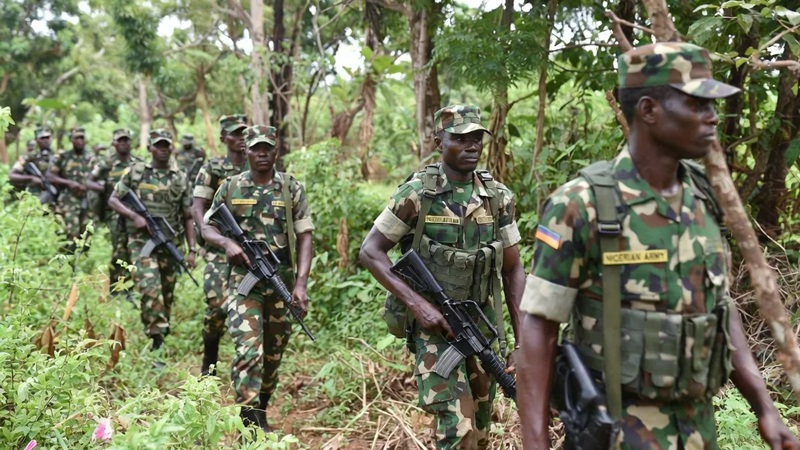

 LOKOJA, Kogi State — Troops of the Nigerian Army under Operation WHIRL STROKE have destroyed a suspected kidnappers’ camp in Edimogbo Forest, Igala-Mela/Odolu Local Government Area of Kogi State.
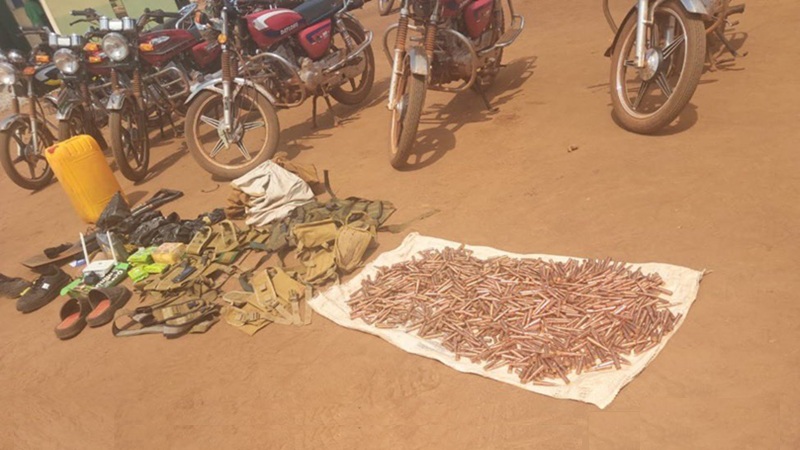
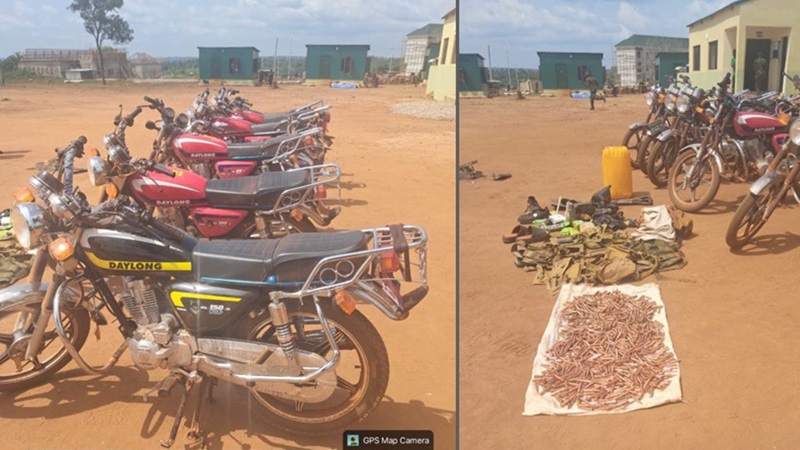
The troops, during the operation, recovered over a thousand rounds of ammunition and other military-related items.
The operation, reportedly conducted at about 7:00 a.m. on October 2, 2026, involved troops of the Quick Reaction Force (QRF), 21 Battalion, following intelligence about the suspected criminal hideout.
According to security sources, the troops advanced towards the location through the Ejule–Alloma–Ofabo route but came under brief gunfire as they approached the camp.
The suspected criminals reportedly fled deeper into the forest following the exchange of fire.
Troops pursued them but made no further contact before proceeding to destroy the camp.

Ammunition, Motorcycles and Communication Equipment Recovered by Troops
Items reportedly recovered from the destroyed camp included:
- 1,000 rounds of 7.62mm × 54 ammunition.
- Seven bandoliers.
- Six Daylong motorcycles.
- Two shovels.
- One hand pump.
- One mobile phone.
- One Glo modem.
- A jerrycan of Premium Motor Spirit (PMS).
- Shoes, clothing and two packets of soap.
The recovery of the ammunition and motorcycles suggests that the hideout may have served as a storage and operational location for the suspected criminal group.
However, the information made available does not indicate whether any suspects were arrested or whether casualties were recorded during the operation.
Nigeria’s Insecurity Crisis: Recent Attacks Across Several States
The Kogi operation comes amid renewed concerns over armed attacks, kidnappings and assaults on troops and other security personnel and civilian communities across different parts of Nigeria.
In one of the deadliest recent incidents, suspected bandits attacked Binnari community in Karim-Lamido Local Government Area of Taraba State on October 23, 2026.
The National Emergency Management Agency (NEMA) subsequently reported that 62 people were killed and 52 others injured.

The attack also affected 7,123 people and displaced 5,187 residents, according to the agency’s assessment.
The attackers reportedly opened fire on residents, looted shops and set houses and other property ablaze.
The incident prompted renewed concerns about the vulnerability of rural communities to heavily armed groups.
In Zamfara State, gunmen ambushed a convoy of traders travelling under military escort to a market in Bukkuyum Local Government Area on October 10.
A Reuters report published on October 12 said at least 20 people were killed, including four soldiers, three police officers, a member of the Nigeria Security and Civil Defence Corps and 12 civilians.
A military source also reported that 19 people were wounded.

The attack demonstrated that even movements involving security escorts remain vulnerable to armed ambushes in parts of the North-West.
Meanwhile, in the North-East, Nigerian troops reportedly repelled coordinated attacks on military positions in Borno and Yobe states.
Reuters reported on October 30 that the military said 48 Islamist fighters were killed during the engagements, which involved air support. The attacks were attributed to Boko Haram and its splinter group, the Islamic State West Africa Province (ISWAP).
The military operations came amid renewed assaults on security formations in the region, despite years of counterinsurgency campaigns.
Security Challenges Extend Beyond the North-East
The incidents highlight the different but interconnected security threats confronting Nigeria.
In the North-East, Boko Haram and ISWAP continue to pose threats through attacks on troops and military formations, communities and infrastructure.
In the North-West and parts of the North-Central region, armed criminal groups engage in village raids, kidnappings for ransom, cattle rustling and attacks on highways and rural settlements.
The attacks have also created humanitarian consequences, including deaths, injuries, displacement, disruption of farming activities and the destruction of homes and livelihoods.
The National Human Rights Commission’s August 2026 Human Rights Situation Dashboard recorded 337 people killed.
Furthermore, 335 were kidnapped in incidents monitored by its Human Rights Observatory during that month.
The figures underscore the scale of the protection challenges confronting communities across the country.
Military Operations and the Need for Troops to Sustain Security
The destruction of the suspected kidnappers’ camp in Edimogbo Forest represents another reported effort by Nigerian troops to disrupt criminal networks operating from forest locations.
The recovery of ammunition, motorcycles and communication equipment could provide security agencies with useful leads for further investigations into the identities, movements and supply networks of the suspected criminals.
However, the broader security situation demonstrates that destroying camps and recovering weapons must be accompanied by sustained intelligence gathering, effective policing, protection of vulnerable communities and the disruption of criminal supply chains.
For residents of Kogi and other affected states, the ultimate measure of success will be a reduction in kidnappings, attacks on communities and threats to lives and property.
This Dawn News will continue to monitor military operations and security developments across Nigeria.