



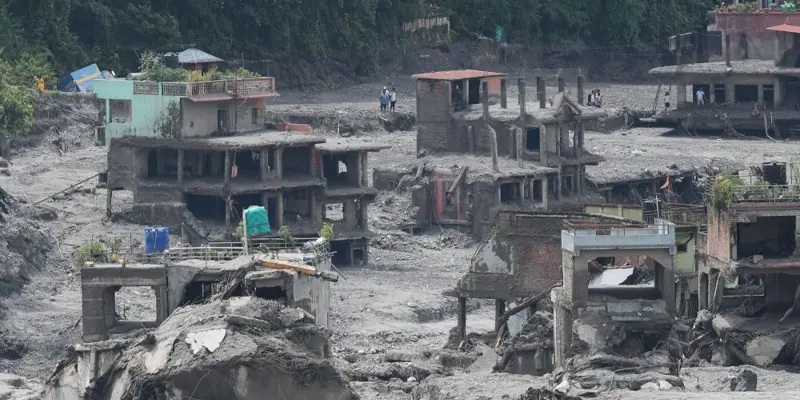

TD KATHMANDU, Nepal — The death toll from devastating flash floods along the Nepal-Tibet border has risen to 675, with more than 2,400 people still missing.
Rescue teams continue searching for survivors and families await news of relatives swept away by the disaster.
The floods struck on Wednesday after what is believed to have been a glacier collapse, sending a huge volume of water downstream.
An aid worker described the sudden surge as resembling a “tsunami.”
The disaster has left communities facing not only the challenge of locating missing people but also the increasingly difficult task of identifying and preserving recovered bodies.
Nepal appeals for international assistance
Nepal’s Foreign Minister has called for a global effort to tackle climate change.

The Minister warned that the country is among those suffering some of the most severe consequences of rising temperatures.
The government is also seeking urgent assistance from foreign countries to help preserve the bodies recovered from the floodwaters.
Health authorities say hundreds of bodies have been recovered downstream.
Many, however, have remained in water for an extended period, creating a serious risk of rapid decomposition.
Officials say Nepal has very limited capacity to keep large numbers of bodies frozen.
The declaration has prompted the government to appeal for international support, including equipment such as freezers.

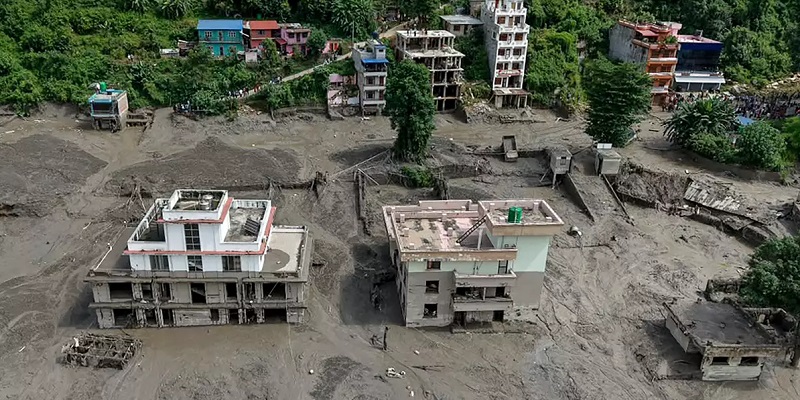
Hundreds of bodies recovered downstream
Shisir Khanal, speaking at a news conference, said “hundreds of bodies have been found downstream.”
“There is a risk of fast decomposition because these bodies have been in water for a long time,” Khanal said.
He stressed the country’s limited capacity to preserve the remains.
Families of the missing—including hundreds of foreign nationals—remain desperate for information about their loved ones.
Authorities are collecting DNA samples and identifying marks from unidentified victims to facilitate eventual identification.
Records are also being maintained detailing where bodies are recovered and, where necessary, where they are buried.

Burials begin amid humanitarian challenge
Burials have already begun in parts of Nepal as authorities struggle to manage the large number of bodies recovered from the disaster.
Nepalese health officials said multiple bodies may need to be buried in the same general area because of the risk of decomposition and infection.
Officials stressed, however, that each victim is being given an individual grave, with identification procedures followed wherever possible.
The bodies are being systematically buried in government, community or forest areas so that relatives who later locate missing family members can identify and recover the remains.
Authorities say international protocols are being followed, including recommendations from the World Health Organization (WHO).
Families face agonising wait
For families whose relatives remain missing, the disaster has created an agonising wait for information.
Officials face the difficult balance of preserving dignity and respecting religious traditions while responding to the immediate public-health challenge posed by the large number of recovered bodies.
Damodar Adhikari, an expert who has worked with the Nepalese government and the WHO, said bodies must be preserved in a manner that allows relatives to identify them and, where required by religious traditions, arrange appropriate cremation.
With the death toll already at 675 and more than 2,400 people unaccounted for, authorities fear the final human cost of the Nepal-Tibet border disaster could rise further.
The catastrophe has also renewed concerns over the vulnerability of Himalayan communities to climate-related disasters.
This is particularly so as rising temperatures increase risks associated with glaciers and unstable mountain environments.