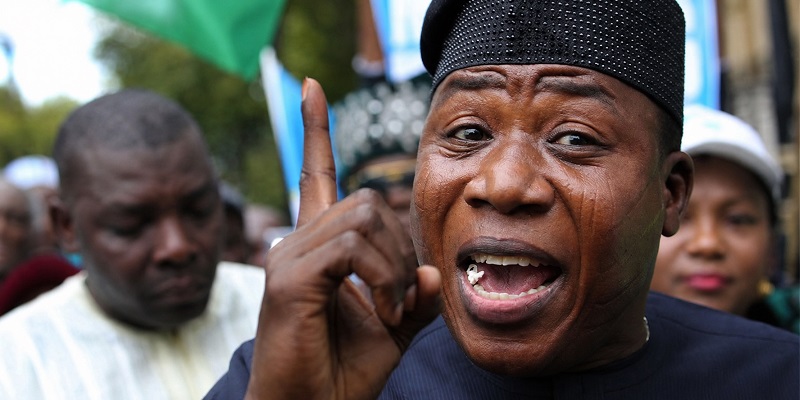
Yoruba activist Sunday Adeyemo, popularly known as Sunday Igboho, has issued a dramatic two-hour ultimatum to Fulani residents in his hometown of Igboho, Oyo State, demanding the immediate release of kidnap victims.
Igboho’s fiery warning comes amid escalating insecurity in the region, including the abduction of dozens of schoolchildren and teachers last month.
Ultimatum and Threats
In a video, Igboho was seen confronting community leaders, accusing Fulani bandits of orchestrating kidnappings in the area.
He declared:
“I will enter your household and kill everybody. You can’t be kidnapping people in my hometown.
“I am Sunday Igboho, and I am from this hometown.”
The activist specifically referenced the killing of a pregnant woman and a man delivering ransom money, incidents that have heightened local anger and fear.
Background of Insecurity
The ultimatum follows the May 15, 2026, abduction of 39 schoolchildren and 7 teachers from three schools in Oriire Local Government Area, Oyo State.

Many of the victims remain in captivity, reportedly held in forested areas such as Old Oyo National Park.
Residents say kidnappings have become routine, with bandits targeting travelers, farmers, and school communities.
The silence of security agencies has fueled frustration, with Igboho’s return from exile in January 2026 reigniting calls for grassroots defense.
Divided Reactions
The video has sparked intense debate online.
Supporters praised Igboho’s boldness, describing him as a defender of Yoruba communities abandoned by the state.

Critics, however, warned that his threats risk inflaming ethnic tensions and could lead to vigilante violence rather than direct action against criminal gangs.
Police authorities have yet to issue a statement on the ultimatum, and by late afternoon no violence or releases had been reported.
Igboho’s Return Legacy, and Implications
Igboho, 53, rose to prominence in 2021 for leading campaigns against herder violence in the Southwest before fleeing abroad following clashes with security agencies.
His return earlier this year has been marked by renewed activism, with many viewing him as a symbol of community resistance amid Nigeria’s worsening security crisis.
The ultimatum underscores the growing vacuum of trust between citizens and state institutions.

As kidnappings persist, activists like Igboho are stepping into roles traditionally reserved for law enforcement.
This has raised questions about the balance between community defense and the dangers of vigilantism.
For now, Igboho’s warning has put the Fulani community in Igboho under intense scrutiny.
Meanwhile, the broader Nigerian public watches closely to see whether his threats translate into action or force authorities to respond decisively to the kidnapping crisis.