
TD“The division between the two professions was well recognised by the end of the 16th century and by the end of the 17th was quite firm…
“While the solicitor spends much of his time trying to keep his clients out of court, there inevitably comes a time when he needs the services of what the Americans call ‘the trial lawyer’.
“In England, this is the barrister….” — Richard du Cann, The Art of the Advocate, 32 (Revised Edition, 1993)
On 20 June 2011, Willy Mutunga assumed office as the first Chief Justice of Kenya under the 2010 Constitution.
A former president of the Law Society of Kenya, Mutunga possessed a doctorate in law and had worked as a law teacher.
He had also lived in internal banishment and was a former political detainee and exile.

He came to the position of Chief Judge from a role in philanthropy as the regional representative of the Ford Foundation in East Africa and was a principal facilitator of the new constitution.
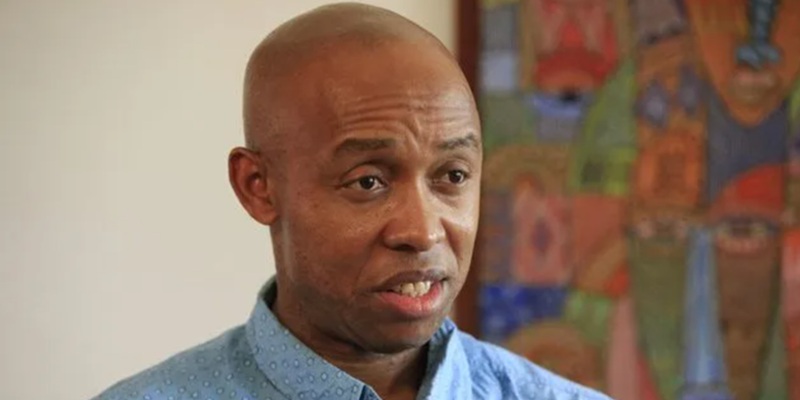
Chief Justice Mutunga’s unusual resume gave him a grounded view of law and its institutions in a post-colonial society.
It also equipped him to try something both necessary and ambitious. Kenya’s institutions of the law had been discredited under the old system.
They desperately needed to be re-fashioned. Chief Justice Mutunga’s arrival in this new role seemed timely.
One of his first tasks was to lead the transformation of the institutions of the law and the judiciary in Kenya.
The process was consultative, involving magistrates, judges, judicial workers, the public, political leaders, the media, communities, citizens, and consumers.

Nearly one year into his tenure, on 31 May 2012, Chief Justice Mutunga launched a four-year-long Judiciary Transformation Framework.
It outlined a set of ideas designed to imbue the institutions of the law and judiciary in the country with the ethos of the new constitution.
The Transformation Framework presented a stark diagnosis of an antediluvian system, out of touch with its people and impervious to change.
In a passage that could be adapted with ease to Nigeria’s institutions of law and the judiciary, Kenya’s Transformation Framework addressed itself to institutions with a “founding history of dominance, power, prestige and remoteness, as opposed to service and equality.
Further, its architecture, rules, dress code and other rituals have uprooted it from social reality.”
The result, the document said, was a legal system perceived by the public as both “alien and insensitive.”

One major aspect of this problem was the “dress and address” of the legal and judicial institutions.
Many an aspiring career in post-colonial law is drawn to it by the attractions of the dressing of lawyers and judges, as well as the manner in which they are addressed.
The original rationales for these were revelatory.
It turns out that among the most compelling of the rationales, there is “a theatrical aspect (that) seeks to impress on laymen”, gives members of the profession “a useful anonymity and conformity”, and seeks to disguise them “to protect them from revenge-seeking defendants.”
In the end, Kenya’s judges voted “to discard the wigs because in their words they are ‘torturous’, ‘colonial relics’, ‘cumbersome’, ‘lack uniformity’, ‘uncomfortable’, and ‘antique.’”
They also voted to re-design the judicial robe and to dispense with “My Lord.” They are now addressed as “Your Honour.” In Kiswahili, that translates into “Mheshimiwa.”
Surprisingly, Kenya’s courts and legal vocation have not collapsed. Instead, they seem to have made progress.
Kenya is not the only country where this change has occurred.
In 2011, the Bar in Punjab and Haryana in India dispensed with addressing the bench as “My Lord” or “Your Lordship”, calling such appellations “relics of the colonial past”.
In June 2022, the Chief Justice of the High Court of Orissa in India, Srinivasan Muralidhar, issued a written notice requiring advocates and court users to “try and avoid addressing the judges of this bench as ‘My Lord’, ‘Your Lordship’, ‘Your Honour’ or with the prefix ‘Hon’ble.
Any form of address consistent with the decorum of the court, including ‘Sir’, should suffice.”
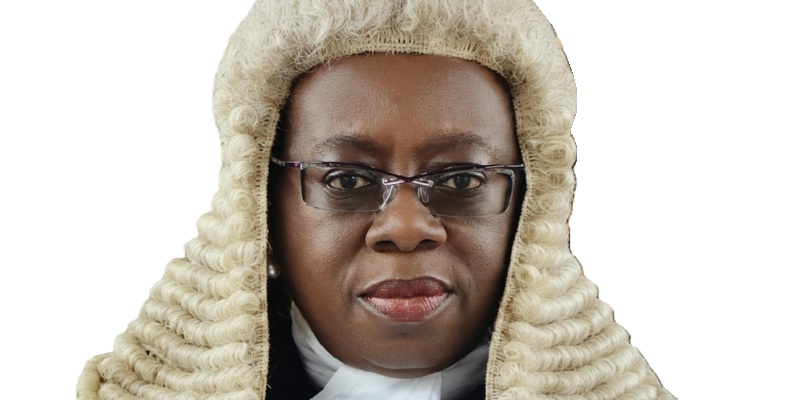
The Chief Justice of Nigeria (CJN) triggered a muted debate on these matters of dress and address in the vocations of the law and the judiciary when she directed the Chief Registrar of the Supreme Court to issue a circular on 13 July 2026 under the title “Prohibition of the Use of the Title ‘Barrister’ as a Prefix to Names.”
In a country in which sundry crooners and Karaoke wannabes of diverse genres self-identify as “Barrister”, the heading of the Chief Registrar’s circular initially seemed ostentatious.
It suggested a magical capacity to – in one swoop – end Nigeria’s fixation with grand prefixes and bland suffixes.
The circular made it clear that it was directed at “official correspondence, records, documents, identity materials, and any other official engagements.”
This begs the question of what an official engagement could be. Does it extend to political rallies, cabinet meetings, or convocation grounds?
The reason given by the CJN is that the use of “Barrister” as a prefix “is inappropriate and inconsistent with the standards of professionalism expected within the Supreme Court.”
The safeguarding of standards in the legal profession is indeed an elevated goal, but there are at least three substantial objections to the circular.
First, it suffers from a crisis of the wrong priorities.
It is evidently piddling to fixate on paraphernalia and prefixes in a country whose legal and judicial vocations suffer terminal tarnish from many more serious ailments.
Second, the circular bore the appearance of a regimental diktat.
The CJN missed an opportunity to undertake an inclusive and consultative process to transform the pointless antiquarianisms that define Nigeria’s legal and judicial processes.
Third, there was a touch of “physician heal thyself” about it.
A judiciary in which even female judges bristle implacably at not being called “My Lord” could have been a suitable point of departure for the Chief Justice’s rebrand.
The prefix that vexes the CJN is itself part of the colonial baggage that she presides over.
The legal profession in England, from where Nigeria borrowed its vocational strait-jackets, has been divided between barristers and solicitors for five centuries.
Christopher Sapara Williams first enrolled at the Inns of Court in England in 1879.
In 1888, he became the first barrister and solicitor of the Supreme Court of Nigeria.
That was 18 years after the foundation of the Law Society of England and Wales and six years before the Bar Council.
In those days, lawyers were rare; transactions were few, and the role of the lawyer was defined by advocacy before the white man’s court.
They became lawyers in Nigeria because they were members of the Bar in England. The appellation “Barrister” easily caught on and held.
In many parts of Nigeria, various neighbourhoods still have different appellations for their local professionals.
From “Dokkie” for the medical doctor to “Deelaw” for the lawyer.
Lawyer and elite footballer, Adokiye Amiesimaka, was famously designated “Chief Justice” by the late football commentator, Ernest Okonkwo, and it stuck.
The CJN cannot possibly presume to abolish those.
In reality, “Barrister” only partly describes what a lawyer is or can do. In that sense, it is somewhat of a misnomer. As such, it is also not a fitting professional title or courtesy.
But that is relatively minor beside the issues that ail Nigeria’s legal profession.
As Richard du Cann writes: “the word ‘advocate’ is applied to both barristers and solicitors in all courts and tribunals other than the Crown Court and the High Court.”
In many parts of East and Southern Africa, lawyers are called “Advocate”.
In South Africa, where the vocation of the law is divided as in England, “Advocate” only refers to those enrolled as barristers.
How we dress and address legal and judicial vocations in Nigeria is important.
But even more important is whether we care to redress the lost mission and ethos of those institutions.
Nigeria’s Chief Justice may have missed an opportunity with her piddling circular, but it is not too late for her to retrieve a sense of direction.
A lawyer and a teacher, Odinkalu can be reached at chidi.odinkalu@tufts.edu