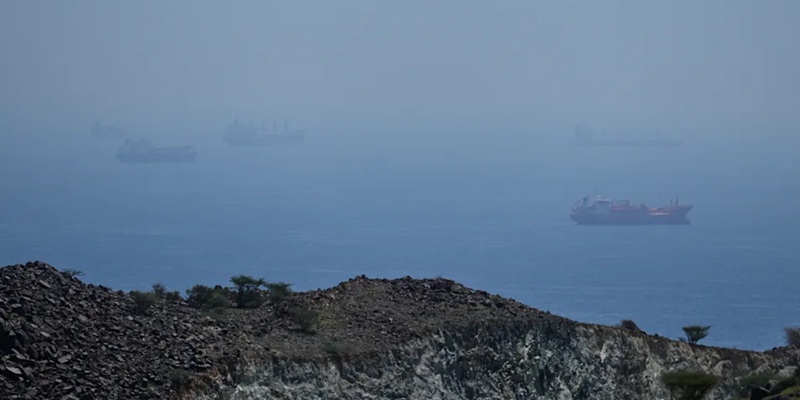

Tensions in the Middle East have sharply escalated after Iran reportedly opened fire on multiple vessels in the strategically vital Strait of Hormuz, raising fresh concerns over global energy security and derailing fragile diplomatic efforts between Tehran and Washington.
According to maritime and regional reports, Iran’s elite Islamic Revolutionary Guard Corps (IRGC) carried out coordinated attacks on three ships navigating the narrow shipping corridor on Wednesday. Two of the vessels were reportedly seized and are being escorted toward Iranian waters, while details surrounding the third ship remain unclear.
The incident marks a significant escalation in a conflict that began on February 28 following joint airstrikes on Iranian targets by the United States and Israel. Since then, more than 30 maritime attacks have been recorded across the region, underscoring the growing risks to international shipping routes.
Strategic Waterway Under Threat
The Strait of Hormuz remains one of the world’s most critical النفط transit chokepoints, with approximately 20% of global oil and natural gas supplies passing through it during peacetime. Any disruption to traffic in the corridor has immediate ripple effects on global markets.
Following Wednesday’s attacks, Brent crude prices surged close to $100 per barrel, reflecting a sharp increase of over 30% since the outbreak of hostilities. Analysts warn that prolonged instability in the strait could lead to sustained spikes in fuel costs, increased inflation, and broader economic disruptions worldwide.
The United Kingdom Maritime Trade Operations (UKMTO) center confirmed that at least two commercial vessels came under fire within a short timeframe, heightening fears among shipping companies and insurers. Many operators are now reconsidering transit routes, potentially leading to supply chain bottlenecks.
Diplomatic Efforts Stall
The attacks come at a critical moment, as efforts to revive diplomatic talks between Iran and the United States appear to be faltering. Donald Trump had earlier announced an indefinite extension of a ceasefire that was due to expire, but simultaneously signaled a continuation of U.S. pressure tactics, including a blockade of Iranian ports.
Iranian officials have responded cautiously. Foreign Ministry spokesperson Esmail Baghaei acknowledged the ceasefire extension but stopped short of confirming Tehran’s participation in a new round of negotiations.
Complicating matters further, U.S. Vice President JD Vance has postponed a planned trip to Pakistan, where talks were expected to resume. Pakistani authorities, including Prime Minister Shehbaz Sharif, had been actively mediating between both sides in an effort to sustain dialogue.
Iran has insisted it will not engage in negotiations while under what it describes as “unacceptable pressure,” particularly referencing the U.S. naval blockade and recent interdictions of Iranian-linked vessels.
Military Posturing Intensifies
Amid the maritime escalation, Iran’s Revolutionary Guard issued a warning that it would deliver “crushing blows” to remaining adversary assets in the region. The rhetoric was accompanied by public displays of missile systems during rallies by hardline supporters of the Iranian government.
Meanwhile, the United States Department of Defense confirmed that U.S. forces recently boarded a sanctioned oil tanker suspected of transporting Iranian crude. Tehran has condemned such actions as violations of international law and the ceasefire framework.
Regional Spillover
The broader conflict continues to impact neighboring countries. In Lebanon, a drone strike reportedly killed one person in the village of Jabbour, despite an existing ceasefire between Israel and Iran-backed Hezbollah. Israel has denied responsibility for the attack, though sporadic violence persists.
Global Implications
Energy experts warn that continued disruption in the Strait of Hormuz could have far-reaching consequences beyond the Middle East. Europe, in particular, faces potential fuel shortages, with officials indicating that jet fuel reserves could be critically low within weeks if supply chains remain constrained.
With both Washington and Tehran maintaining hardline positions, the prospects for renewed negotiations remain uncertain. Analysts caution that without a diplomatic breakthrough, the region could face a prolonged period of instability with significant economic and geopolitical fallout.
As the situation develops, the international community is closely monitoring events, with growing calls for de-escalation to safeguard global trade and energy flows.