TDFresh satellite imagery and video analysis by BBC Verify has revealed that Iranian strikes have damaged at least 20 US military sites across the Middle East since the war began in late February.

This suggests the scale of Tehran’s counter‑attacks is far greater than publicly acknowledged.
Extent of the Damage
The facilities hit span eight countries—Saudi Arabia, the United Arab Emirates (UAE), Qatar, Kuwait, Iraq, Jordan, Bahrain, and Oman.
Analysts caution the true figure could be higher, with some estimates placing the number of bases struck at 28.
Among the most significant losses are three Terminal High Altitude Area Defense (THAAD) batteries at Al Ruwais and Al Sader airbases in the UAE and Muwaffaq Salti Airbase in Jordan.
Each battery costs around $1 billion to manufacture and requires a crew of 100 troops to operate.
Vice‑Admiral Mark Mellett, former head of the Irish Defence Forces, described them as the “core of a highly complex regional defence network that cannot be quickly or easily replaced.”
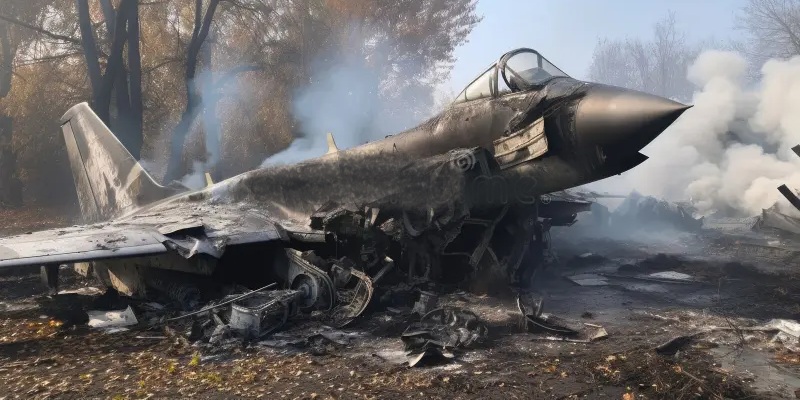
Iranian strikes also heavily damaged US refuelling and surveillance aircraft at Prince Sultan Airbase in Saudi Arabia, with satellite images showing smoking craters and destroyed planes.
One of the aircraft identified was an E‑3 Sentry surveillance plane, valued at up to $700 million.
Broader Impact
Other facilities hit include Ali Al Salem Airbase and Camp Arifjan in Kuwait, where analysts identified destroyed fuel storage bunkers, aircraft hangars, troop accommodation, and satellite communications hardware.
The Pentagon has estimated the total cost of Operation Epic Fury at $29 billion, much of it likely to cover repair and replacement of equipment destroyed in the conflict.
The report also found that at least 42 aircraft—including F‑15 and F‑35 fighter jets, 24 MQ‑9 Reaper drones, and an A‑10 attack plane—have been destroyed or damaged since February.
Iran’s Strategy
Iran’s Supreme Leader Mojtaba Khamenei has sought to highlight these strikes as proof of American vulnerability. In a statement, he declared that the Middle East was “no longer a safe place for American bases.”
Experts say Tehran’s tactics have evolved rapidly. Dr. Kelly Grieco of the US‑based Stimson Centre explained:
“Iran’s opening salvos were optimised for volume—mass waves designed to overwhelm air and missile defences.
“Within days, however, Iran shifted to smaller, more precisely targeted salvos, conserving missiles and drones for high‑value targets.”
Analysts at MAIAR noted that US forces appeared “guilty of early‑war complacency,” failing to move aircraft out of range even after bases like Prince Sultan had already come under fire.
US Response and Restrictions
The Pentagon claims it has struck more than 13,000 targets in Iran since the start of Operation Epic Fury, but officials declined to comment on BBC Verify’s findings, citing “operational security reasons.”
In an effort to limit public analysis, the US requested satellite provider Planet to impose an indefinite restriction on new imagery of Iran and much of the Middle East.
BBC Verify relied on other international providers and older Planet images to track the damage.
Ceasefire Under Strain
The revelations come as the fragile US‑Iran ceasefire faces renewed strain. Iran’s Islamic Revolutionary Guard Corps (IRGC) claimed fresh strikes on an American base last Thursday, following US attacks on southern Iran.
Khamenei vowed that “the nations and lands of the region will no longer serve as shields for American bases,” warning that America would “drift further from its former position.”
Dr. Grieco cautioned that if fighting resumes, US facilities across the Gulf could be highly vulnerable: “
The current conflict has consumed US and partner air defence stocks at a significant rate.
“There is no rapid path to replenishment, meaning any renewed Iranian assault would be met with far fewer interceptors than at the start of the war.”
Conclusion
While Washington has portrayed Iran’s military as nearly destroyed, satellite evidence paints a different picture: Tehran’s counter‑attacks have been precise, extensive, and costly for the US.
With billions already spent on repairs and replacements, and dozens of aircraft lost, the war has exposed vulnerabilities in America’s regional defence network.
As ceasefire talks falter and Iran vows to escalate, the question remains whether the US can sustain its military presence in the Middle East—or whether Iran’s evolving tactics have permanently altered the balance of power.
This report weaving together the verified satellite analysis, expert commentary, and geopolitical context.