TDA renewed debate over the events surrounding Nigeria’s January 15, 1966 military coup has emerged following the circulation of a controversial commentary arguing that the coup was neither an “Igbo coup” nor solely orchestrated by military officers of Igbo extraction.

The writer contends that the widely held narrative portraying the coup as an ethnic conspiracy against Northern leaders is historically inaccurate.
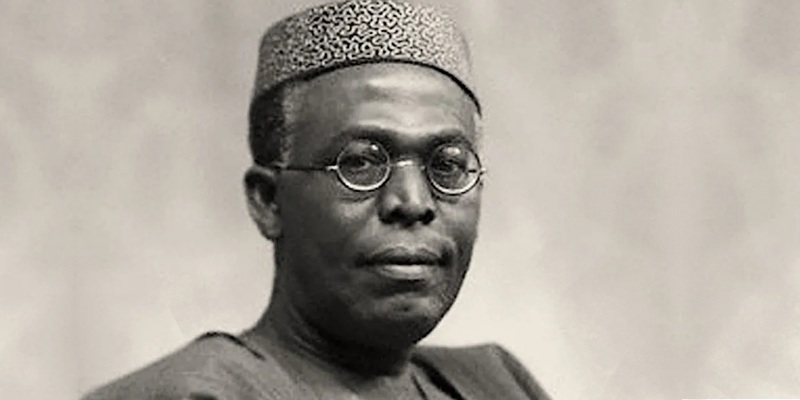
Instead, the article advances the controversial claim that late nationalist and former Western Region Premier, Obafemi Awolowo, was the principal beneficiary and alleged mastermind behind the coup that overthrew Nigeria’s First Republic.
According to the commentary, the political circumstances leading to the coup stemmed from the bitter rivalry between Awolowo and the Northern People’s Congress-led federal government headed by Abubakar Tafawa Balewa and supported by Ahmadu Bello.
The author argues that because Nigeria’s ceremonial President at the time, Nnamdi Azikiwe, was from the South East, there was little political incentive for Igbo politicians to eliminate Balewa.
The article further claims that the coup plotters targeted individuals perceived as political opponents of Awolowo rather than pursuing an ethnic agenda.
Central to the argument is the role of Major Chukwuma Kaduna Nzeogwu, who led the coup operation in Kaduna.
The writer maintains that Nzeogwu’s background in Northern Nigeria and the former Midwestern Region complicates attempts to portray him solely as an Igbo nationalist.
The article also alleges that Awolowo, who was imprisoned for treason-related charges before the coup, stood to benefit politically from the overthrow of the civilian government.
It points to his subsequent appointment as Vice Chairman of the Federal Executive Council under the military administration of Yakubu Gowon as evidence supporting that theory.
However, most mainstream historical accounts do not conclusively establish that Awolowo planned the coup.
Historians remain divided over the motivations of the coup plotters, the extent of civilian involvement, and whether the operation was driven by ethnic, ideological, or anti-corruption objectives.
The January 15, 1966 coup resulted in the deaths of Prime Minister Balewa, Northern Premier Ahmadu Bello, Western Premier Samuel Ladoke Akintola, Finance Minister Festus Okotie-Eboh and several senior military officers.
The aftermath of the coup triggered political instability, a counter-coup in July 1966, widespread ethnic violence, and ultimately the Nigerian Civil War.
The latest commentary emerged amid contemporary political debates, with the author criticizing attempts by some commentators to link the actions of the 1966 coup plotters to present-day political figures and communities from the Southeast.
More than six decades later, the January 15 coup remains one of the most contested events in Nigerian history.
Scholars, political commentators, and former participants continuing to disagree over its causes, beneficiaries, and long-term consequences.