





 Abuja, FCT — The Independent National Electoral Commission (INEC) has acknowledged concerns over suspected artificial intelligence-generated photographs appearing in Nigeria’s preliminary Register of Voters, saying questionable registration records had been identified and flagged for further examination.
In a press statement issued on Tuesday, October 27, 2026, the commission said it had commenced a review of the suspicious records and would take appropriate corrective action based on verified findings.
The clarification follows public concerns circulating on social media over photographs suspected to have been generated using artificial intelligence.
The photographs were associated with multiple entries in the preliminary voters’ register published online.
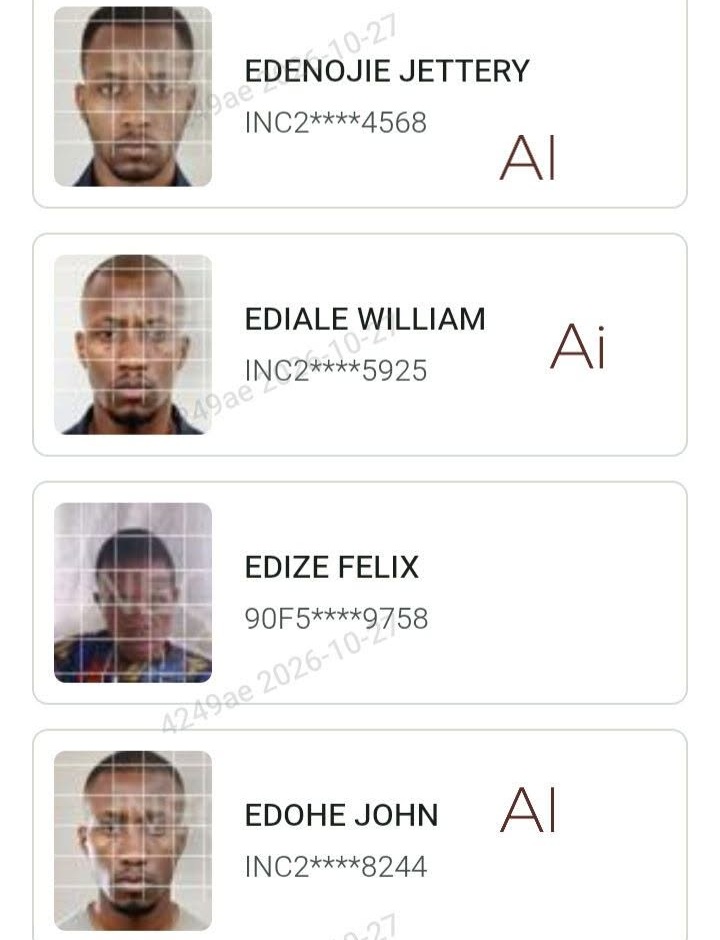
INEC said the online register, published on October 26, was the same preliminary register physically displayed at Registration Areas nationwide from October 9 to 15 as part of its Display, Claims and Objections exercise.
The commission explained that the online version represented the original preliminary register, not incorporating all the data-cleanup activities already under way.

INEC Confirms Questionable Records Were Flagged
According to the commission, some questionable registration records were identified during the physical display exercise and flagged for further examination.
INEC said it had begun reviewing the records and would implement appropriate corrections in accordance with established procedures.
The commission also disclosed that it was examining the circumstances surrounding the suspicious photographs.
This includes possible technical or procedural lapses that might have allowed them to appear in the register.
However, the statement did not identify the affected records and did not disclose how many questionable entries had been detected.
It did not also establish whether the photographs were conclusively generated by AI.

It also did not state whether the suspected irregularities resulted from deliberate manipulation, technical failures, weaknesses in verification procedures or other causes.
The commission said further action would depend on the outcome of its examination.
Online Register Is Not the Final Certified Version
INEC stressed that the preliminary Register of Voters published online should not be confused with the final certified register.
It said the Display, Claims and Objections exercise was designed to enable citizens and stakeholders to scrutinise the register.
It will also enable citizens and stakeholders to identify inaccuracies and irregularities and facilitate corrections before certification.
The commission’s explanation means that the presence of questionable entries in the preliminary register does not, by itself, establish that those entries will remain in the final register.

Nevertheless, the discovery of suspicious photographs raises questions about the effectiveness of the systems and procedures used to verify voter information before publication.
The outcome of INEC’s review will be important in determining the nature and extent of the problem and whether additional safeguards are required.
INEC Promises Corrective Action
In the statement signed by Mohammed Kudu Haruna, Chairman of INEC’s Information and Voter Education Committee, the commission welcomed the vigilance of citizens and stakeholders who brought the concerns to public attention.
INEC said public scrutiny contributes to improving the accuracy and integrity of the voters’ register.
The commission assured Nigerians that verified irregularities would be addressed through applicable procedures and promised further updates as the review progresses.
It also reaffirmed its commitment to completing the verification, adjudication and data-cleanup processes ahead of the scheduled certification of the final Register of Voters on December 15, 2026.
Electoral Transparency Under Scrutiny Ahead of 2027
The controversy has placed renewed attention on the integrity of Nigeria’s voters’ register ahead of the 2027 general elections.
An accurate register is central to credible elections because it helps establish who is registered to vote and supports the administration of the electoral process.
Suspected duplicate or artificially generated photographs warrant investigation.
However, establishing whether they correspond to fictitious voter identities requires examination of the underlying registration records and verification data.
The latest statement by INEC acknowledges that questionable records exist and are being reviewed.
It does not, however, establish that the commission deliberately used AI to fabricate voter identities.
The commission will now face scrutiny over whether it:
- can identify the affected records,
- explain how the suspicious photographs entered the preliminary register, and
- demonstrate that any confirmed irregularities have been corrected before certification.
The key test will be whether INEC’s review produces transparent and verifiable findings.
It will also ensure that the final voters’ register accurately reflects eligible registered voters ahead of the 2027 elections.