


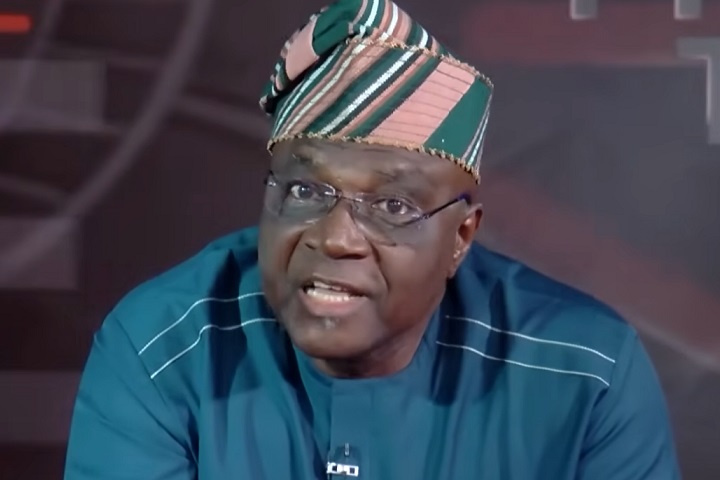

TDThe Special Adviser to President Bola Tinubu on Information and Strategy, Bayo Onanuga, has sparked debate after stating that he does not see the level of hunger frequently described by many Nigerians and critics of the Federal Government.
Onanuga made the remarks while speaking during an interview on Arise Television.
He defended the Tinubu administration’s economic policies, arguing that several government programmes and infrastructure projects are already improving the lives of citizens across the country.
He cited projects such as newly constructed roads, the Lagos-Calabar Coastal Highway, the Federal Government’s student loan scheme, and low-interest credit facilities for civil servants.
According to him, such projects demonstrate that government policies are yielding positive results.
He cited his personal experience travelling on newly completed roads and reduced travel times in Lagos as examples of the benefits Nigerians are receiving.

Onanuga questioned the widespread narrative of severe hunger, saying many citizens are benefiting from government interventions.
He argued that public discussions often focus on negative assumptions while overlooking ongoing developments and economic support programmes.
The presidential spokesman also pointed to the student loan initiative.
He describing it as a major relief for families with children in tertiary institutions, while highlighting access to single-digit interest loans for civil servants.
While acknowledging that Nigerians face economic challenges, Onanuga maintained that his personal interactions with workers and people around him do not reflect the scale of hardship often portrayed in public discourse.
His remarks have since generated mixed reactions amid ongoing concerns over inflation, rising food prices and the cost of living across the country.

The comments come as the Tinubu administration continues to defend its economic reforms.
Such reforms including the removal of fuel subsidies and other policy measures.
Tinubu’s government officials insist are necessary for long-term economic stability despite the short-term hardships experienced by many Nigerians.