TD Human rights lawyer and former Chairman of Nigeria’s National Human Rights Commission, Chidi Odinkalu, has raised concerns over a controversial judgment-related development at the High Court of Imo State, alleging that a Certified True Copy (CTC) of a judgment differed from the decision delivered in open court.
Odinkalu’s concerns followed a ruling by Justice S.I. Okpara of the High Court of Imo State, Orlu Judicial Division, delivered on 21 July 2026, in Suit No. HOR/98/2019 involving Hon. Chief Athanasius Uche Ogoh and the Governor of Imo State, among others.
According to the Certified Copy of the ruling obtained by This Dawn News, the dispute centres on a judgment delivered by Justice M.E. Nwagboso on 24 June 2025.
Dispute over judgment delivered in open court
The applicant, Chief Athanasius Uche Ogoh, subsequently brought an application seeking, among other reliefs, an order setting aside the document purported to be the Certified True Copy of the judgment delivered by Justice Nwagboso.
The application also sought an order directing Justice Nwagboso to produce the actual judgment delivered and read in open court on 24 June 2025.
Justice Okpara’s ruling records that the applicant presented evidence which, in the court’s assessment, indicated that the record book of the court had been doctored.

The ruling further states that the Certified True Copy of the judgment issued on 23 July 2025 was not the judgment delivered and read by Justice Nwagboso on 24 June 2025.
The court therefore found the disputed CTC to be a nullity.
Justice Okpara stated:
“This Court rules that the said Certified True Copy of the judgment i.e. exhibit B or exhibit 1 is a nullity.”
The court consequently ordered that the Certified True Copy issued on 23 July 2025 be set aside for being a nullity.
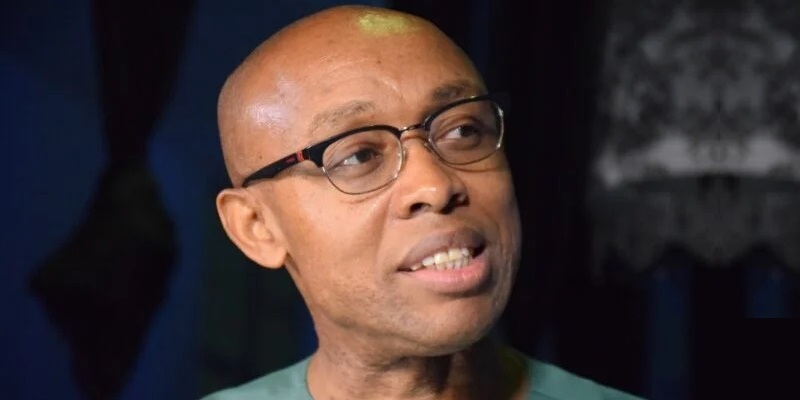
Odinkalu questions what should happen next
Reacting to the development, Odinkalu described the case as “truly incredible.”

According to him, Justice Nwagboso had delivered a judgment in open court on 24 June 2025 in a manner that was allegedly unfavourable to the Governor of Imo State.
Odinkalu alleged that when the Certified True Copy of the judgment was subsequently released, its contents had changed and were instead favourable to the Governor.
He further alleged that the party who had prevailed in the original judgment approached the court seeking to have the disputed CTC set aside.
“The original winner applied to have the CTC set aside,” Odinkalu wrote, adding that the court ordered the production of the court’s record book and allegedly found the original judgment notes concealed.
The court document supplied to This Dawn News does support the central finding that Justice Okpara considered evidence indicating that the court record had been doctored and that the CTC issued on 23 July 2025 did not represent the judgment delivered on 24 June 2025.
However, the ruling does not itself make a finding that Justice Nwagboso personally altered the judgment or concealed the original notes.

Indeed, Justice Okpara expressly refused the applicant’s second prayer seeking an order directing Justice Nwagboso to produce the original judgment, holding that Justice Nwagboso was neither a party to the substantive suit nor a party to the application.
Court distinguishes a nullity from an appeal
Justice Okpara’s ruling also made an important legal distinction between challenging the correctness of a judgment through an appeal and challenging something that is alleged to be a nullity.
The court relied on judicial authorities including Obimonure v. Erinosho & Anor (1966) and Ikokwu v. Asset Management Corporation of Nigeria (2017) in addressing the circumstances under which a court can set aside a purported judicial act considered a nullity.
After considering the evidence and authorities, Justice Okpara concluded that the disputed CTC was not the judgment delivered in open court and therefore could not stand.
Calls for accountability
The development has raised questions about the integrity of judicial records and the safeguards surrounding the preparation and certification of court judgments.
Odinkalu ended his intervention with a pointed question:
“What should happen to Justice Nwagboso?!”
That question, however, goes beyond what Justice Okpara decided in the ruling.
The ruling set aside the disputed CTC; it did not sanction, remove or convict Justice Nwagboso of misconduct.
Any determination of whether Justice Nwagboso personally bears responsibility for an alteration, concealment or substitution of a judgment would require a separate investigation establishing who prepared the disputed document, who had custody of the relevant records, how the discrepancy occurred and who, if anyone, authorised or participated in it.
A troubling issue for judicial credibility
The case nevertheless presents a serious issue for public confidence in Nigeria’s justice system.
A Certified True Copy of a judgment is expected to accurately reflect what the court delivered.
If a court subsequently determines that a purported CTC does not represent the judgment actually delivered in open court, the circumstances surrounding that discrepancy warrant careful institutional scrutiny.
Among the questions arising from the ruling are:
- Who prepared the disputed Certified True Copy?
- How did it come to differ from the judgment delivered in open court?
- Who had custody of the original judgment and court records?
- What does the court’s reference to a “doctored” record mean in the circumstances of the case?
- Was the discrepancy caused by an administrative error, misconduct or deliberate alteration?
- Who should investigate the circumstances?
- Should the matter be referred to the appropriate judicial disciplinary authorities?
For now, the legally established position from the ruling is that the Certified True Copy issued on 23 July 2025 was set aside as a nullity because Justice Okpara found that it was not the judgment delivered by Justice Nwagboso on 24 June 2025.
The larger question of responsibility—and whether anyone should face disciplinary or other consequences—remains a matter for competent authorities to investigate and determine on the evidence.
This Dawn News will continue to follow the case and any subsequent action arising from Justice Okpara’s ruling.