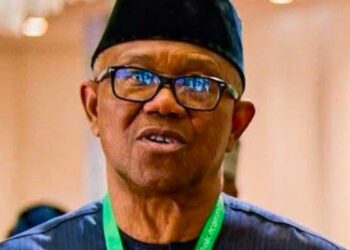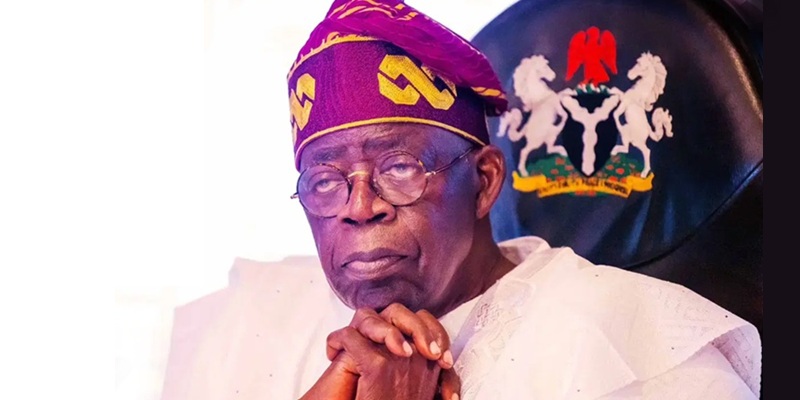
TDThe conversation around symbolic public actions—such as those associated with Pat Utomi—should not distract from the far more pressing issue confronting Nigerians today: the economic direction of the country under President Bola Ahmed Tinubu and its impact on everyday life.

Since the current administration assumed office, Nigerians have experienced a sharp decline in economic stability.
Key policy decisions, including the removal of fuel subsidies and the liberalization of the foreign exchange market, were presented as necessary reforms to stabilize public finances and attract investment.
However, for the average Nigerian, these measures have translated into soaring fuel prices, a weakened Naira, and a dramatic rise in the cost of living.
The effects are visible everywhere. Households are stretching already thin incomes to cover basic needs food, transportation, school fees, and rent.
Savings are being depleted at an alarming rate, while many are forced to borrow simply to survive.
Rather than easing hardship, the current policy environment appears to have intensified it, pushing more citizens into financial deep ends.
There is also a growing perception that the benefits of these policies are unevenly distributed.
While ordinary Nigerians struggle, those within political circles or close to power are seen as thriving.
This perception erodes public trust and fuels the belief that governance is increasingly disconnected from the realities of the masses especially in the case of this administration.
Claims of increased government revenue or “tax savings” offer little reassurance when they are not reflected in improved living conditions or visible public services.
Concerns about fiscal management further deepen this skepticism.
Nigeria continues to rely heavily on borrowing, not necessarily for transformative infrastructure or productive investments, but often to meet recurrent expenditures.
This raises questions about sustainability and whether the country is building a foundation for long-term growth or merely postponing deeper economic challenges.
Taxation policies have also come under scrutiny.
Many Nigerians feel that the burden of revenue generation is falling disproportionately on ordinary citizens and small businesses, while large-scale benefits appear to accrue to a select few.
Reports and public statements such as those attributed to industrial leaders like Aliko Dangote have intensified debate about the structure and fairness of government levies.
This is particularly so in key sectors like manufacturing where government is taking 5% of every Naira on items like a bag of cement, cost which is always passed on to the consumer who is at the lower end of the totting pole.
At the heart of the issue is a fundamental question: has governance improved the daily life of the average Nigerian? For many, the answer remains no!
A simple survey of citizens across markets and streets would likely reveal widespread dissatisfaction, with many stating that their quality of life has worsened compared to previous years.
Government interventions, such as the distribution of food items, are often viewed as short-term relief rather than sustainable solutions.
While such measures may provide temporary support, they do not address the structural issues driving economic hardship.
Long-term solutions require policies that stabilize prices, create jobs, support local production, and ensure that economic growth is inclusive, none of which we see with this government.
Ultimately, leadership must be judged by outcomes, not intentions.
The responsibility for the nation’s economic direction rests squarely with the presidency.
Accountability is not optional; it is essential, and a must.
Nigerians are not merely asking for reforms; they are demanding results that translate into tangible improvements in their daily lives.
In this context, voices like Pat Utomi play an important role.
Public criticism and civic engagement are vital components of a functioning democracy.
If anything, more voices not fewer—are needed to demand transparency, accountability, and people-centered governance.
The stakes are high. Nigeria cannot afford a widening gap between policy promises and lived reality.
Until meaningful improvements are felt by the average citizen, the debate will—and should—continue, and yes, Pat Utomi and others like him out there, please speak on.
Christopher Wenegieme (MSHC)