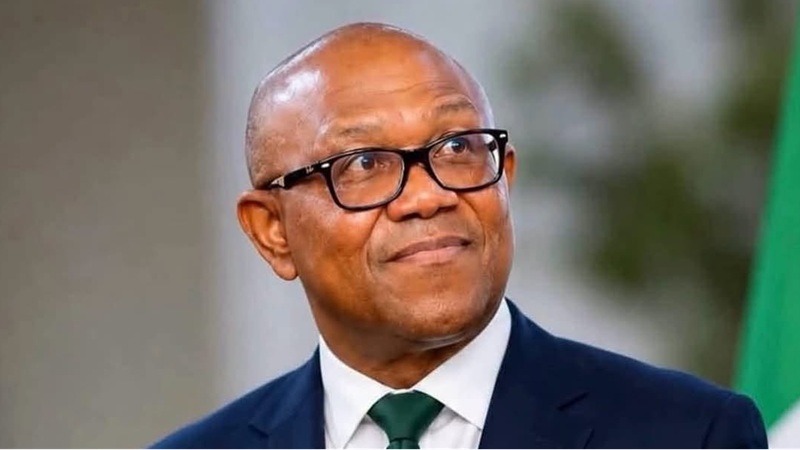

 Mr. Peter Obi says his administration made education a central part of its development strategy while he governed Anambra State.
In the third instalment of his “Nigerians, Go and Verify” series, the former governor describes investments spanning primary schools, secondary schools, technical colleges, universities, and adult education.
Obi says his government returned mission and privately owned schools to their original proprietors while continuing public support.
He says the state provided billions of naira for rehabilitation and maintained responsibility for teachers’ salaries and infrastructure.
According to Obi, a World Bank-commissioned study led by economist Paul Collier examined the arrangement and recommended it as a model for other states.
He also disputes claims that his administration failed to build schools, saying it constructed five-classroom blocks in nearly all 177 communities.

Obi says his government renovated hundreds of schools, including Comprehensive Secondary School in Onitsha and Oraukwu Grammar School.
He presents the programme as a partnership in which government funding and non-government school ownership could work together to expand access.
Technology, Facilities and Teacher Support
Obi says Anambra distributed about 40,000 computers to schools, including more than 22,500 HP laptops, and established Microsoft Academies.
He says more than 500 secondary schools received internet connectivity, alongside libraries, generators, boreholes, and sports support.
The former governor attributes praise for the technology programme to executives from HP, Microsoft Nigeria, and Galaxy Backbone.
He says public secondary schools received buses and that ₦525 million went directly to schools for sick bays and dispensaries.

Obi also says principals received intervention funds to address erosion and other urgent infrastructure problems.
He recounts making personal, sometimes unannounced visits to secondary schools, inspecting facilities and speaking with students.
On staffing, Obi says his government recruited 2,000 primary teachers and 7,000 secondary teachers, including special-subject instructors.
He says provisions were made for two years of their salaries, while promotions, allowances, pensions, and gratuities were addressed.
The former governor says outstanding teachers and principals were also recognised and rewarded.
Technical and Higher Education Projects
Obi says his administration renovated and re-equipped government technical colleges in Onitsha, Nkpor, and Umuchu.

He says it also strengthened adult education, market schools, vocational programmes, and 53 schools serving nomadic and migrant communities.
At Chukwuemeka Odumegwu Ojukwu University, Obi says more than 40 projects were built or completed during his tenure.
He lists faculty buildings, laboratories, workshops, hostels, an e-learning and research centre, roads, and water infrastructure among them.
Obi says the state released ₦5 billion for university infrastructure and facilitated two 250-bed hostels through the Central Bank of Nigeria.
At Nwafor Orizu College of Education, he cites new classrooms, lecture halls, staff offices, and an auditorium, alongside accreditation support.
He says about 15 buildings were constructed at the College of Agriculture, Mgbakwu.
Obi also says his administration built the Chukwuemeka Odumegwu Ojukwu Teaching Hospital from scratch, constructing more than 25 buildings.
Support for Institutions and Students
Obi says assistance extended beyond institutions owned by the state government.
He says Madonna University, Paul University, Tansian University, and Peter University each received grants of about ₦100 million, as well as vehicle support.
The former governor also describes a policy that awarded ₦1 million to Anambra indigenes graduating with First Class degrees.
He says more than 500 graduates benefited and that some have told him the award helped fund further education.
Obi frames the grants and awards as recognition of education’s broader role in developing people, regardless of institutional ownership.
He says mission, private, and community-owned schools should receive attention because they also educate Nigerian children.
The former governor argues that public responsibility for education should not depend solely on who owns a school.
Obi Cites Results and Pledges National Priorities
Obi says Anambra improved its performance in examinations including WASCE, GCE, NECO, and JAMB during his administration.
He says schools in the state have continued to win local and international awards, which he links to sustained investment and supervision.
The claims form part of Obi’s argument that education spending can create lasting benefits beyond one administration.
He says his support for education continued after leaving office through donations, classroom construction, and learning materials.
Obi says that, if elected president, he would prioritize accountability across education agencies and require clear accounting of taxes and other education revenues.
He says his proposed support would include government, mission, private, and community schools.
“Education must become a genuine national priority,” Obi writes, arguing it should extend beyond annual budget speeches.
He says the next instalment in the series will address his administration’s work in the health sector.