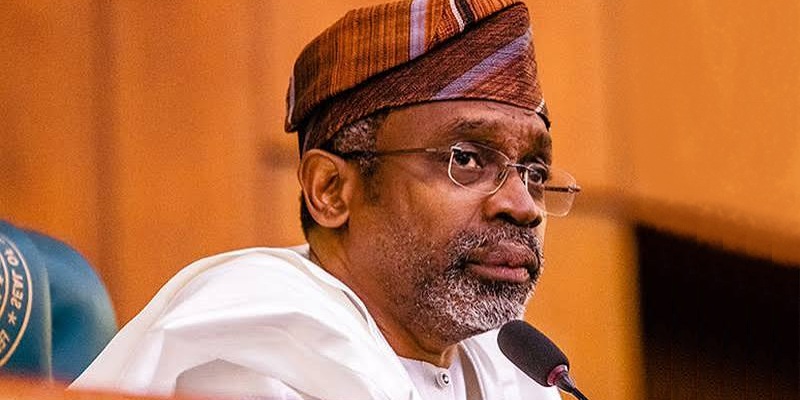
TDNigeria’s budgetary system has once again come under scrutiny following revelations about the Presidential Foreign Intervention Promotion Council (PFIPC) scandal involving the Chief of Staff to President Bola Ahmed Tinubu, Hon. Femi Gbajabiamila, and Prince Adeniyi Adeyemi.
Independent research into budget documents from 2019 to 2026 by Enitan Bello has uncovered how a dormant Buhari-era institution, the Presidential Economic Advisory Council (PEAC), was exploited to insert a suspicious budget code worth over N1.3 billion into the 2026 Appropriation Act.
The findings raise serious questions about oversight, accountability, and the integrity of Nigeria’s financial governance.
This report presents a detailed account of the scandal, tracing the origins of the borrowed name.
It analyzed budgetary evidence, examining the role of civil servants, and highlighting unanswered questions that demand urgent investigation.
Part 1 — Origins of the Name
The controversy begins with the name Presidential Economic Advisory Council.

Contrary to popular belief, this was not a creation of President Bola Tinubu.
Tinubu’s economic body is the Presidential Economic Coordination Council (PECC), established in March 2024 and inaugurated in July 2024.
Tinubu himself was the chairman alongside prominent figures such as Aliko Dangote, Tony Elumelu, the Senate President, and the Governors Forum Chairman.
The PEAC, however, was created by former President Muhammadu Buhari in September 2019 to replace the Osinbajo-led Economic Management Team.
It had real members, including Prof. Doyin Salami, Charles Soludo, and Bismark Rewane, and functioned as a legitimate advisory body.
When Tinubu introduced the PECC in 2024, the PEAC was never formally dissolved.

No gazette revoked it, and no Budget Office circular erased its institutional identity.
It simply went dormant — a status that, in Nigeria’s bureaucratic system, is not equivalent to deletion.
This dormant identity became the perfect camouflage for what followed.
Part 2 — Budgetary Evidence
A review of Nigeria’s appropriation acts reveals a striking anomaly.
The PEAC does not appear in the 2024 or 2025 budgets. Budget code 0111062001 is absent in both years.
However, in the 2026 Appropriation Act, signed into law by President Tinubu on April 17, 2026, the code suddenly appears under the title Presidential Economic Advisory Council / Presidential Foreign Intervention Promotion Council.

The allocation totaled N1,302,978,784, broken down as follows:
- Personnel costs: N802,978,783 (including N573 million in salaries)
- Overhead: N200,000,001
- Capital: N300,000,000 under Research and Development
The capital allocation was detailed across ten program lines, including N182.5 million for logistics for the World Investment Summit 2026, funding for a Harvard Program on Negotiation, WTO trade negotiation courses, and strategic investment management training.
This was not a vague placeholder, but a fully populated budget submission written in precise bureaucratic language.
Crucially, this code did not exist under Buhari and was not carried forward.
It was created fresh during the September–December 2025 budget preparation window — the same period when Adeyemi, the central figure in the scandal, was arrested and charged.
Part 3 — The Borrowed Name
The choice of name was deliberate.
Whoever inserted budget code 0111062001 borrowed the Buhari-era PEAC title, leveraging its institutional history to avoid suspicion.
A budget reviewer encountering the name would likely assume it was legitimate, given its past existence.
The Presidency’s July 1 statement dismissed both PEAC and PFIPC as fictitious entities.
Yet, Bello’s research shows that PEAC was not fictitious; it was real, albeit dormant.
By pairing it with PFIPC, the perpetrators created a hybrid entity that appeared credible enough to pass review but obscure enough to escape scrutiny.
Part 4 — Civil Servants and the OAGF Trail
Court documents and Premium Times reporting add another disturbing dimension.
In April 2025, Adeyemi wrote to the Office of the Accountant General of the Federation (OAGF) requesting staff deployment to PFIPC.
By August 28, 2025, three senior civil servants — Ojo Victor (Assistant Chief Accountant), Omeh Amarachukwu (Internal Auditor), and Wakili Saidu (Audit Department) — were officially posted to the agency.
Their posting letters were published on the OAGF’s website.
Yet, upon resuming duty, they were given no assignments, no documentation, and no mandate.
Testimonies reveal their confusion:
- Ojo Victor: “I have not been documented, and no schedule has been given to me since my assumption, which I find very strange.”
- Wakili Saidu: “Since then, there has been no correspondence between me and the DG.”
- Omeh Amarachukwu: “I only go to work once a week, the reason being that we have nothing to do since we were posted there.”
This episode demonstrates how a fake agency successfully processed staff deployment requests through official channels, exposing systemic weaknesses in Nigeria’s administrative checks.
Part 5 — Timeline of Events
- Sept 2019: Buhari creates PEAC.
- Mar 2024: Tinubu creates PECC; PEAC remains dormant.
- Apr 2025: Adeyemi writes to OAGF requesting staff deployment.
- May–Jun 2025: Adeyemi meets lawmakers and hosts Chinese delegation.
- Aug 28, 2025: Civil servants posted to PFIPC.
- Sept–Dec 2025: Budget code 0111062001 inserted.
- Oct 2025: Adeyemi hosts foreign ambassadors; later arrested.
- Nov 2025: Eight-count charge filed.
- Dec 2025: Tinubu presents 2026 Appropriation Bill with code intact.
- Apr 2026: Tinubu signs Appropriation Act into law.
Unanswered Questions
Despite the revelations, critical questions remain:
- Who submitted the budget proposal for code 0111062001?
- Why did the OAGF approve staff deployment without verifying the agency’s existence?
- Who allocated office space and issued a .gov.ng domain?
- What do GIFMIS expenditure records show for the N1.3 billion allocation?
- Who are Femi and Anu, the co-defendants still at large?
The PFIPC scandal is not the work of a lone fraudster.
It reflects systemic vulnerabilities in Nigeria’s governance, where dormant institutions can be exploited, budget codes inserted, and civil servants deployed to fictitious agencies without scrutiny.
With Adeyemi’s trial ongoing, the scandal underscores the urgent need for transparency, stronger institutional checks, and accountability at the highest levels of government.