





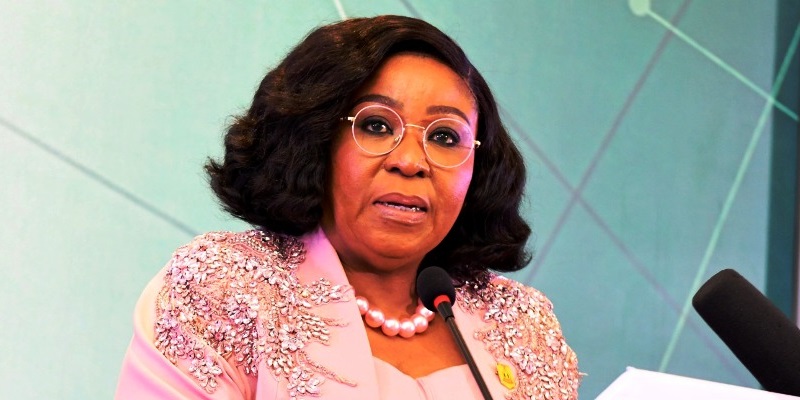
TD Abuja, FCT — Nigeria’s Head of Service of the Federation, Esther Walson-Jack, has told a House of Representatives committee that the office space at the Federal Secretariat allegedly used by the Presidential Foreign Intervention Promotion Council (PFIPC) was never allocated to the agency.
Instead, she confirmed, the space was officially assigned to the Office of the Secretary to the Government of the Federation (OSGF) in November 2023.
Her testimony has intensified scrutiny of PFIPC, an entity now at the center of a scandal involving its purported head, Adeniyi Adeyemi.
Adeyemi is accused of forging documents to run the council.
Despite lacking legal recognition, PFIPC reportedly secured a 2026 federal budget line of over ₦1.3 billion and obtained recruitment waivers.
The development has raised questions about how a disowned body was able to function within government structures.

Testimony Before Lawmakers
Walson-Jack explained that the allocation of office spaces in the Federal Secretariat is strictly managed by her office.
She categorically denied granting any space to PFIPC.
She noted that the location cited as its headquarters was part of the offices assigned to the OSGF.
“The office of the Head of the Civil Service of the Federation did not allocate any office space to the PEAC-PF-ICP.
“The office space indicated as the council’s physical address in the Federal Secretariat Phase Three is part of the office spaces allocated to the Office of the Secretary to the Government of the Federation,” she stated.
Her remarks cast doubt on PFIPC’s legitimacy and reinforce suspicions that the council operated without official sanction.

How PFIPC Operated
Despite lacking formal recognition, PFIPC reportedly functioned with civil servants, maintained accounts with the Central Bank of Nigeria, and engaged in diplomatic-style activities.
Observers say this points to serious bureaucratic lapses that allowed an unrecognized entity to embed itself within government operations.
The scandal has sparked outrage, with critics demanding accountability from the Tinubu administration.
Online discussions have accused some commentators of defending the government.
Meanwhile, others highlight how weak oversight enabled PFIPC to secure funding and privileges.
Key Issues Raised
Lawmakers and civil society groups are now pressing for answers on several fronts:

- Budgetary Oversight: How did PFIPC secure a ₦1.3 billion allocation in the 2026 budget despite lacking legal status?
- Recruitment Waivers: On what basis were waivers granted to an entity not recognized by the Head of Service?
- Diplomatic Engagements: How did PFIPC conduct foreign-related activities without official mandate?
- Civil Service Involvement: Which officials facilitated or enabled PFIPC’s operations within government structures?
Broader Implications
The PFIPC scandal underscores systemic weaknesses in Nigeria’s public administration.
Forged documents and bureaucratic oversights can enable unauthorized entities to access state resources.
Analysts warn that such lapses erode public trust and highlight the need for stronger checks within the budgeting and civil service allocation processes.
Nigeria is facing economic strain and a ₦31.45 trillion deficit in its ₦68.3 trillion 2026 budget.
Amidst the scandal, revelations that billions may be flowing to questionable entities have fueled public anger.
The Head of Service’s testimony has added weight to suspicions that PFIPC was never a legitimate federal agency.
As investigations continue, Nigerians are demanding transparency and accountability to ensure that public funds are not siphoned off through fraudulent or unauthorized structures.
The scandal is now a litmus test for the Tinubu administration’s commitment to fiscal discipline and bureaucratic integrity.
Accountant-General Mandated Opening of Accounts, CBN Confirms
Yesterday, This Dawn News reported how the House of Representatives’ ad hoc committee investigating the controversial Presidential Foreign Investment Promotion Council (PFIPC) heard testimony from the Central Bank of Nigeria (CBN).
CBN confirmed that it opened two foreign currency accounts for the council on the directive of the Office of the Accountant-General of the Federation (OAGF).
The CBN said the accounts—one in U.S. dollars and the other in British pounds—were opened after receiving a formal mandate from the OAGF but were never activated, funded, or used because no account signatories were provided.
The revelation came as lawmakers continued probing the legal status, operations, and ₦1.3 billion budget allocation for the PFIPC.
Read more:
PFIPC Reps Probe: Accountant-General Mandated Opening of Accounts, CBN Confirms