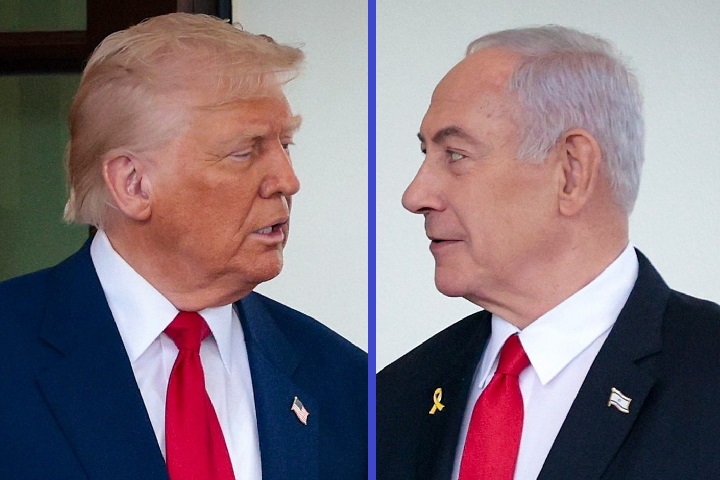
TD The U.S. government has confirmed plans to sell Israel a massive $2.8 billion package of highly destructive 2,000‑pound bombs, including tens of thousands of MK‑84 and BLU‑117 munitions.The deal, informally notified to Congress, represents one of the largest single transfers of such weapons in recent years and has already sparked criticism over humanitarian concerns.
Key Details of the Arms Sale
- Value of package: Up to $2.8 billion.
- Quantity: About 40,000 bombs.
- Types included:
- 20,000 MK‑84 general‑purpose bombs (nicknamed “the hammer”).
- 20,000 BLU‑117 bombs, a safer storage variant.
- 20,000 I‑2000 Penetrator warheads designed to strike hardened underground structures.
- Funding mechanism: Foreign Military Financing (FMF), meaning U.S. taxpayer money is provided to Israel to purchase U.S. weapons.
- Notification status: Informally communicated to congressional committees; formal notification pending.
Why This Sale Matters
- Humanitarian concerns: The MK‑84 bomb has a destruction radius of nearly half a mile, capable of collapsing apartment buildings and leaving craters 35 feet deep.
- Rights groups note Israel has used these bombs in Gaza and Lebanon, including in areas designated “safe zones,” causing mass civilian casualties.
- Political context:
- The sale comes amid strained U.S.–Israel relations, with bipartisan unease in Washington over unconditional support for Prime Minister Benjamin Netanyahu.
- Public opinion in the U.S. has shifted: a June 2026 poll found 66% of Democrats believe the U.S. is “too supportive” of Israel, up sharply from 2017.
- Historical precedent: The Biden administration briefly paused one shipment of MK‑84 bombs in 2024 due to civilian casualty concerns, but the Trump administration reversed that pause in early 2025.
Regional Impact
- Gaza and Lebanon: Israel has already employed thousands of 2,000‑pound bombs in these regions, contributing to high civilian death tolls.
- Iran conflict: The U.S. and Israel jointly struck Iran in February 2026, escalating tensions across the Middle East. Analysts warn that additional bomb transfers could fuel further instability.
- International criticism: Human rights organizations argue the sale undermines U.S. credibility on humanitarian law and risks complicity in alleged war crimes.
Reactions
- U.S. officials: A senior administration official said only that “all foreign arms sales are moving through the appropriate process.”
- Congress: Senator Chris Van Hollen vowed to block the sale, accusing Trump of “sending bombs paid for by American taxpayers to a government led by a wanted war criminal.”
- Israel: The Israeli Embassy has not yet commented publicly.
Concerns and Fears
The planned $2.8 billion bomb sale to Israel represents one of the largest transfers of destructive munitions in recent history.

While the Trump administration frames it as part of strategic defense cooperation, critics warn it risks deepening humanitarian crises in Gaza, Lebanon, and beyond.
The deal now faces scrutiny in Congress, where growing bipartisan unease could test the limits of U.S. military support for Israel.