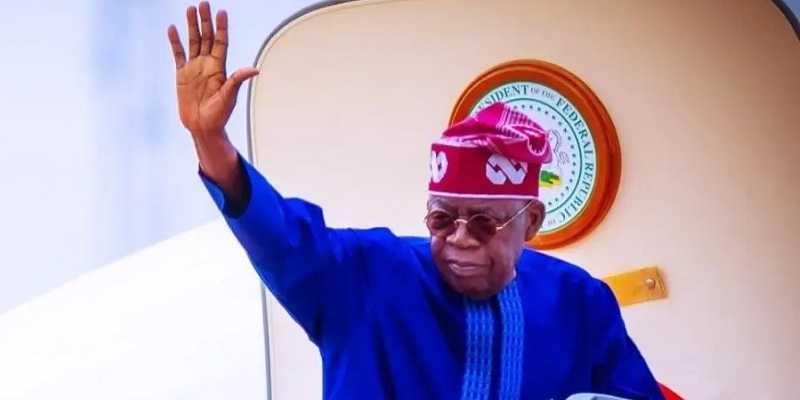
TD President Bola Ahmed Tinubu has extended his working vacation in Europe by a few days and is now expected to return to Nigeria at the weekend, the Presidency announced on Monday.
Tinubu departed Nigeria on August 30, 2026, for London to begin what was initially announced as a three-week working vacation.
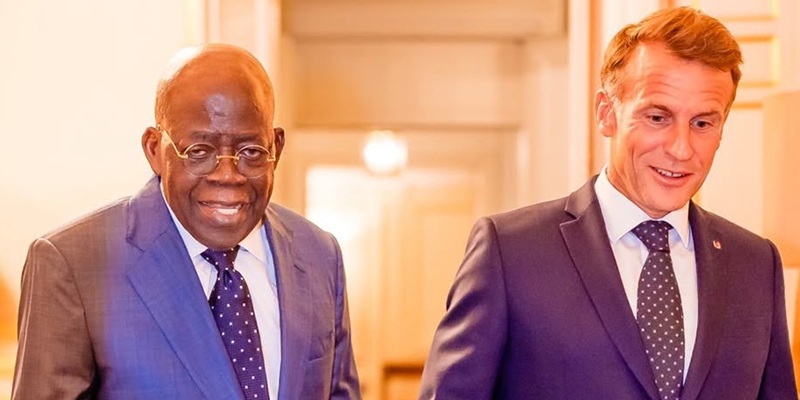
After spending about a week in London, he travelled to Paris, France, where the Presidency said he held engagements with French President Emmanuel Macron and businessman Vincent Bolloré.
The extension comes as the President’s prolonged absence has generated renewed public discussion about the constitutional provisions governing presidential absence and the transfer of presidential functions.
Presidency Says Tinubu Has Continued Directing Government Amid Vacation
In the statement signed by Presidential Adviser on Information and Strategy, Bayo Onanuga, the Presidency said Tinubu had remained in contact with officials in Nigeria and continued to direct the affairs of the country during his vacation.
The statement cited, among other official actions, the President’s directive for an independent panel to investigate the deaths of 37 illegal miners in Minna.
The death followed their detention by the Nigeria Security and Civil Defence Corps.

The Presidency’s position is that Tinubu’s physical absence from Nigeria has not prevented him from continuing to exercise presidential authority from abroad.
Shettima Represents Tinubu at UNGA
The development coincides with Vice-President Kashim Shettima’s departure for New York to represent Tinubu at the 81st United Nations General Assembly.
Shettima left Abuja on September 20 and is leading Nigeria’s delegation to the global gathering.
He is scheduled to deliver Nigeria’s national statement during the General Debate and participate in other high-level engagements.
The Presidency said that Shettima had previously represented Tinubu at some official functions while the President was away.

However, his departure for New York means that Secretary to the Government of the Federation, George Akume, will continue representing the President at events where necessary while Tinubu rounds off his vacation.
Section 145 Comes Under Renewed Scrutiny
Tinubu’s extended stay abroad also puts renewed focus on Section 145 of the 1999 Constitution, as amended.
Section 145(1) provides that when the President proceeds on vacation or is otherwise unable to discharge the functions of his office, he is to transmit a written declaration to the President of the Senate and the Speaker of the House of Representatives.
Section 145(2) provides that where the President is unable or fails to transmit the declaration within 21 days, the National Assembly may, by a resolution supported by a simple majority in each chamber, mandate the Vice-President to perform the functions of President as Acting President.
The constitutional question therefore extends beyond the President’s physical location.

It concerns whether the required constitutional procedure for an extended Tinubu’s vacation has been complied with.
The Presidency’s latest statement does not publicly disclose the contents or existence of any Section 145 declaration.
It instead emphasises that Tinubu has remained in contact with Nigeria and continued directing government affairs.
Atiku’s Challenge Reignites Debate
Former Vice-President Atiku Abubakar has criticised Tinubu’s extended vacation, questioning the constitutional status of the President’s prolonged stay abroad and the arrangements for exercising presidential authority.
The Presidency has rejected Atiku’s position, describing what it called insinuations concerning Tinubu’s absence from the UN General Assembly as baseless and irresponsible.
The statement also referred to a United States-based lobbying firm associated with Atiku.
The Presidency, meanwhile, did not alter its position that Shettima’s representation at the UNGA adequately covers Nigeria’s participation at the global forum.
The 21-Day Issue Amid Tinubu’s Vacation
Tinubu left Nigeria on August 30.
His initial three-week vacation therefore reached its announced endpoint around September 20, while the Presidency’s latest statement confirms that the stay has now been extended.
This has led to increased attention to the 21-day provision in Section 145(2).
However, the constitutional text does not simply state that a President automatically violates the Constitution by remaining outside Nigeria for more than 21 days.
The provision is specifically tied to whether the President has transmitted the written declaration contemplated under Section 145(1), and it sets out what the National Assembly may do if the President is unable or fails to transmit that declaration within 21 days.
The distinction is important because the Presidency is now publicly maintaining that Tinubu remains actively directing the affairs of the state while abroad.
No Automatic Impeachment
The extension of Tinubu’s vacation does not, by itself, automatically initiate an impeachment process.
Impeachment of a President is governed separately under Section 143 of the Constitution, which establishes a specific procedure involving allegations of gross misconduct, investigations and votes by the National Assembly.
Section 145 instead concerns the temporary performance of presidential functions by the Vice-President when the constitutional conditions for an acting presidency arise.
Consequently, any parliamentary action arising from Section 145 would have to be distinguished from impeachment proceedings.
Why the Development on Vacation Matters
The latest announcement creates an unusual constitutional and political situation: the President remains abroad, the Vice-President is also outside Nigeria representing the country at the UN General Assembly.
The Presidency says the Secretary to the Government of the Federation will continue representing Tinubu at official events.
At the same time, the Presidency maintains that Tinubu himself remains in contact with Nigeria and continues directing the affairs of government.
The question now moving to the centre of public debate is therefore not simply when Tinubu will return.
Rather, it is what constitutional arrangements govern the exercise of presidential functions during his extended absence.
With the President now expected back at the weekend, the issue is likely to remain under scrutiny until his return or until the Presidency publicly clarifies the constitutional status of his absence.
Key dates
- August 30: Tinubu departed Nigeria for London.
- Early September: He moved from London to Paris.
- September 20: Vice-President Shettima departed Abuja for the UN General Assembly in New York.
- September 21: Presidency announced that Tinubu’s working vacation had been extended by a few days.
- Weekend: Presidency says Tinubu is expected to return to Nigeria.