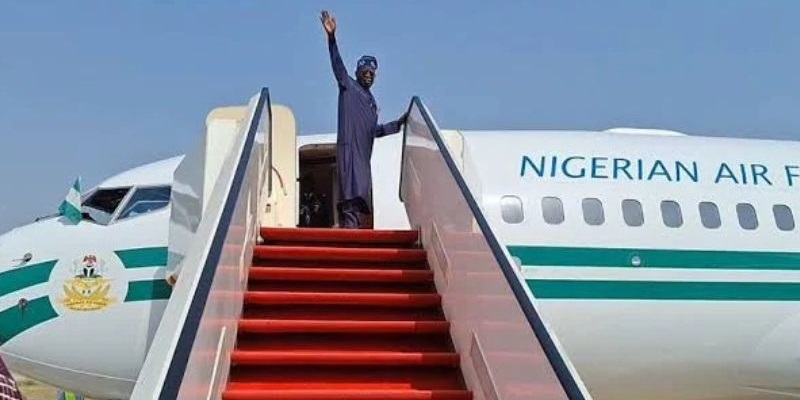
TD ABUJA, Sept. 21, 2026 – Questions over who is exercising Nigeria’s presidential powers as enshrined in the constitution intensified on Monday as Bola Ahmed Tinubu remained outside the country following the expiration of the three-week vacation announced by the Presidency.
Tinubu left Nigeria on August 30 for Europe on what the Presidency announced as a three-week annual vacation, with London as his first destination.
Reports on Monday said the Presidency had extended the working vacation by a few days and now expects him back in Nigeria at the weekend.
The extension has thrust Section 145 of the 1999 Constitution, as altered in 2010, into the spotlight.
Nigerians are concerned whether Tinubu transmitted the constitutionally prescribed written declaration to the President of the Senate and Speaker of the House of Representatives before or during his vacation.


The Constitution of the Federal Republic of Nigeria (First Alteration) Act, 2010, expressly substituted Section 145 of the Constitution.
Under Section 145, the constitutional procedure enables the Vice-President to discharge presidential functions as Acting President following the required written declaration.
The provision also creates a mechanism for the National Assembly where such a declaration is not transmitted within 21 days.
21-day provision comes into focus
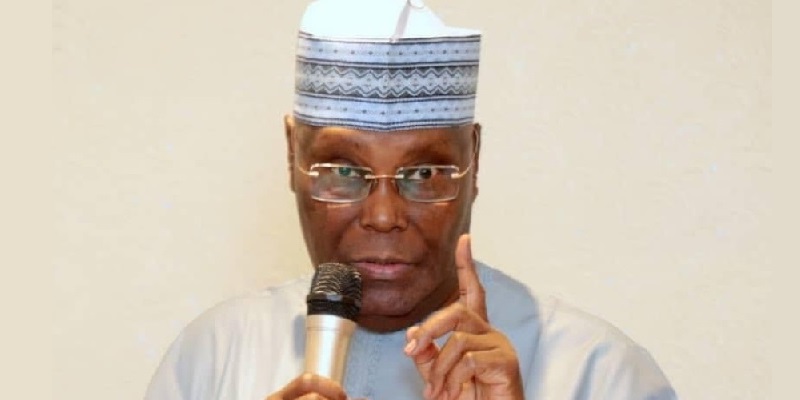
The issue became more pronounced on Monday after former Vice-President Atiku Abubakar publicly demanded clarification of the country’s chain of authority in line with the constitution.

Atiku Abubakar said Nigerians had not been shown a constitutional letter transferring presidential authority to Vice-President Kashim Shettima following Tinubu’s departure on August 30.
He called on the Presidency to publish the document if one exists.
The significance of the 21-day mark lies in subsection 2 of Section 145.
It provides that if the President is unable or fails to transmit the prescribed declaration within 21 days, the National Assembly can, through a simple-majority resolution in each chamber, mandate the Vice-President to perform the functions of President as Acting President.
That means the immediate constitutional question is not simply whether Tinubu is physically outside Nigeria, but whether the prescribed transfer-of-authority procedure has been followed.
Presidency says Tinubu remains in charge
The Presidency, however, maintains that Tinubu has continued directing the affairs of the country while overseas.
A report citing presidential spokesman Bayo Onanuga said the President had remained in contact with officials and continued issuing directives during the vacation.
The Presidency said Tinubu would return during the weekend after extending his vacation by several days.
That position does not, however, dispose of the separate question being raised about Section 145 and the written declaration contemplated by the Constitution.
The sources reviewed for this report establish that critics say no such declaration has been made public.
They do not establish that no declaration exists. That distinction is crucial.
Consequently, a definitive allegation of constitutional breach would require establishing whether the Senate President and House Speaker actually received such a declaration.
Where does this leave Shettima?
The controversy has another dimension because Vice-President Kashim Shettima is himself outside Nigeria, representing the country at the 81st United Nations General Assembly in New York.
This has fuelled Atiku Abubakar’s demand for an explanation of precisely who is exercising presidential powers and under what constitution or authority.
Physical absence from Nigeria does not, on the evidence reviewed here, itself settle that legal question.
The central issue raised by Section 145 remains the constitutionally prescribed declaration and the resulting authority to perform presidential functions.
National Assembly now faces questions about the Constitution
If no Section 145 declaration was transmitted, attention inevitably shifts to the National Assembly.
Section 145(2) expressly provides the legislative mechanism.
Following the stipulated 21-day period, a simple majority of each chamber can mandate the Vice-President to perform presidential functions as Acting President.
That is therefore the clearest immediate constitutional consequence contained in Section 145 itself.
An impeachment proceeding is a different question of constitution.
The sources reviewed do not support treating impeachment as the automatic consequence of reaching or passing the 21-day threshold.
The safer conclusion is that Section 145(2) places responsibility on the National Assembly to address the temporary exercise of presidential functions if its conditions have been satisfied.
Atiku Abubakar has consequently demanded that lawmakers explain why the Section 145(2) process has not been activated if there was no presidential declaration.
The unanswered Constitution question
Tinubu’s stay abroad has extended beyond the originally announced three-week vacation.
The controversy could ultimately be resolved by answering one straightforward factual question:
Did President Bola Ahmed Tinubu transmit the written declaration contemplated by Section 145 of the constitution to the Senate President and Speaker of the House of Representatives?
If the letter exists, its disclosure would answer much of the controversy surrounding the constitutional transfer of presidential functions.
If it was not transmitted, Section 145(2) becomes central because it provides the mechanism through which the National Assembly can mandate Vice-President Shettima to perform presidential functions as Acting President after the stipulated period.
For now, the Presidency says Tinubu remains engaged in directing affairs from abroad and is expected back during the weekend.
But the President’s expected return does not make the constitutional questions surrounding the handover procedure disappear.
Until the existence or absence of a Section 145 declaration is established, the controversy leaves the Presidency and National Assembly in tight corners.
They face demands for greater clarity over the constitutional exercise of Nigeria’s executive authority.