


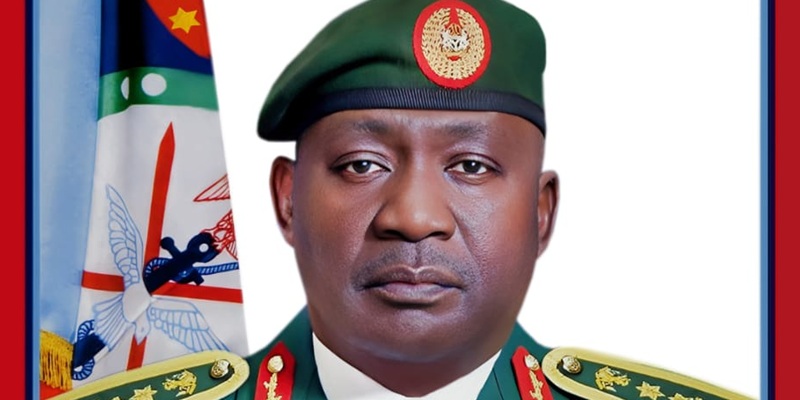

TD Nigeria’s Minister of Defence, General Christopher Gwabin Musa (Retired), has declared that Nigeria may need to undertake what could become its largest federal infrastructure project — an over 3,500-kilometre technology-enabled border wall as Sahel security threat intensifies.
General Musa said it’s part of efforts to curb infiltration by terrorists and other armed groups operating across the country’s porous borders.
The proposal called for a “smart wall” equipped with ground sensors, sentry towers, surveillance cameras and drones, rather than a conventional barrier made solely of concrete and steel.
The initiative is being presented as a long-term security investment by the former Chief of Defence Staff.
It is aimed at preventing terrorist networks from exploiting Nigeria’s extensive borders with neighbouring countries to move fighters, weapons and expertise.
The proposal comes amid growing concern over the spread of jihadist violence across the Sahel.

Also, there are concerns over the ability of armed groups operating in the region to maintain links across national boundaries.
‘We Must Secure Our Borders’
The Defence Minister said Nigeria must begin considering comprehensive fencing and technological surveillance of its borders.
He warned that the country’s geographical position makes it particularly vulnerable to instability spreading southward from the Sahel.
Musa pointed to Nigeria’s approximately 1,500-kilometre border with Niger Republic and 1,900-kilometre boundary with Cameroon.
He, meanwhile, also noted the country’s borders with Chad and Benin in a recorded speech.
“How do we secure fully and take control of our borders? It is critical for our survival. It is critical for our sovereignty,” Musa said.

He cited Pakistan’s fencing of its border with Afghanistan and Saudi Arabia’s fencing of its border with Iraq as examples of countries that have invested heavily in physical border security.
Musa warned that the deteriorating security situation across the Sahel could have direct consequences for Nigeria if stronger border controls are not implemented.
“If we don’t do anything, when the Sahel falls, it is Nigeria that everybody is interested in,” he said.
He cited Nigeria’s size, population and economic importance.
Proposed Sahel Wall to Go Beyond Concrete
The proposed border barrier is envisaged as a sophisticated surveillance system rather than a traditional wall.
According to the proposal, the infrastructure would combine physical barriers with ground sensors, surveillance cameras, sentry towers and drones capable of monitoring large stretches of difficult terrain.

Supporters of the proposal argue that such a system could allow Nigerian security agencies to detect movements across remote border areas.
Consequently, they could respond before infiltrating fighters reach communities deeper inside the country.
The argument is particularly focused on the country’s northern borders.
The security situation in the area is increasingly connected to developments across the wider Sahel region.
Terrorist Networks Exploiting Porous Borders in the Sahel
The security concern extends beyond conventional smuggling and illegal migration.
The proposal highlights the ability of terrorist organisations operating in different parts of the Sahel to maintain operational links and exchange personnel.
They also share technical expertise despite being separated by hundreds or even more than 1,000 kilometres.
Islamic State West Africa Province (ISWAP), which operates principally around the Lake Chad Basin, and Islamic State Sahel Province (ISSP), active across parts of the western Sahel, have been cited in the broader security debate over cross-border militant networks.

The concern is that fighters can move through poorly monitored borders, enabling terrorist groups to replenish their ranks even when Nigerian military operations inflict losses on their members.
Reports of militant movements from Niger into areas of north-western Nigeria, including Sokoto and Kebbi states, have further heightened concerns about the country’s vulnerability to cross-border infiltration.
Such movements can potentially provide armed groups with alternative routes for recruitment, logistics and reinforcement.
₦33 Trillion Sahel Security Spending
The economic argument for a major border-security project in the Sahel centres on the enormous resources Nigeria has already committed to defence and national security.
The proposal states that Nigeria has spent more than ₦33 trillion on defence and national security over the past decade, yet continues to face terrorism, banditry, insurgency and cross-border infiltration.
The argument is that continuing to spend heavily on military operations without addressing the country’s border vulnerabilities risks creating a cycle in which security forces eliminate or disrupt terrorist cells, only for the groups to replenish their personnel and resources through neighbouring territories.
“It’s an investment in breaking the cycle of endless conflict, infiltration and replenishment of terrorist networks,” the proposal states.
‘We Cannot Afford to Postpone It’
Advocates of the plan argue that securing Nigeria’s borders should no longer be regarded as an optional infrastructure project.
Instead, they say, Sahel border security should be treated as a strategic national investment capable of reducing the long-term cost of counterterrorism operations.
The proposed system would, however, require substantial financial investment, as well as cooperation with neighbouring countries.
It will also demand extensive coordination among the military and other security agencies.
Broader Argument for Sahel Security
Musa’s comments reflect a broader argument that Nigeria’s security challenges cannot be addressed solely through kinetic military operations inside the country.
With instability continuing across parts of the Sahel, the proposal places greater emphasis on border control.
It also emphasises on surveillance technology, intelligence gathering and regional security cooperation.
For Nigeria, the central question is whether a massive investment in border infrastructure can prevent the cross-border movement of terrorists and weapons while reducing the burden of continuous military operations.
The proposal ultimately frames border security as a matter not only of counterterrorism, but of Nigeria’s sovereignty and long-term national survival.