
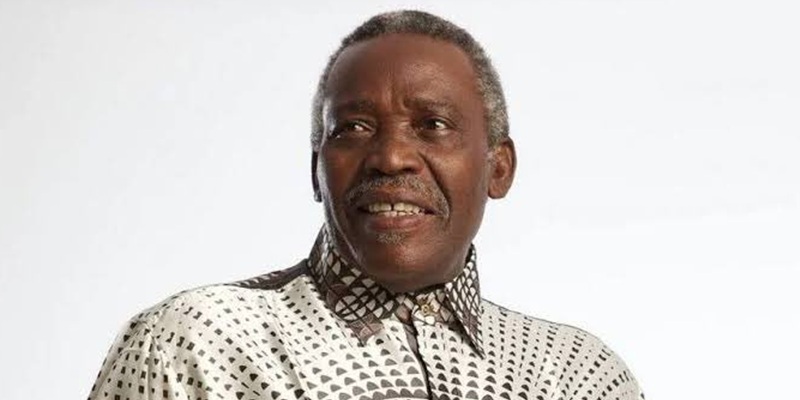
TD The world awoke on Wednesday to the heartbreaking news that Oludotun Baiyewu Jacobs, known to millions simply as Olu Jacobs, has passed away at the age of 84.

With his death, Nigeria and the global creative community have lost not just a great actor, but a cultural institution, a pioneer, and one of the finest ambassadors of African storytelling.
Early Life and Inspiration of Olu Jacobs
Born on 11 July 1942 in Abeokuta, Ogun State, Olu Jacobs hailed from the Egba Alake community but spent much of his childhood in Kano.
It was there, as a young boy, that he first encountered the magic of theatre.
Watching a performance by the legendary Hubert Ogunde, Nigeria’s theatre pioneer, ignited a passion that would define his life.
Despite his father’s reservations, Jacobs pursued his dream.
He obtained a visa and traveled to England, enrolling at the prestigious Royal Academy of Dramatic Art (RADA) in London.
This decision marked the beginning of a journey that would take him from the stages of Britain to the screens of Nollywood, and ultimately into the hearts of millions.
Career in Britain and International Film
Olu Jacobs began his professional career in Britain during the 1970s, appearing in stage productions such as A Taste of Honey at the Crucible Theatre and Tom Stoppard’s Night and Day.
His versatility shone through in television series including The Goodies, Till Death Us Do Part, The Venturers, Angels, The Tomorrow People, and The Professionals.
By the 1980s, Jacobs had broken into international cinema, featuring in films such as:
-
Ashanti (1979),
-
The Dogs of War (1980, opposite Christopher Walken),
-
Baby: Secret of the Lost Legend (1985), and,
-
Roman Polanski’s Pirates (1986).
His commanding presence and distinctive voice made him a natural fit for roles that demanded gravitas.
Return to Nigeria and Nollywood Legacy
Around 1990, Olu Jacobs returned home to Nigeria, where he starred in the NTA detective series The Third Eye as Inspector Best Idafa.
His return coincided with the rise of Nollywood, and Jacobs quickly became one of its most respected figures.
Over the next three decades, he appeared in more than 120 Nollywood films, often portraying kings, chiefs, patriarchs, and politicians.
His performances in Dancing Heart, Adesuwa, Potomanto, Oloibiri, Dry, and The Royal Hibiscus Hotel cemented his reputation as a master of dignified, authoritative roles.
In 2007, Jacobs won the Africa Movie Academy Award for Best Actor in a Leading Role, a recognition of his artistry and influence.
He later received lifetime achievement awards from the Africa Movie Academy Awards (2016) and AFRIFF (2021).
Family and Partnership with Joke Silva
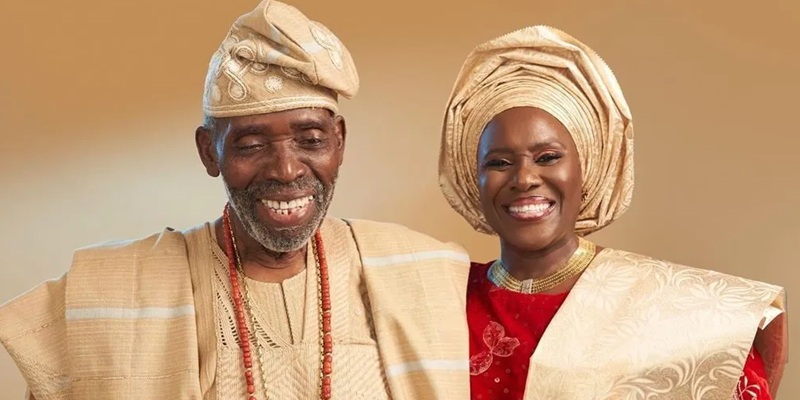
Olu Jacobs married fellow actress Joke Silva in 1989, and together they became one of Nigeria’s most respected celebrity couples.
Their union was not only personal but professional, as they co‑founded the Lufodo Group, which included film production, distribution, and the Lufodo Academy of Performing Arts.
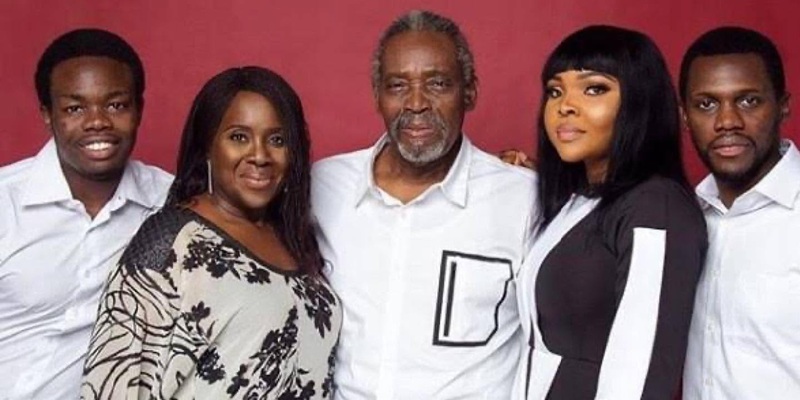
The couple raised three children, though tragedy struck with the loss of their daughter Dayo at a young age.
Their sons, Olusoji and Olugbenga, continue to carry forward the family’s creative legacy.
Honors and Recognition of Olu Jacobs
Jacobs’ contributions to Nigerian cinema and culture earned him national recognition.
In 2011, he was awarded the title of Member of the Order of the Federal Republic (MFR).
He also received the Industry Merit Award at the 2013 Africa Magic Viewers’ Choice Awards.
These honors reflected not just his talent, but his role in elevating Nigerian cinema onto the global stage. He was widely regarded as one of the “godfathers of Nollywood.”
Later Years and Passing of Olu Jacobs
In his later years, Olu Jacobs battled Lewy body dementia, a condition that led to periodic false death rumors before his passing was confirmed on 16 September 2026 by his son Olusoji.
Despite his illness, Jacobs remained a revered figure, with his legacy celebrated across Nigeria and beyond.
His death has prompted an outpouring of grief from colleagues, fans, and leaders.
Former Vice President Atiku Abubakar, President Bola Tinubu, actor Emeka Ike, actress Funke Akindele, and countless others have paid tribute, describing him as a giant of the creative industry and a cultural icon whose influence will endure.
A Dirge for Olu Jacobs — a Legend
Olu Jacobs was more than an actor; he was a storyteller who gave dignity to Nigerian narratives.
He embodied the strength of African culture, carrying it with distinction across continents.
His voice, his presence, and his artistry became part of Nigeria’s collective memory.
His passing feels deeply personal to a nation that grew up with him.
He was the patriarch on screen, the mentor off screen, and the symbol of Nollywood’s rise from humble beginnings to global recognition.
The curtain has fallen on an extraordinary life, but the characters he gave us, the standards he set, and the generations he inspired will continue to speak for him.
Conclusion
The world has lost a legend, but the legacy of Olu Jacobs remains indelible.
He gave Nigeria his talent, his voice, and a lifetime of excellence.
He will be remembered with pride, affection, and profound gratitude.
As tributes pour in, one truth stands clear: Olu Jacobs was not just part of Nollywood—he was Nollywood.