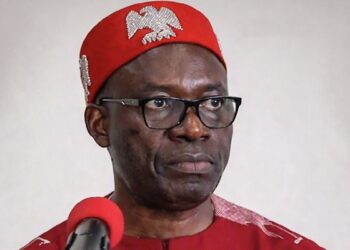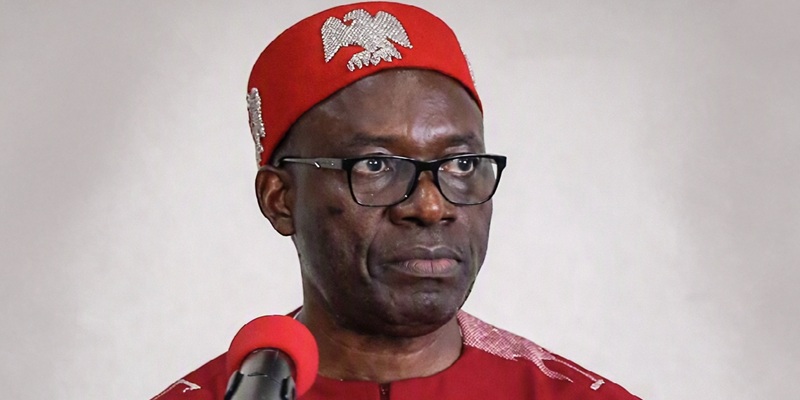
TD Governor Charles Chukwuma Soludo has once again attempted to smear former Governor Peter Obi by claiming that Obi saddled Anambra State with eight external loans totaling $123.77 million.

In his bid to paint Obi as reckless with debt, Soludo listed projects such as FADAMA and NEWMAP as loans contracted by the state government.
But a closer look at the facts reveals that these facilities were federal government programs, negotiated with the World Bank and extended to all 36 states and the FCT.
Soludo’s presentation is not only misleading, but also mischievous with numbers.
By lumping together the original amounts of eight multilateral financing facilities, he presented them as though they were Obi’s personal borrowings.
The official Debt Management Office (DMO) record tells a different story: as of December 31, 2013, just months after Obi left office, Anambra’s total external debt stock stood at $30.32 million—not $123.77 million.
FADAMA and NEWMAP: Federal Programs, Not Obi’s Loans
The Third National FADAMA Development Project (2008) was a World Bank agricultural support program procured by the federal government and distributed nationwide.
It was interest-free and designed to boost rural farming productivity. To call this Obi’s loan is a distortion.
Similarly, the Nigeria Erosion and Watershed Management Project (NEWMAP, 2013) were federal initiative targeting erosion-prone states.
Anambra, like other states, was a beneficiary. Obi did not negotiate or contract this loan; it was federally arranged.
Everyone in Anambra during Obi’s tenure remembers the impact of FADAMA and NEWMAP in agriculture and environmental protection.
If Obi had adopted Soludo’s current mentality—rejecting federally provided facilities—Anambra would have missed out entirely.
NG-Cares Blunder by Soludo
The irony is that under Soludo, Anambra became the only state in Nigeria to pull out of NG-Cares, a federal program designed to support farmers and small businesses.
Soludo initially rejected NG-Cares, claiming it was a loan, only to later discover it was a grant.
By then, Anambra had lost the opportunity.
This episode exposes the flaw in Soludo’s approach: an over-bloated ego more interested in headlines than in impact.
His rejection of NG-Cares left Anambra behind while other states advanced.
Dissecting the Eight Loans Claimed by Soludo
Let us examine the eight projects Soludo cites:
- Malaria Control Booster Project (2007)
- Third National FADAMA Development Project (2008)
- Health System Development Project II (2009)
- Malaria Control Booster Project (Additional Financing, 2009)
- State Education Programme Investment Project (2010)
- Community and Social Development Project (2009)
- NEWMAP (2013)
- Value Chain Development Project (2013)
1. Malaria Control Booster Project (2007)
- Nature: A World Bank–supported health intervention program.
- Reality: This was a federal government facility extended to states to strengthen malaria control.
States did not individually negotiate or “take” these loans; they were beneficiaries of a national program.
- Implication for Obi: He did not originate this loan; Anambra was a recipient under a federal framework.
2. Third National FADAMA Development Project (2008)
- Nature: A World Bank agricultural support program designed to boost rural farming and productivity.
- Reality: FADAMA was interest-free and federally procured, then distributed to states.
It was not a loan Obi personally contracted.
- Implication for Obi: This is the clearest example of Soludo’s misrepresentation.
FADAMA was not Obi’s borrowing; it was a federal agricultural intervention.
3. Health System Development Project II (2009)
- Nature: A World Bank health sector strengthening initiative.
- Reality: Like malaria control, this was federally negotiated and extended to states.
- Implication for Obi: Again, Anambra was a beneficiary, not a borrower in the conventional sense.
4. Malaria Control Booster Project (Additional Financing, 2009)
- Nature: Continuation of the earlier malaria program.
- Reality: Same as above—federally arranged, not state-originated.
- Implication for Obi: Not a loan Obi “took”; it was an extension of a national program.
5. State Education Programme Investment Project (2010)
- Nature: World Bank–backed education sector investment.
- Reality: This was structured as part of Nigeria’s broader education reform financing.
States were beneficiaries, not independent borrowers.
- Implication for Obi: He did not negotiate this loan; it was part of a federal package.
6. Community and Social Development Project (2009)
- Nature: World Bank social safety net program.
- Reality: Federally procured, states implemented.
- Implication for Obi: Not a loan Obi contracted; Anambra was a beneficiary.
7. Nigeria Erosion and Watershed Management Project (NEWMAP, 2013)
- Nature: World Bank environmental intervention targeting erosion control.
- Reality: NEWMAP was a federal government loan extended to erosion-prone states like Anambra.
- Implication for Obi: He did not “take” this loan; it was federally arranged.
8. Value Chain Development Project (2013)
- Nature: Agricultural value chain financing, World Bank–supported.
- Reality: Again, federally procured and distributed to states.
- Implication for Obi: Not Obi’s borrowing; it was a federal agricultural program.
Key Point: None of these were loans Obi personally contracted. They were federal programs extended to states.
The Mischief in the Numbers Presented by Soludo
Soludo’s administration added the original amounts of these eight facilities and presented the total—$123.77 million—as Obi’s debt legacy.
This is deceptive. Several of these facilities were disbursed over time, including after Obi had already left office.
For example, the Value Chain Development Programme did not record its first disbursement until September 2014, six months after Obi’s exit.
The official DMO record is clear: Anambra’s external debt stock was $30.32 million at the end of 2013.
That figure, not Soludo’s inflated $123.77 million, reflects the reality.
Soludo: Why the Claim Falters and the Bigger Picture
Governor Soludo’s attempt to frame these loans as Obi’s borrowings ignores the structure of Nigeria’s external financing.
States are implementing partners, not originators, of World Bank loans. The federal government negotiates, and states benefit.
By misrepresenting federal programs as Obi’s loans, Soludo undermines his own credibility.
His rejection of NG-Cares shows what happens when a governor refuses to accept federally provided facilities: the state loses out.
Obi, by contrast, embraced FADAMA and NEWMAP, ensuring Anambra benefitted.
- Total Loan Amount Signed (2007–2013): $123.77 million.
- Outstanding Balance (June 2026): $92.35 million (₦127.4 billion).
- Key Point: These loans were federal programs negotiated by Nigeria with the World Bank, then allocated to states.
They were not discretionary borrowings by Peter Obi as governor.
Conclusion on the Claims by Soludo
Of the eight loans cited, none were directly contracted by Peter Obi.
They were federal government loans from the World Bank, extended to states for sectoral projects in health, education, agriculture, erosion control, and community development.
Governor Soludo’s attempt to frame these loans as Obi’s personal borrowings ignores the structure of Nigeria’s external financing.
States are implementing partners, not originators, of World Bank loans.
The FADAMA project alone exposes the weakness of Soludo’s argument: it was interest-free, federally arranged, and distributed nationwide.
At best, Obi oversaw their implementation in Anambra; at worst, Soludo’s claim is a political distortion aimed at discrediting Obi.
The truth is simple: Peter Obi left Anambra with one of the lowest debt profiles in Nigeria.
Soludo’s attempt to rewrite history collapses under the weight of official records and common sense.
Thus, while Anambra continues to service portions of these obligations through federal deductions, it is misleading to claim that Peter Obi “took” these loans.
He administered programs funded by them, but he did not negotiate or contract them independently.