



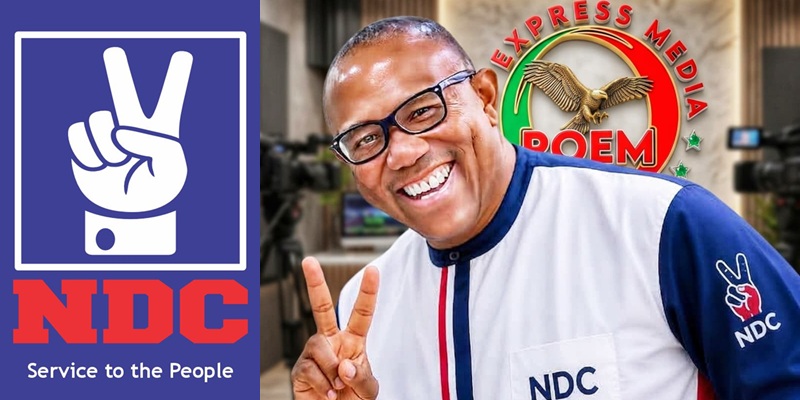

TD ABUJA, Nigeria — The Igbo Agenda Dialogue (IAD), a socio-political and pro-democracy organisation representing Igbo interests in Nigeria and the diaspora, has endorsed former Anambra State Governor Peter Obi as its preferred candidate for Nigeria’s January 16, 2027, presidential election.
The organisation announced its endorsement at a press conference held in the Federal Capital Territory, Abuja, on Wednesday, October 21, declaring its support for Obi, who it identified as the presidential candidate of the Nigeria Democratic Party (NDC), with former Kano State Governor Rabiu Musa Kwankwaso as his running mate.
In a statement jointly signed by IAD National Chairman, Chief Dr Chekwas Okorie, also known as Ojeozi Ndigbo, and Executive Secretary Jonathan Elendu, the organisation said its decision followed an assessment of the leading presidential contenders and consultations with various Igbo organisations and associations.
The group said it considered the candidates’ previous leadership records, commitment to public welfare, management of public resources and ability to address Nigeria’s challenges.
According to the IAD, these consultations culminated in a unanimous resolution to endorse Obi for the presidency.
IAD Cites Historical Igbo Political Alliances
Explaining the background to its decision, the organisation highlighted what it described as a longstanding tradition of political cooperation between Igbo leaders and other ethnic nationalities in Nigeria.

The IAD cited the political alliances involving Dr Nnamdi Azikiwe’s National Council of Nigerian Citizens (NCNC) and the Northern Peoples Congress (NPC) in the First Republic, as well as the accord between the Nigerian Peoples Party (NPP) and the National Party of Nigeria (NPN) during the Second Republic.
The organisation argued that these alliances demonstrated the willingness of Igbo political leaders to collaborate with political interests from other parts of the country to facilitate governance and national unity.
It also recalled the 1999 transition to civilian rule, when Igbo political leaders reportedly backed the Peoples Democratic Party (PDP) following assurances that former Vice-President Alex Ekwueme would receive support from political associates in the North.
According to the IAD, despite the support mobilised for the PDP across the South-East, Ekwueme was unsuccessful in securing the party’s presidential ticket at its primary election in Jos, Plateau State.
The organisation presented these historical experiences as part of its argument for a political strategy that combines the protection of Igbo interests with broader national engagement.
Organisation Explains Why It Chose Obi
The IAD said its endorsement of Obi followed an evaluation of the candidates seeking the presidency in 2027.

The group stated that its assessment considered their previous political leadership experience, concern for ordinary Nigerians, approach to public expenditure and capacity to govern a country as diverse as Nigeria.
It described Obi as a candidate whose leadership approach aligns with its expectations for Nigeria’s next president.
The organisation also claimed that Obi enjoys support across ethnic and religious lines and has significant international visibility.
However, the assertions about the extent of his national support and comparative visibility represent the IAD’s assessment and were not accompanied by independent polling data in the statement.
The organisation said its endorsement was motivated by a desire for leadership that prioritises prudent management of public resources, accountability and the welfare of citizens.
IAD Calls for Greater Youth Participation in Politics
The organisation also argued that Nigeria has historically relied heavily on older politicians for presidential leadership, limiting opportunities for generational change.

It called on eligible voters, particularly those of Igbo origin, to participate actively in the 2027 election and support its preferred candidate.
The IAD urged voters to exercise their democratic rights despite what it described as intimidation and threats surrounding the election campaign.
The organisation did not identify specific individuals responsible for the alleged intimidation in its statement.
It also appealed to political actors to focus their campaigns on policy issues rather than divisive rhetoric.
Group Makes Claims About Igbo Voting Strength
In its address, the IAD asserted that Igbo people constitute at least 25 per cent of the voting population in each of 31 Nigerian states and the Federal Capital Territory, while accounting for more than 99 per cent of the voting population in the five South-East states.
The organisation attributed its position to the demographic distribution of Igbo communities across Nigeria.
However, it did not provide census figures, voter-registration records or other independently verifiable data to substantiate these specific percentages.
The claims therefore remain the organisation’s assertions rather than established electoral statistics.
Nigeria’s officially registered electorate is determined through voter-registration records, while ethnic population estimates require separate demographic evidence.
IAD Cites Historical Examples of Political Tolerance
The organisation also appealed to Igbo politicians supporting other presidential candidates to keep their campaigns focused on issues and avoid rhetoric capable of generating hostility.
To illustrate its argument for political tolerance, the IAD cited the election of Alhaji Umaru Altine, a politician of Fulani origin, as the first mayor of Enugu during the First Republic.
It said Altine was subsequently re-elected as an independent candidate after losing his party’s nomination.
The group also recalled the appointment of Chief Obafemi Awolowo’s wife, Chief Hannah Idowu Dideolu Awolowo, as a minister without portfolio by the Eastern Region government led by Dr Michael Okpara while Awolowo was imprisoned.
The IAD presented these historical examples as evidence of cross-ethnic political cooperation and goodwill.
It argued that Nigerians should draw lessons from such precedents as the country approaches another general election.
Organisation Pledges Nationwide Mobilisation
Concluding its address, the IAD announced plans to expand its political mobilisation through its networks of Igbo associations, market groups, women’s organisations, youth bodies and civil society organisations in Nigeria and abroad.
The organisation said the campaign would seek to secure support for Obi in the 2027 presidential election.
It also reiterated its position that Igbo political interests should be pursued within the framework of a united Nigeria.
The endorsement adds another political declaration to the developing alignments ahead of the 2027 election. Its electoral significance will depend on the organisation’s mobilisation capacity, the response of voters and the broader political landscape as the campaign progresses.
The announcement represents the IAD’s institutional position. It does not, by itself, establish the preferences of all Igbo voters or organisations.
About the Igbo Agenda Dialogue
The Igbo Agenda Dialogue describes itself as a socio-political and pro-democracy organisation committed to promoting, protecting and defending Igbo political interests within a united Nigeria.
The October 21 press conference was signed by Chief Dr Chekwas Okorie, its national chairman, and Jonathan Elendu, its executive secretary.