
TD ABUJA, Nigeria — The African Centres for Disease Control and Prevention (Africa CDC) has called an emergency meeting of African health ministers for October 28 as the Ebola outbreak spreads across parts of Africa, including Nigeria.
Meanwhile, lawmakers in Abuja have demanded the immediate release of outstanding funds appropriated for health agencies.
The twin developments have intensified attention on regional coordination, emergency financing and the capacity of national health systems to contain the outbreak.
The Africa CDC said the extraordinary virtual meeting would strengthen the continent’s collective response.
Separately, Nigeria’s House of Representatives adopted a motion.
It urged the Federal Government to mobilise health agencies and release outstanding funds needed for surveillance, contact tracing and emergency preparedness.

Africa CDC Seeks Coordinated Continental Response
The meeting was announced by Africa CDC Director-General Jean Kaseya following confirmation of Nigeria’s first case in the current outbreak.
According to the Associated Press, the October 28 meeting is intended to strengthen coordination among African governments as health authorities respond to infections reported in the Democratic Republic of the Congo, Kenya and Nigeria.
The World Health Organization has also advised countries in the region to maintain heightened readiness as the outbreak continues to evolve.
The spread across different African regions has raised concerns about cross-border transmission, delays in identifying infections and the need for rapid information-sharing between national health authorities.
Nigeria Monitors 44 Contacts
Nigeria confirmed an imported Ebola case in the Federal Capital Territory on October 20.
The patient, a foreign national who arrived in Nigeria on October 5 after travelling through Uganda, developed symptoms two days later and sought treatment at a private hospital in Abuja on October 11.

According to Nigerian health officials cited by the Associated Press, the patient initially received treatment for malaria-like symptoms but did not recover as expected, prompting further investigation.
Authorities have identified 44 contacts for monitoring.
They include healthcare workers and the patient’s spouse, a Swiss national.
The WHO has confirmed that the infection involves the Bundibugyo virus, a strain for which no approved vaccine or specific treatment is currently available.
The patient’s travel history does not, by itself, establish where the infection was acquired.
Uganda has disputed claims that the case originated there, and investigators continue to examine the circumstances surrounding the infection.

House of Representatives Demands Release of Health Funds
In a separate development, Nigeria’s House of Representatives has called on the Federal Government to release outstanding appropriated funds for relevant health agencies.
The resolution followed a motion of urgent national importance sponsored by Amobi Ogah, a member representing Isuikwuato/Umunneochi Federal Constituency of Abia State.
The lawmakers urged the government to strengthen disease surveillance, contact tracing, laboratory capacity, infection prevention and emergency response measures.
They also called for greater coordination among federal and state health authorities, private healthcare providers, port health officials and international public health organisations.
The House directed its Committee on Infectious Diseases to engage relevant ministries, departments, agencies and health institutions and report back on the country’s preparedness and response.
The parliamentary resolution highlights concerns about whether health agencies have sufficient funding to perform their responsibilities during an emergency.
However, the demand to release outstanding appropriated funds does not, by itself, establish the amount of money currently unpaid or prove that any specific Ebola-related allocation was misappropriated.
Funding Accountability Becomes a Central Issue
The latest developments have also intensified scrutiny of the difference between announcing emergency funding and demonstrating that the money has been released and used effectively.
For accountability purposes, the relevant records would include approved allocations, actual disbursements, procurement contracts, equipment deliveries and expenditure reports.
These records would help establish whether health agencies received the resources intended to support surveillance, protective equipment, laboratory testing and emergency treatment.
The House’s resolution calls for outstanding appropriated funds to be released, but a complete assessment of Nigeria’s Ebola preparedness requires detailed financial and operational information from the responsible authorities.
What Happens Next?
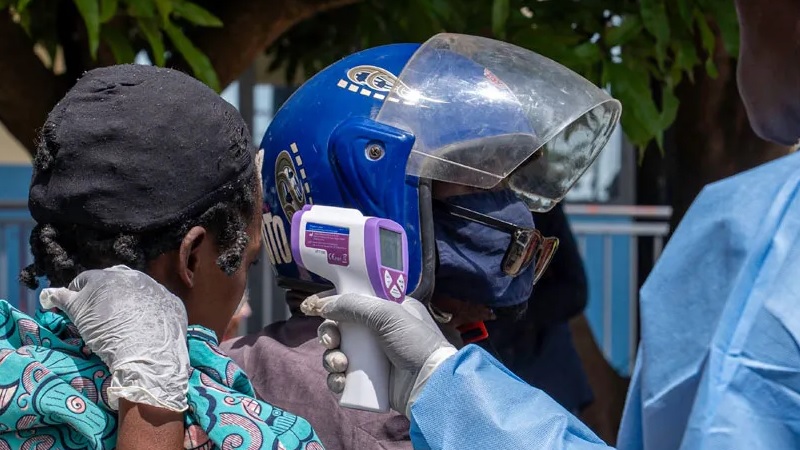
The immediate priorities are continued contact tracing, effective infection prevention, protection of healthcare workers and timely communication with the public.
The October 28 Africa CDC meeting is expected to provide a forum for African health ministers to coordinate their response and identify gaps requiring additional support.
For Nigeria, the effectiveness of the response will depend on whether surveillance systems can identify potentially exposed people quickly and whether medical facilities have the personnel, equipment and funding needed to respond safely.
Developing Story
The Africa CDC meeting is scheduled for October 28. Nigeria’s contact-tracing exercise remains ongoing.
In the meantime, the precise status of outstanding health-sector allocations and the source of the Nigerian patient’s infection require further clarification.