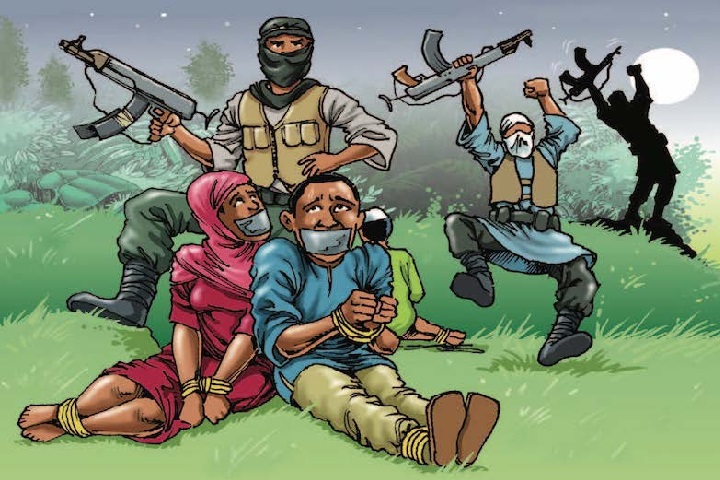

TD ABUJA, Nigeria — The South East recorded the lowest number of reported kidnapping cases among Nigeria’s six geopolitical zones in September, with just one case, according to figures attributed to the National Human Rights Commission (NHRC) and published by data platform StatiSense.
The figures show that Nigeria recorded 210 kidnapping cases nationwide during the month, with North Central accounting for 101 and North West recording 94.
Together, the two zones accounted for 195 cases, representing approximately 92.9 per cent of the national total.
Reacting to the figures, lawyer Aloy Ejimakor has urged an end to what he described as anti-Southeast rhetoric.
Ejimakor argued that public discussions about insecurity and security deployments in the region should be guided by evidence rather than generalisations.
The NHRC separately confirmed that its September 2026 Human Rights Situation Dashboard documented 210 kidnappings and 208 killings during the reporting period.

The Commission also recorded 338,810 human rights complaints across its 38 offices nationwide.
North Central and North West Account for 92.9% of Reported Kidnappings
The September figures indicate a marked concentration of reported kidnapping cases in the North Central and North West geopolitical zones.
North Central recorded 101 cases, the highest among the six zones, while North West recorded 94. Their combined total of 195 cases represented nearly 93 per cent of the 210 reported nationwide.
The South South recorded nine cases, while the South West had three.
The North East recorded two, and the South East recorded one.
Kidnapping Cases by Geopolitical Zone — September 2026
| Rank | Geopolitical zone | Reported cases | Share of national total |
|---|---|---|---|
| 1 | North Central | 101 | 48.1% |
| 2 | North West | 94 | 44.8% |
| 3 | South South | 9 | 4.3% |
| 4 | South West | 3 | 1.4% |
| 5 | North East | 2 | 1.0% |
| 6 | South East | 1 | 0.5% |
| Total | Nigeria | 210 | 100% |
Source: September 2026 kidnapping figures attributed to the NHRC and published by StatiSense. Percentages are calculated from the reported national total and rounded.

The figures place North Central and North West far ahead of the other zones in recorded kidnapping cases for September.
However, the data represents reported cases captured during the period and should not be interpreted as a comprehensive measure of all criminal activity or every dimension of insecurity in the country.
Ejimakor Calls for an End to Anti-South East Rhetoric
In a statement titled “Insecurity: It’s Time to Stop the Anti-Southeast Rhetorics”, Ejimakor argued that the South East’s low reported kidnapping figures deserved recognition and should inform public debate about security in the region.
According to Ejimakor, the South East recorded four kidnapping cases in August 2026 and three in May, when it also had the lowest figure among the geopolitical zones.
He said the September result continued a pattern of comparatively low recorded kidnapping cases and questioned whether the scale of security deployments in the South East reflected the distribution of reported kidnapping incidents nationally.
Ejimakor argued that the North Central and North West figures should attract proportionate security attention, given their combined share of reported cases.

He also called for a clearer distinction between criticism of specific security threats and rhetoric that portrays the South East as a whole as a centre of insecurity.
His position is that security decisions should be assessed against evidence, with resources allocated according to identified threats and the protection needs of affected communities.
Security Deployments and the Eastern Security Network
Ejimakor further argued that the South East continues to experience substantial military and police deployments, including operations and checkpoints.
Meanwhile, public security messaging frequently highlights the Eastern Security Network (ESN) as a threat.
He contended that the September figures raise questions about whether the level of security emphasis across the country corresponds to the reported distribution of kidnappings.
However, the kidnapping figures alone do not establish whether security deployments in any zone are excessive, insufficient or appropriately targeted.
Such an assessment would require broader evidence, including data on killings, armed attacks and separatist-related violence.
Others are attacks on security personnel, other forms of crime, operational objectives and the effectiveness of security interventions.
The figures therefore provide one relevant indicator for assessing kidnapping trends.
However, they do not independently settle the wider debate about security policy in the South East.

NHRC Dashboard Highlights Wider Human Rights Concerns
The NHRC’s September dashboard documented 338,810 human rights complaints received across its 38 offices nationwide.
The report shows an increase from the 297,943 complaints recorded in August.
The Commission identified insecurity as a major concern and highlighted reports of mass abductions, particularly in Niger State.
Also highlighted were killings, attacks on communities and other alleged human rights violations.
The NHRC stressed the responsibility of government and security agencies to protect life and property.
It further stressed the need to rescue abducted people and ensure that perpetrators are brought to justice.
The Commission’s overall complaint total covers a broad range of human rights issues.
It is distinct from the 210 kidnapping cases recorded in its September monitoring, so the two figures should not be conflated.
Why the Figures Matter
The September figures provide a basis for comparing recorded kidnapping cases across Nigeria’s six geopolitical zones during a defined period.
For policymakers and security agencies, the concentration of cases in North Central and North West reinforces:
- the need to assess local threats,
- strengthen intelligence-led operations, protect vulnerable communities, and,
- improve efforts to rescue abducted victims.
For the South East, the single reported case offers evidence of a comparatively low number of recorded kidnappings during September.
It does not, by itself, establish that the region has the lowest overall level of insecurity or that other security concerns have disappeared.
A sustained assessment would require comparable monthly figures, consistent reporting methods and additional indicators covering other forms of violence and criminal activity.
Ejimakor’s appeal for an end to anti-Southeast rhetoric has therefore brought renewed attention to the importance of evidence-based security debates.
The appeal also calls for regional fairness and the distinction between reported incidents and broader political narratives.
Developing Story
The figures cited in this report relate to September 2026.
Further NHRC dashboards and independently verified security data will be needed to establish whether the pattern continues in subsequent months.
Ejimakor’s assessment of security deployments is an attributed opinion and is not a finding of the NHRC dashboard.