



TDFor over 100 years, Northern Nigeria has been held together by a politically contrived twofold ethnic fusion expediently branded as “Hausa-Fulani”. It has served as an instrument of cohesion that aggregates demographic weight for political relevance. Now, however, beneath the artificial ethnic construct, a quiet shift is underway.
The shift is not yet organised or formally articulated, but it is increasingly raising its head above the ground in public discourse. There is a growing conviction among some leaders of thought of the Hausa majority of the Northwest that political authority and visibility do not reflect their reality vested in their numerical strength.
Across key North-Western states of Sokoto, Kano, Katsina and Kebbi, the architecture of authority still bears the imprint of the emirate system that emerged from the Fulani Jihad, over 200 years ago. The legacy, anchored in Fulani aristocratic lineages, has adapted to modern governance but has not disappeared. Its networks continue to shape access to power, legitimacy, and succession.
Some argue that Nigeria’s political system is too layered for crude or total dominance by a few. But the issue is more precisely concerned with the distribution of visible authority: who occupies the upper tiers of decision-making and who embodies institutional legitimacy. How these patterns are interpreted by the broader population is beginning to matter. Many in the Hausa communities are beginning to question why topmost positions are disproportionately occupied by those who by lineage, network, or historical association, are linked to Fulani elite structures.
Whether this can be exhaustively quantified is secondary. What matters is that it is experienced as reality and therefore shapes political behaviour. This explains why social media narratives identifying most officeholders as Fulani resonate so widely, an attempt to describe a recurring pattern of perceived exclusion.
To analyse this dynamic adequately, two deeper structural forces, religion and poverty, must be foregrounded as active variables in the organisation and maintenance of power in the north.

Religion in North-West functions both as a unifying force and a source of political legitimacy. Islam provides a shared moral framework that has historically moderated ethnic divisions and sustained the manufactured Hausa-Fulani mixture. It influences public action or inaction through clerical networks, emphasising unity and restraint. While stabilising, it also delays the expression of internal inequalities by softening potential contestation.
Poverty reinforces this dynamic. Economic fragility fosters dependence on patronage, limiting independent political agency. Loyalty becomes vertical, and grievances though widespread, remain fragmented, preventing coordinated mobilisation but sustaining existing power structures.
This interaction between religion and poverty produces a system that is at once cohesive and restrictive. It enables authority structures to endure while limiting the capacity for coordinated challenge. In this context, the Hausa majority’s difficulty in translating demographic weight into structured political influence becomes more intelligible. It is certainly a question of identity, but also that of institutional access shaped by socioeconomic and moral frameworks.
Now this equilibrium is under strain. Two developments are particularly significant. First, the rise of digital communication has introduced a degree of narrative autonomy that bypasses traditional filters. Interpretations of power are no longer solely mediated by clerical or official channels; they are contested in real time. Second, persistent insecurity and economic hardship are reducing the persuasive power of appeals to unity. Where lived experience diverges sharply from official reassurance, scepticism grows.
The result is a gradual but important shift from acceptance to questioning, and from questioning to articulation. What is emerging may not yet be a coordinated movement, but a convergence of narratives is emerging. Across different platforms and voices, similar concerns are being expressed about representation, equity, and access to power.
Historical parallels must be used with care, but they can clarify structural risk. The experience of the Rwandan Genocide illustrates a broader but similar principle: where a numerically dominant population comes to view itself as persistently peripheral within visible structures of authority, where such structures are associated with a smaller, historically entrenched elite, grievances consolidate into a defining political narrative.

Nigeria is not Rwanda. Its institutional complexity, scale, and social interdependence differ significantly. But the underlying warning remains relevant. Stability sustained by managed ambiguity and deferred imbalance is inherently restrictive and dangerous. Religion and poverty may prolong that stability; they cannot substitute for structural adjustment.
What is unfolding in the North-West may best be understood as a budding reconfiguration. The long-standing Hausa-Fulani stratagem is being quietly interrogated. Identities once politically fused are beginning, under pressure, to differentiate, and in search of clearer representation.
The appropriate response is neither dismissal nor alarmism. It is recognition. First, that the grievance exists and is grounded in lived experience. Second, that its persistence reflects structural features of governance. beyond rhetorical misalignment. And third, that sustainable stability requires more than the language of inclusion; it requires its visible demonstration.
The North-West has long been central to Nigeria’s political rest and unrest. Its cohesion has depended on a delicate balance of history, constructed identities, faith, and power. That balance is now under growing strain. Whether it adapts or fractures will depend on the way its governing structures evolve hereafter, in ways that are inclusive in principle and recognizable in practice.
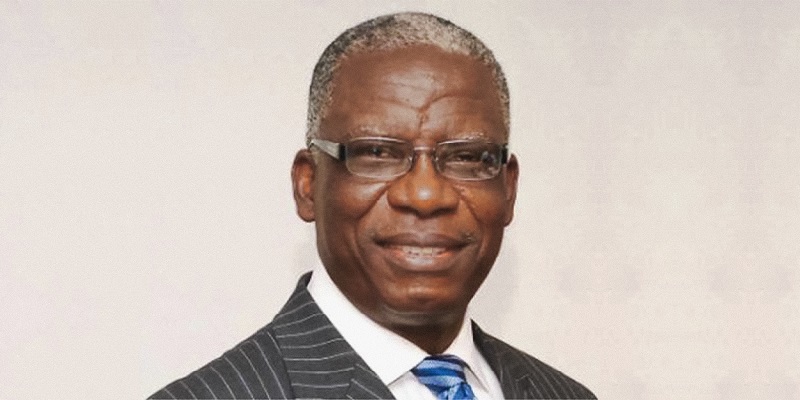
Dr. Richard Ikiebe is a Media and Management Consultant, Teacher and Chairman, Board of Businessday Newspaper.