
 A major diplomatic and security controversy has emerged following a statement by Pete Hegseth, the United States Secretary of War, declaring that Washington is “preparing for action” over ongoing attacks against Christians in Nigeria.
The remarks came after Donald Trump directed the U.S. Department of War to prepare for more possible responses.
His administration described the Nigerian factor as persistent killings of Christians by Islamist terrorist groups.
The development has sparked international debate, heightened tensions between Washington and Abuja, and renewed scrutiny of Nigeria’s long-running security crisis.
Hegseth Signals Readiness for Possible U.S. Intervention
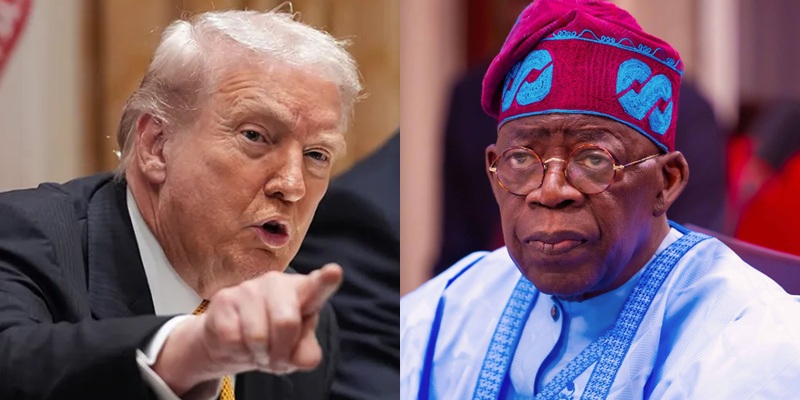
The controversy began when President Donald Trump issued a strongly worded statement accusing the Nigerian government of failing to adequately protect Christian communities from extremist violence.
President Trump had earlier warned that the United States could suspend aid to Nigeria.

He instructed the Department of War to prepare for more possible military action against Islamist terrorist groups operating in the country.
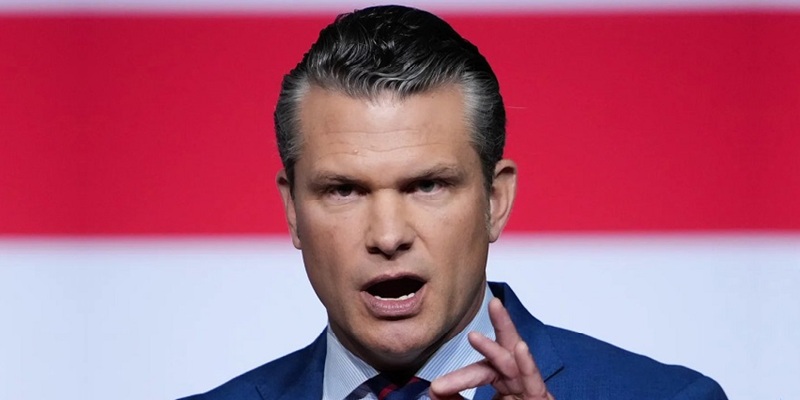
Responding publicly, Pete Hegseth endorsed the president’s position and wrote:
“The killing of innocent Christians in Nigeria and anywhere must end immediately.
“The Department of War is preparing for action.
“Either the Nigerian government protects Christians, or we will kill the Islamic terrorists who are committing these horrible atrocities.”
The statement quickly drew international attention because it suggested that the United States was considering a far more aggressive posture toward terrorist groups operating within Nigerian territory.
Hegseth Expresses Concern Over Religious Violence
The remarks credited to Hegseth were made against the backdrop of years of violence linked to extremist organizations.
These include Boko Haram and Islamic State-affiliated factions operating in parts of northern and northeastern Nigeria.
American officials have argued that Christian communities have increasingly become targets of extremist attacks.

The Trump administration had redesignated Nigeria as a “Country of Particular Concern” over allegations of severe religious persecution and violence against Christians.
President Trump described Christianity as facing an existential threat in parts of Nigeria.
He accused radical Islamist elements of perpetrating mass violence against Christian populations.
The administration’s position has resonated with several conservative and religious freedom advocacy groups in the United States.
These have long urged stronger international action against religious persecution in Africa.
Nigeria Rejects Genocide Allegations
The Nigerian government has firmly rejected claims that it is permitting or ignoring a campaign of Christian genocide.

President Bola Ahmed Tinubu responded by insisting that Nigeria remains a democratic nation founded on constitutional guarantees of religious freedom and equal protection under the law.
He argued that portrayals of Nigeria as a country engaged in or tolerating systematic persecution of Christians do not reflect the nation’s reality.
“Religious freedom and tolerance have been a core tenet of our collective identity and shall always remain so,” the Nigerian president stated.
The Nigerian Ministry of Foreign Affairs likewise rejected the allegations credited to Trump, Hegseth, and other officials.
It emphasized the country’s ongoing counterterrorism efforts and commitment to combating violent extremism across affected regions.
Officials in Abuja have maintained that Nigeria’s security challenges are complex and involve multiple factors.
Such factors include terrorism, banditry, communal conflicts, and organized criminal violence.
From Rhetoric to Military Cooperation
The significance of the remarks by Hegseth increased following reports that the United States subsequently intensified cooperation with Nigerian security forces against ISIS-linked militants.
According to a report published by the U.S. Department of War, Pete Hegseth later disclosed that President Trump had specifically instructed the department to focus on protecting Christians targeted by ISIS in Nigeria.
The department stated that U.S. Africa Command conducted operations in northeastern Nigeria that resulted in the death of Abu-Bilal al-Minuki, along with other senior terrorist figures.
Al-Minuki was identified as ISIS’s director of global operations.
The operation was carried out in coordination with Nigerian authorities.
Hegseth said the mission demonstrated the value of U.S.-Nigeria security cooperation.
It highlighted Washington’s commitment to confronting terrorist threats responsible for attacks on civilians, including Christians.
Diplomatic and Regional Implications
The sharp language employed by both Trump and Hegseth has raised concerns among policymakers and analysts about the future direction of U.S.-Nigeria relations.
Nigeria remains one of Africa’s largest economies, a major regional power, and a critical partner in counterterrorism efforts across West Africa.
Any substantial deterioration in relations between Abuja and Washington could have implications for regional security cooperation.
It could also have implications for intelligence sharing, and humanitarian assistance programs.
At the same time, the controversy has focused global attention on the continuing challenge posed by extremist groups operating in parts of Nigeria and the wider Lake Chad Basin region.
“Preparing for Action”
The statement attributed to Pete Hegseth is supported by multiple published reports quoting him.
Reports say that the U.S. Department of War was “preparing for action” if Nigeria failed to protect Christians from Islamist terrorist violence.
The Trump administration has framed the issue as a response to extremist attacks against Christians.
Meanwhile, the Nigerian government strongly disputes allegations that it is tolerating religious persecution.
it insists that it remains committed to protecting citizens of all faiths.
As security cooperation continues and terrorist threats persist, the debate underscores the growing international attention being paid to religious freedom, terrorism, and stability in Africa’s most populous nation.