
 A video circulating online has demonstrated how the Independent National Electoral Commission (INEC) created duplicate “Ewein Primary School” polling units across Warri South and Warri South-West.
The speaker points to entries described as “Ewein Primary School A” and “B” in Warri South, and “I” and “II” in Warri South-West.
The post calls the entries fake or secret polling units and alleges they could be used to rig the 2027 election.
Those are serious allegations, but similar names or numbering alone do not establish that polling units are fictitious.
This review found independent confirmation that the listed units are duplicates INEC may have created to manipulate votes.
A publicly indexed polling-unit directory lists “Ewein Primary School II” as unit 036 in Ogbe-Ijoh Ward, Warri South-West.

The available online records are not a substitute for checking the current INEC portal entry, official maps and location coordinates.
What Available Polling Units Listings Show
A directory reproducing polling-unit data lists “Ewein Primary School II” at code 10-25-01-036 in Ogbe-Ijoh, Warri South-West.
A second searchable listing also places that name at unit 036 and reports 288 registered voters there.
However, these are third-party directories, not an authenticated INEC certification of the newly delineated polling-unit entries.
The INEC polling-unit locator is the relevant official channel for voters to check locations and assigned units.
INEC describes polling-unit codes as identifying state, local government area, registration area and unit number.

That structure matters because a polling-unit number must be read with its LGA and registration-area code, not by number alone.
The video’s transcript appears consistent about the Ogbe-Ijoh polling units.
Ewein Polling Units: What INEC Records Show About Viral Duplicate Claim
Polling places can share a school or venue name when they serve separate communities, wards or voter groups.
Roman numerals and letters may distinguish units at one location, but their presence does not establish that a site exists.
A valid assessment would compare the official unit codes, ward boundaries, addresses, coordinates, voter registers and field-verification records.
The video’s allegation that INEC “created” fake units goes beyond what can be established from the names alone.

Nor does the appearance of similar names in two local government areas demonstrate that either unit is fraudulent.
The central question is whether each listed unit corresponds to a real location and has been allocated to the correct administrative area.
To answer that, INEC would need to publish or confirm the underlying list and relevant geographic details.
No evidence reviewed here shows that these entries were designed to provide extra votes or support artificial voters.
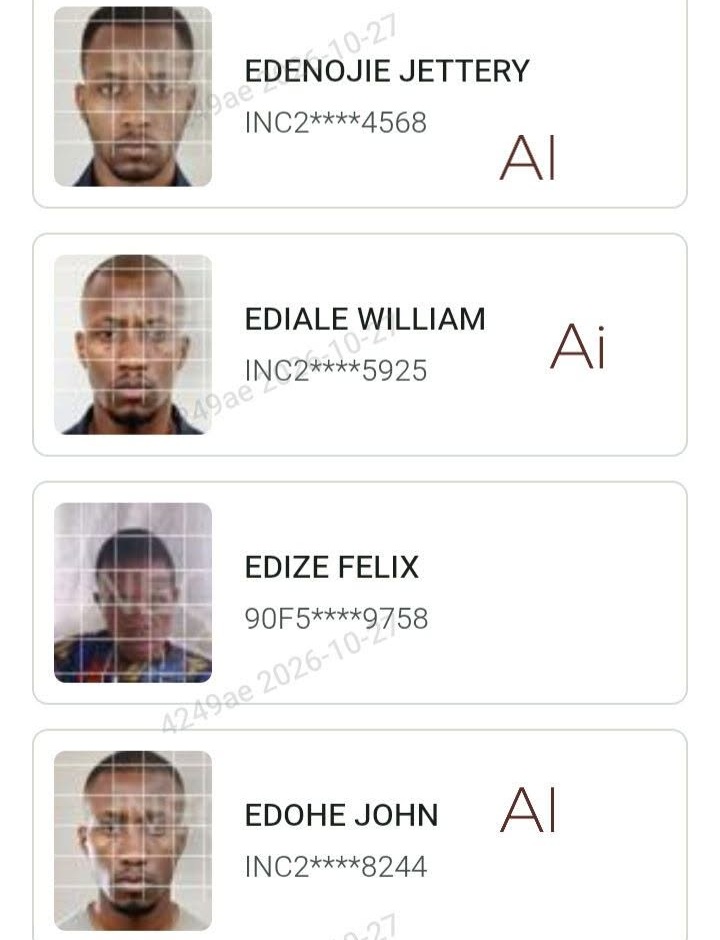
The post also alleges that INEC is preparing to use AI-generated voters, but supplies no independently verified evidence for that claim.
Claims about rigging should be separated from verifiable questions about mapping accuracy, duplicated records and public access to polling information.
Warri Delineation Has a Contested History
The dispute sits within a wider, long-running disagreement over electoral boundaries in Warri Federal Constituency.
In December 2022, the Supreme Court ordered INEC to conduct a fresh delineation of wards and polling units in Warri North, Warri South and Warri South-West.
INEC later carried out fieldwork and presented a delineation report to stakeholders in May 2026.
The report created or reorganised wards across the three local government areas and reflected competing claims about electoral representation.
The exercise has drawn criticism from Itsekiri, Ijaw and Urhobo stakeholders, who have disputed aspects of the mapping and allocations.
Some Itsekiri representatives alleged that polling units belonging to Warri South-West communities were placed in proposed Warri South wards.
Ogbe-Ijoh representatives have offered a different account, arguing that Ijaw communities in Warri South were historically denied electoral representation.
These are competing stakeholder positions; they do not independently verify the specific “Ewein Primary School” allegations.
What INEC Said About the Exercise
INEC has said the Warri delineation was carried out in response to the Supreme Court’s order.
The Commission presented its report at a stakeholder meeting attended by representatives of the area’s major ethnic communities.
Public reporting on that presentation describes new ward structures and polling-unit allocations across Warri North, Warri South and Warri South-West.
Stakeholders have since continued to question the accuracy and fairness of parts of the exercise.
The materials reviewed do not show INEC responding specifically to the video’s claim about units 036 and 044.
They also do not provide an official finding that either named polling unit is fictitious or incorrectly placed.
The commission’s public locator allows voters to search for polling-unit locations, but the claim requires confirmation against current source records.
INEC should clarify the disputed entries by publishing their full codes, ward names, addresses, coordinates and status.
That would allow residents, party agents and election observers to distinguish new units from existing ones and identify any errors.
What Can Be Concluded So Far
The video raises a checkable question about how Ewein-named polling units appear across Warri’s local government boundaries.
But the evidence reviewed does not prove that INEC created fake polling units or intended to rig the 2027 election.
The indexed listing supports the presence of an Ewein Primary School II entry at unit 036 in Ogbe-Ijoh, Warri South-West.
Claims of electoral fraud, however, require stronger evidence, including verified records, physical-site checks or findings by competent authorities.
Until INEC publishes the underlying data or comments on the specific entries, the allegation of secret units remains unverified.