
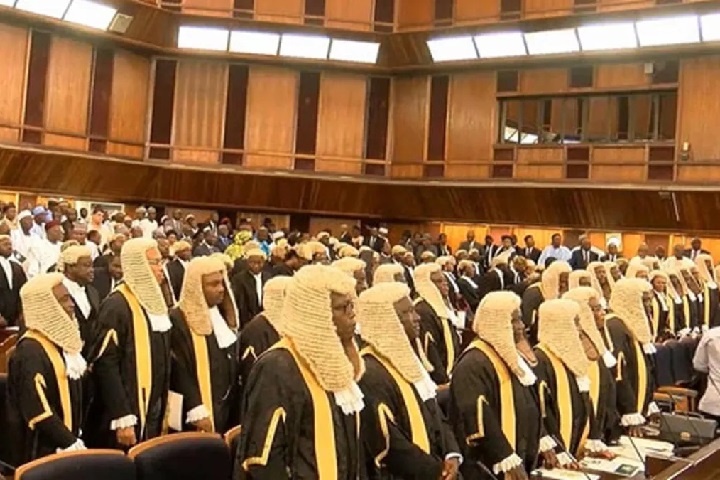
TD Around Africa, many associate the job of a judge with the easy life. All they do, they believe, is cosy up to politicians and give them what they want. The reality, however, is a lot harsher, and this is not exactly new.
When the United Nations adopted the Basic Principles on the Independence of the Judiciary in 1985, it omitted any direct mention of attacks on the person or well-being of the judge.
Justice Mavedzenge, an advocate from Zimbabwe, distinguishes between attacks on the independence of judges on the one hand and the persecution of judges on the other.
The latter is different from the former because it seeks to harm the lives, person, or well-being of the judge or their family.
On 21 September 1972, for instance, elements in the army of Uganda’s Field Marshall Idi Amin Dada, abducted Chief Justice, Benedicto Kiwanuka, from his chambers at the Supreme Court.
Four days later, Marshall Amin personally shot and killed Chief Justice Kiwanuka at the State Lodge in Nakasero, Kampala.
Kiwanuka’s crime was that he had dared to write to Idi Amin about the killings taking place under him and had also advised him “that the expulsion of the Indians from Uganda was wrong and against international law.”

Elective governments in Africa have not necessarily grown more subtle.
When they convened on 3 February 2020 to deliver judgment in the petition concerning the country’s presidential election from the previous year, all five judges of the Constitutional Court of Malawi wore bulletproof vests.
They lived to be celebrated for their courage.
Raphael Yanyi was not so lucky. Around 26 May 2020, the Police in the Democratic Republic of the Congo (DRC) announced that Yanyi, a senior judge, “had suffered a suspected heart attack.”
The Ministry of Justice quickly clarified, however, that the remains of the judge “did not exhibit any toxic substances.”

Following an autopsy, Justice Minister Celestin Tunda Ya Kasende, disclosed that Judge Yanyi had died from “blows of sharp points or knife-like objects, which were thrust into his head.”
Contrary to the claim by the police, the judge did not die of a heart attack. He was murdered.
At the time of his killing, Raphael Yanyi was presiding over the high-profile corruption trial of Vital Kamerhe, Chief of Staff to President Felix Tshisekedi.
It is assumed that politicians, government, or ruling parties have a monopoly over such crimes of state.
Quite often, however, when judges are attacked, the boundaries between state and non-state can seem blurred.

On 30 June 1982, unknown persons abducted three serving judges of the High Court of Ghana: Cecilia Koranteng-Addow, Frederick Poku Sarkodee, and Kwadwo Agyei Agyepong.
They transported the judges to the Bundase Military Firing Range near Accra where they were shot and killed. To cover up the act, the perpetrators incinerated their bodies.
Their charred remains were located the following morning.
Joachim Amartey Quaye, a senior member of the ruling Provisional National Defence Council, PNDC, was one of the people found guilty of the judges’ murder.
On 18 August 1983, he was executed by firing squad.
On other occasions, non-state actors can be enabled by uniformed venality.
In 1985, George Iyamu, a Deputy Superintendent of Nigerian Police, arranged to frame Donald Ikomi, a judge and Chairman of the Armed Robbery and Firearms Tribunal in Benin, for the murder of his Police Orderly.
Iyamu’s motive was to deflect from the trial before Justice Ikomi of Kingsley Eweka, a member of the infamous robbery gang of Lawrence Anini.
Justice Ikomi lost his job as a judge after being charged with the murder.
He was eventually exculpated but his untimely death at 56 in 1992 was not unconnected with the trauma from the trial.
The contemporary arc of the judicial trajectory around the continent reflects intersecting trends of both “regime capture of the courts” and willing abdication of independence by the highest levels of judicial leadership.
However, in many African countries these days, the presumed monopolies of the state are contested by sundry entities exercising quasi-state capacities, which enable them to target judicial officers at will or bring them to harm.
At the beginning of January 2012, for instance, an unknown gunman entered the house of Baba Loskurima, Registrar of the High Court of Borno State in north-east Nigeria and “fired several shots into Baba’s head and chest with a Kalashnikov rifle in front of his wife and children.”
He stood no chance.
Nine months later, in September of the same year, Zanna Mallam Gana, the state Attorney-General, was also assassinated.
The killings of both Baba Loskurima and Zana Mallam Gana were suspected to have been the handiwork of Boko Haram Islamist insurgents.
These were not the first attacks by suspected non-state actors in Nigeria against judicial figures.
In 2009, Florence Duroha-Igwe, a judge of the High Court of Imo State in south-east Nigeria, suffered an attack in which both her driver and Police Orderly sustained severe gunshot injuries.
The following year, the judge-president of the state’s Customary Court of Appeal, Ambrose Egu, and senior Magistrate, Pauline Njemanze, were abducted around the Sam Mbakwe International Cargo Airport near the state capital, Owerri.
In March 2011, high court judges in the state embarked on a strike to protest the abduction of one of their colleagues, Theophilus Nzekwe.
Emboldened by the incapacity of the Nigerian state to exact accountability, these attacks grew in both audacity and intensity.
The perpetrators began snatching judges for ransom.
In October 2019, a senior Justice of Appeal from Imo State, Chioma Nwosu-Iheme, was abducted in Benin City while on duty presiding over election disputes. She spent a fortnight in captivity.
In September 2021, former Chief Judge of Abia State, Nnenna Oti, was abducted in Orlu, Imo State.
Seven months earlier, Presiding Justice of Appeal in Owerri, Rita Pemu, needed an extra supply of native wiles to survive the perils of abduction.
Janet Gimba, a judge of the Upper Customary Court of Kaduna State in north-west Nigeria, was abducted with four of her children on 24 June 2024 by reputed bandits.
They subsequently killed one of the children to drive home their bargain for both money and prisoners. The surviving children were released after 15 days in captivity.
In the same June that Judge Janet Gimba and her children were abducted, in the Borno-Yobe borderlands in north-east Nigeria, elements suspected to be from the Islamic State, West Africa Province (ISWAP), abducted Haruna Mshelia, a senior judge of the High Court of Borno State.
He was taken with his wife, Binta; their driver, and an Orderly. The judge regained his freedom after 76 days.
In June 2025, Ebiyerin Umukoro, a judge of the High Court of Bayelsa State, in south-south Nigeria, was abducted around the capital city, Yenagoa. His ordeal lasted 12 days.
In the early hours of Sunday, 26 July 2026, unknown persons abducted Faruku Hassan Bunza, a judge of the state High Court, from his home on Zogirma Road in Bunza, Kebbi State in north-west Nigeria.
Subsequently, they reportedly transmitted a ransom demand of 200 million Naira as a condition for his release.
Three days later, Mohammed Muktar, a Sharia Court judge in Matazu Local Government Area of Katsina State, also in north-west Nigeria, avoided death or abduction when he “quickly escaped through a window moments before (armed bandits) reached the courtroom.”
In its reaction to the abduction of Justice Faruku Bunza, the African Judges and Jurists Forum (AJJF) identifies why these rising attacks on judges matter.
The Forum points out that “the abduction of a judge strikes at values that lie at the heart of every constitutional democracy”, and that “the administration of justice depends upon judges being able to perform their constitutional duties free from fear, intimidation, coercion or violence.”
The question remains how the judiciary and others respond to judges caught between the twin threats of capture by the state or erasure by non-state actors.
The idea of special protection squads for judges may be unsustainable.
Government must show zero tolerance for those who attack or abduct judges.
Punishment must be swift and assured.
Of course, well-founded perceptions of judicial complicity in the perversions of electoral justice do not help.
All must work hard to restore the idea of courts as places where judges sit to do justice.
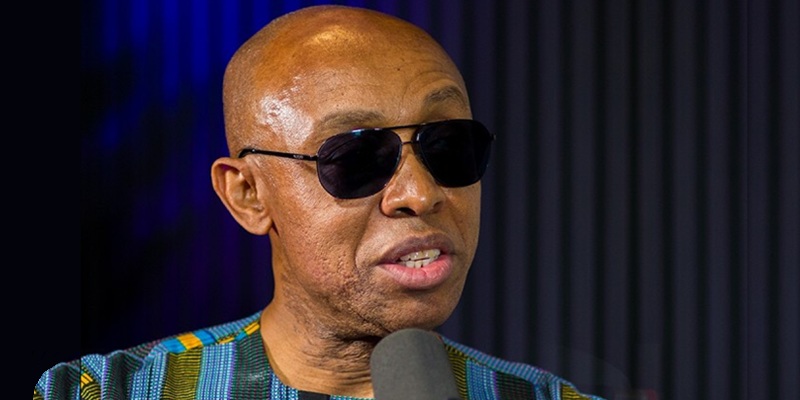
A lawyer and a teacher, Odinkalu can be reached at chidi.odinkalu@tufts.edu.