


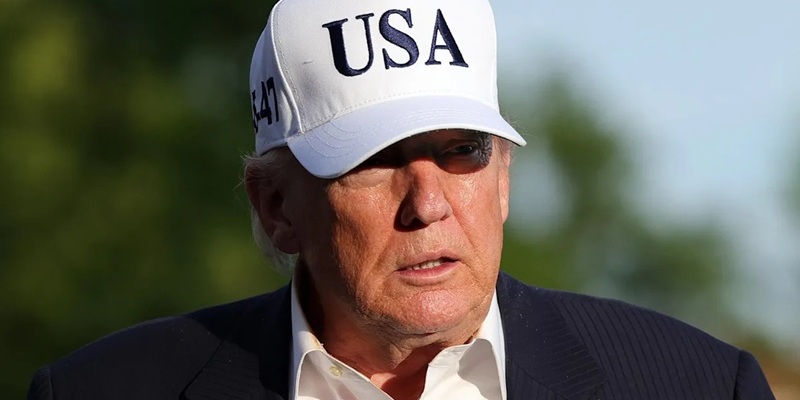

TDU.S. Secretary of Defense Pete Hegseth has disclosed that President Donald Trump directed the Pentagon to prioritize the protection of Nigerian Christians allegedly targeted by ISIS-linked extremists.
Hegseth said the move culminated in the elimination of a top Islamic State commander in Nigeria.
Hegseth made the revelation during an interview aired by Fox News, where he defended the administration’s counterterrorism operations in West Africa.
He praised Trump’s leadership on national security issues during the interview.
According to him, intelligence gathered during the mission contributed to the deaths of “hundreds” of ISIS fighters accused of attacks on Christians and threats against the United States homeland.
“There’s a lot of things we do that the media pays attention to, and a lot of things that the president empowers the Department to do on behalf of the American people, that he deserves great credit for,” Hegseth said during the interview.

The comments come days after President Trump announced that a joint operation involving U.S. and Nigerian forces led to the killing of Abu-Bilal al-Minuki.
Al-Minuki was described by American officials as ISIS’ global second-in-command.
The operation reportedly took place in northeastern Nigeria’s Lake Chad Basin, an area long troubled by insurgent violence linked to the Islamic State West Africa Province (ISWAP) and Boko Haram.
Reuters reported that the operation was coordinated with Nigerian authorities and executed through a precision air-and-ground assault without reported U.S. casualties.
Nigerian President Bola Tinubu also acknowledged the operation, describing it as a significant milestone in counterterrorism cooperation between both countries.
While the Trump administration has framed the military actions as part of efforts to stop the killing of Christians in Nigeria, analysts and Nigerian officials have continued to stress that extremist violence in the country affects both Muslims and Christians alike.

Nigeria’s Foreign Minister Yusuf Tuggar previously stated that joint operations with the United States were aimed at combating terrorism generally and protecting all Nigerians irrespective of religion.
The extremist group most commonly associated with ISIS activities in Nigeria is the Islamic State West Africa Province (ISWAP), which operates mainly in the northeast and around the Lake Chad region.
Security experts note that counterterrorism missions involving high-profile targets are usually conducted through multinational cooperation and are often publicly acknowledged after completion.
Hegseth also hinted that additional military operations could follow if extremist attacks continue in the region.
Previous statements from the Pentagon and the Trump administration had warned that more strikes against ISIS-linked targets in Nigeria remained possible.
The latest disclosures have triggered renewed international debate over foreign military involvement in Nigeria’s security crisis and the framing of religious persecution in the country.

It also highlights Washington’s growing counterterrorism footprint across West Africa.