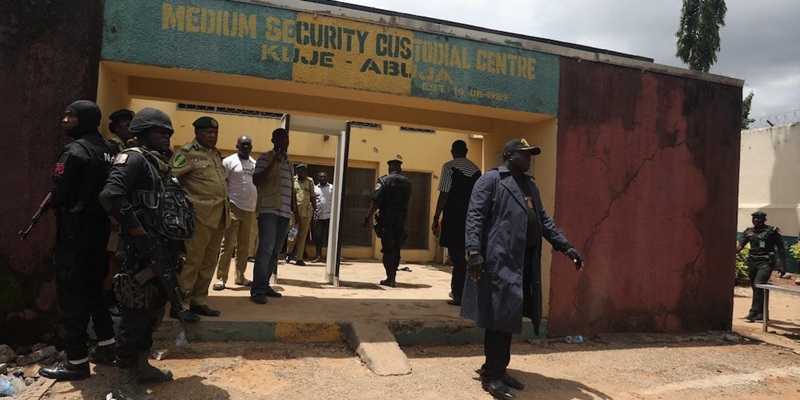
A major security developmeTDnt has emerged following the transfer of more than 300 suspected terrorists and high-risk detainees from a military detention facility in Kwara State to the Kuje Custodial Centre in Abuja.

Sources familiar with the movement disclosed that the large-scale transfer was carried out on Sunday under heavy security escort.
However, authorities have yet to issue an official statement explaining the reasons behind the relocation, fueling widespread speculation among security analysts and members of the public.
The transfer comes at a time when Nigeria continues to confront security challenges posed by terrorist groups, bandits, and other violent criminal networks operating across several regions of the country.
Possible Reasons Behind the Transfer
Although official explanations remain unavailable, security experts have outlined several possible factors that may have influenced the decision.
One possible reason is intelligence reports indicating a heightened threat of attack on the military holding facility in Kwara State.
Security agencies may have considered it necessary to move the detainees to a more fortified location to prevent any attempted jailbreak or rescue operation by terrorist collaborators.
Another likely factor is the shrinking detention capacity at military facilities.
As security forces intensify operations against insurgents and criminal groups, increasing numbers of arrests may have placed pressure on existing holding centres, necessitating the redistribution of inmates to other facilities.
Analysts also point to the superior security infrastructure available at the Kuje Custodial Centre.
The facility, located within the Federal Capital Territory, benefits from enhanced surveillance systems, stronger perimeter protection, and easier access to rapid-response security units.
A fourth possibility is the ongoing restructuring of detention and prosecution processes.
Authorities may be centralizing terrorism-related cases in Abuja to facilitate investigations, court appearances, intelligence gathering, and coordination among security agencies.
Others believe the transfer could be linked to plans for decongesting military detention centres and returning them to their primary operational role of housing military suspects and conducting security operations.
Additionally, there are suggestions that some detainees may be approaching critical stages in ongoing prosecutions, making their transfer to a facility closer to federal courts and investigative agencies more practical.
Security Implications
The movement of such a large number of suspected terrorists to Kuje has inevitably raised concerns among residents and security observers, particularly given the facility’s history.
In July 2022, terrorists attacked the Kuje Correctional Centre, freeing hundreds of inmates and exposing vulnerabilities within the country’s correctional system.
Since that incident, however, the Federal Government has reportedly invested significantly in strengthening security around the facility.
This includes increased military presence, upgraded surveillance technology, and enhanced intelligence coordination.
As of the time of filing this report, neither the Nigerian Correctional Service nor relevant military authorities have publicly confirmed the exact number of detainees transferred or the official reasons behind the operation.
Security experts say transparency from the authorities will be crucial in reassuring the public and preventing misinformation regarding the unusual movement of such a significant number of terrorism suspects.
More details are expected to emerge as officials provide clarification on the development.