


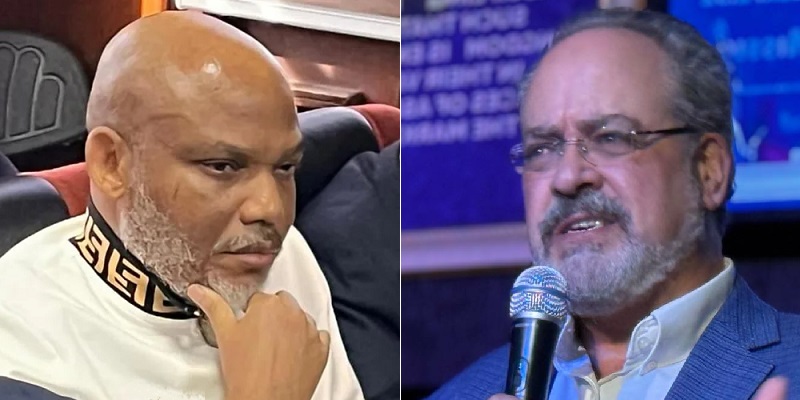

TDA major political and humanitarian proclamation, The Sokoto Declaration, has been formally released under the authority of Mazi Nnamdi Okwu Kanu, leader of the Indigenous People of Biafra (IPOB), in partnership with Mayor Mike Arnold, founder of Africa Arise International. The declaration is being described as one of the most significant calls for justice and self-determination in Nigeria’s recent history, combining moral conviction with a sweeping vision for national transformation.
Key Themes of the Declaration
The document, jointly signed by Kanu and Arnold, outlines a bold framework for liberation and renewal:
- Unity and Justice: It calls for Nigerians across ethnic, religious, and regional divides to rise against oppression, corruption, and systemic violence. The declaration insists that the people themselves must reclaim their destiny from entrenched elites and structures of tyranny.
- Human Rights: Rooted in the African Charter on Human and Peoples’ Rights, the declaration asserts that freedom, dignity, and equality are not privileges but inherent entitlements. It condemns the denial of self-determination as the true form of terrorism, challenging laws such as Nigeria’s Terrorism Prevention and Prohibition Act 2022 that criminalize peaceful activism.
- Self-Determination: The declaration emphasizes that peoples have the right to determine their future through consent and democratic processes. It rejects imposed governance and insists that Nigeria must be restructured to reflect genuine federalism and respect for diverse identities.
- Peaceful Resistance: While uncompromising in tone, the declaration stresses that the struggle must not be captured by hatred, tribalism, or vengeance. Instead, it calls for moral clarity, restraint, and a principled defense of life and liberty.
- Vision of Freedom: The document paints a vivid picture of a liberated Nigeria:
- The North freed from terror, allowing its people to rebuild rather than endure endless cycles of violence.
- The Middle Belt healed, with displaced communities returning home, farms restored, and churches rebuilt.
- The South rising, empowered to control its resources and chart its own destiny.
- A new constitutional order, written by the people through genuine consent, enabling cooperation while respecting self-determination.
Leadership Remarks
Mazi Nnamdi Kanu, described in the declaration as a “Prisoner of Conscience”, reaffirmed his commitment to peaceful but firm resistance. He urged Nigerians to “break the Darkness” and reclaim dignity, insisting that liberty must be built and taken, not granted.
Mayor Mike Arnold echoed these sentiments, stressing that the cause is not about vengeance but about life, liberty, and the right of every human being to live in peace in their ancestral lands. He emphasized that the world must stand with oppressed peoples, not with oppressive regimes, and that Nigeria’s transformation is essential for Africa’s future.
Context and Implications
The Sokoto Declaration arrives at a time of heightened political tension in Nigeria, with debates over restructuring, insecurity, and economic hardship dominating national discourse. It reflects a broader movement advocating for:
- Accountability in governance
- An end to systemic violence and displacement
- Recognition of diverse identities and aspirations
Declarations of this nature have historically played pivotal roles in Nigeria’s political evolution—from the independence movements of the 1950s to the Biafran struggle of the late 1960s. The Sokoto Declaration situates itself within that lineage, but with a renewed emphasis on non-violence, moral clarity, and international solidarity.

The document concludes with a spiritual appeal, invoking divine guidance for wisdom, courage, and unity in the struggle for freedom. It frames the cause not only as a political project but as a moral and spiritual duty to future generations.
Note:
This report is based on the official release of The Sokoto Declaration. The document represents the views of its signatories and supporters, and its political implications are expected to spark significant debate across Nigeria’s political and civil society landscape.
This declaration could mark a turning point in Nigeria’s political discourse, and its resonance will likely be tested in the weeks ahead as both supporters and critics weigh in on its vision for a reimagined nation.