TDAmerican commentator Mike Arnold has strongly disputed the account by the Nigerian Army that it freed 360 abductees from a Jama’atu Ahlis Sunna Lidda’awati wal-Jihad (JAS) stronghold in the Mandara Mountains, southern Borno State.

The Nigerian military had announced what it described as one of its most significant hostage rescue operations in recent years, claiming to have freed 360 abductees from a Jama’atu Ahlis Sunna Lidda’awati wal-Jihad (JAS) stronghold in the Mandara Mountains, southern Borno State.
According to the Army’s statement, the operation was executed under Operation HADIN KAI (OPHK) and involved Special Forces and Sector 1 troops.
The military said the rescue was the culmination of weeks of intelligence gathering, covert reconnaissance, and operational planning.
It highlighted the integration of Human Intelligence (HUMINT), Signals Intelligence (SIGINT), and persistent surveillance to locate the hostages and map insurgent defenses.
The Army further claimed that intelligence assets penetrated the terrorist network, providing actionable information on the abductees’ locations and insurgent commanders’ movements.
It said psychological operations disrupted insurgent cohesion, enabling troops to carry out the rescue with “unprecedented situational awareness.”
Counter-Claims by Mike Arnold
Arnold, while responding, strongly disputed the Army’s account, describing it as “a lie.”
In a post shared on social media, Arnold alleged that soldiers did not rescue the hostages but instead delivered a ransom payment to Boko Haram.
“Soldiers delivered ransom to Boko Haram, said to be somewhere between 3 and 5 billion naira.
“Only Muslim hostages were released.
“The Christian women and children remain in captivity,” Arnold wrote.
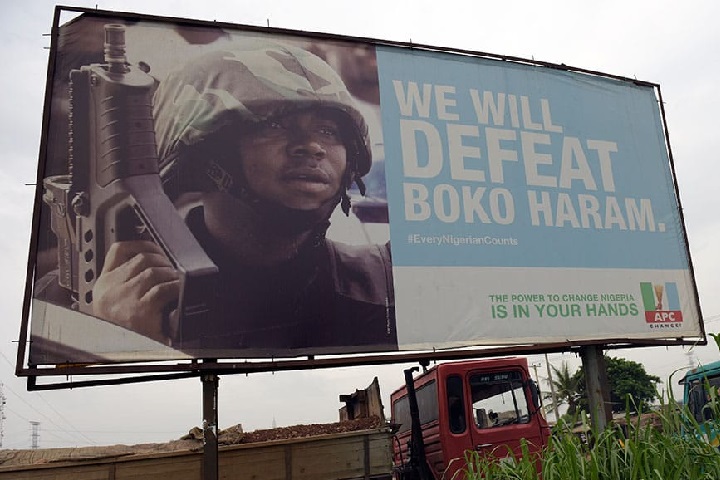
He claimed eyewitnesses confirmed that the abductees were being held in Gavva village, at the foot of the Mandara Mountains, just three kilometers from a military base in Ngoshe.
Arnold described the Army’s announcement as complicity with terrorists.
He accused the military of facilitating “a wealth transfer to their comrades” and perpetuating what he called an “ongoing Christian genocide.”
Arnold also shared video footage purportedly showing Muslim women and children being returned, while Christian captives remained in Boko Haram custody.
Broader Implications
The conflicting narratives highlight the deep mistrust between sections of the public and Nigeria’s security institutions.
While the Army insists its operation demonstrates growing intelligence dominance and tactical superiority, critics argue that ransom payments and selective releases undermine the credibility of official claims.
This incident also revives long-standing debates about whether Nigeria’s military and political authorities have, at times, resorted to ransom payments to secure hostage releases.
Past controversies—such as the release of abducted schoolgirls in Chibok and Dapchi—were marred by allegations of secret negotiations and payments, though officials consistently denied such claims.
The humanitarian dimension is equally troubling.
If Arnold’s claims are accurate, the selective release of Muslim hostages while Christian women and children remain in captivity raises serious questions about religious bias and the protection of vulnerable groups.
It also underscores the ongoing plight of communities in Nigeria’s North East, where abductions, forced displacement, and violence remain daily realities.
Observers note that the Mandara Mountains have long served as a strategic hideout for insurgents, offering rugged terrain and proximity to border areas that complicate military operations.
The Army’s assertion of “intelligence dominance” in such a difficult environment is significant, but the credibility of its claims is now under intense scrutiny.
What Next?
As of press time, the Nigerian Army has not responded directly to Arnold’s allegations.
Independent verification of the circumstances surrounding the release remains difficult, given the remote terrain and restricted access to conflict zones.
Civil society groups and international observers are calling for transparency, urging the government to provide verifiable evidence of the rescue operation.
Analysts warn that if ransom payments were indeed made, it could embolden insurgents to continue abductions as a lucrative enterprise, further destabilizing the region.
The controversy underscores the fragile trust between Nigeria’s citizens and its security institutions.
For many, the question is not only whether the Army rescued the abductees, but whether the state can credibly protect all communities—regardless of religion or ethnicity—from the scourge of terrorism.
Until independent investigations shed more light, the competing narratives of a daring rescue versus a ransom-fueled release will continue to dominate public discourse.
It will also deepen the uncertainty around Nigeria’s fight against insurgency.