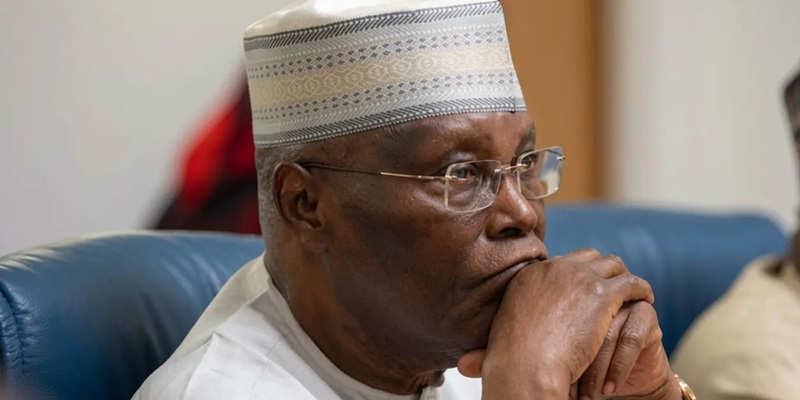
TD Former Vice President Atiku Abubakar has declared that the 2027 presidential election will be his final attempt to become Nigeria’s president, saying he will not seek the office again if he loses the election.
Atiku, the presidential candidate of the African Democratic Congress (ADC), made the declaration during a Hausa-language interview on August 19, 2026, while responding to questions about his age, health and repeated attempts to secure Nigeria’s presidency.
The statement comes as Atiku intensifies preparations for the 2027 election and seeks to position the ADC as the principal opposition platform challenging the ruling All Progressives Congress (APC).
‘2027 Will Be My Last Contest’
Addressing concerns about his age and his previous presidential campaigns, Atiku reportedly stated that he would not return to the presidential race if he fails to win in 2027.
The declaration is significant because Atiku has contested Nigeria’s presidency several times, including under the Peoples Democratic Party (PDP) in 2019 and 2023.
His latest pledge is likely to become an important part of the political conversation surrounding his candidacy, particularly among voters who have questioned whether the former vice-president would continue seeking the presidency beyond 2027.

Atiku Builds ADC Opposition Platform
Atiku’s 2027 campaign is being built around the ADC as a vehicle for a broader opposition coalition.
After leaving the PDP, he secured the ADC presidential nomination, defeating other contenders including former Rivers State Governor Rotimi Amaechi.
The emerging political structure is designed to bring together politicians and supporters from different parties and political backgrounds in an effort to challenge the APC.
The coalition strategy has attracted figures with previous connections to the PDP, APC and other political movements.
Amaechi Named Running Mate
Atiku’s proposed ticket pairs him with Amaechi, giving the ticket a North-South structure.
Amaechi, a former governor of Rivers State and former Minister of Transportation, finished behind Atiku in the ADC presidential primary.

The combination has been presented by the party as a unity and rescue ticket aimed at appealing across Nigeria’s regional and political divides.
Supporters argue that the ticket combines Atiku’s extensive national political experience with Amaechi’s executive and legislative background.
Youth Mobilisation Takes Centre Stage
The Atiku campaign is also placing significant emphasis on grassroots and youth mobilisation.
One of its major initiatives is the RiseUpNaija (RUN) movement, which seeks to mobilise young Nigerians across political-party lines.
The movement has reportedly targeted millions of potential supporters and plans to establish structures across polling units.
Its strategy includes membership recruitment, voter mobilisation, election monitoring and encouraging supporters to reject vote-buying.

The campaign is also seeking to transform online political engagement into physical participation through voter registration, volunteering and election-day mobilisation.
‘Renewed Action’ Against APC
Atiku’s campaign message contrasts the APC administration’s “Renewed Hope” agenda with what the ADC describes as a programme of “renewed action.”
The opposition candidate has criticised the government’s handling of the economy, insecurity, unemployment and social welfare.
His campaign has highlighted security reform, education, employment, healthcare, electricity and economic recovery among its priorities.
Atiku has also advocated free and compulsory primary and secondary education and greater investment in skills development for young Nigerians.
On the economy, he has criticised the removal of the petrol subsidy and argued that Nigerians have not sufficiently benefited from the savings generated by the policy.
Age and Electoral Record Remain Key Issues
While Atiku’s experience remains one of his major political strengths, his age and history of presidential contests remain central issues in the 2027 debate.
Critics have questioned whether a northern presidential candidate can successfully challenge an incumbent from the South after the eight-year rotation traditionally associated with Nigeria’s presidency.
Atiku has maintained that he is physically and mentally capable of serving as president.
His latest promise not to contest again after a defeat in 2027 appears aimed at addressing concerns that his presidential ambition could continue indefinitely.
Online Reaction Mixed
The declaration has generated mixed reactions online.
While some supporters welcomed the statement as evidence that Atiku is approaching the 2027 election as a final opportunity to provide what he describes as an alternative to the APC, others expressed skepticism.
Some commentators questioned whether political promises made before an election can be relied upon, while others accused Atiku of maintaining a long-standing ambition to become president.
The controversy reflects the broader challenge facing the ADC campaign: convincing voters that its coalition can translate its political alliances and mobilisation structures into actual electoral strength.
2027 Race Begins to Take Shape
With the 2027 election approaching, Atiku’s ADC campaign is increasingly focused on coalition-building, grassroots organisation and presenting itself as the main opposition alternative to President Bola Ahmed Tinubu and the APC.
The former vice-president brings decades of political experience and an established national network to the contest.
However, the campaign faces significant challenges, including opposition fragmentation, regional voting patterns, the strength of the incumbent political structure and concerns over Atiku’s age and previous presidential bids.
His latest declaration therefore carries both political and personal significance.
If he wins in 2027, Atiku would finally achieve his long-standing ambition of becoming president. If he loses, he says Nigerians will not see his name on another presidential ballot.