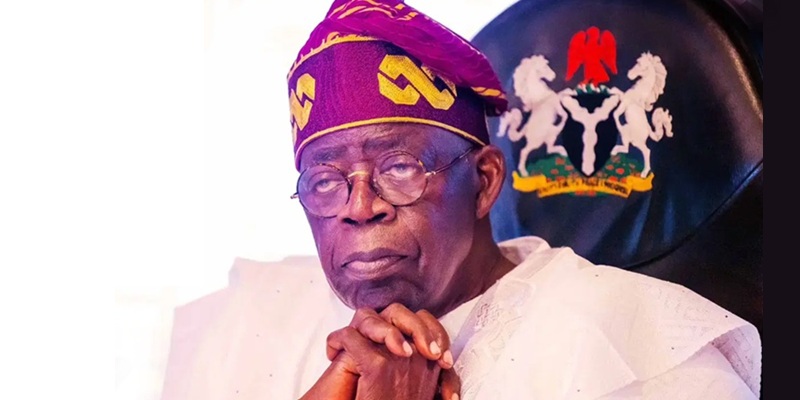
TDThe Arewa APC Forum Kano State Chapter has formally announced the withdrawal of its support for the second-term ambition of Bola Ahmed Tinubu.

The group cited concerns over governance, accountability, and public trust.
This was contained in an official press statement dated April 17, 2026, and signed by its chairman, Dr Sallah Hakilu Kibiya.
The Forum declared that its decision followed “extensive consultations and careful reflection” on the current direction of leadership at the federal level.
The statement marks a significant shift in political alignment within Kano State, a region traditionally considered influential in northern political dynamics.
The Forum stated that it could no longer, “in good conscience,” continue to support an administration it described as being widely criticized for nepotism, incompetence, and corruption.
This strong language underscores growing dissatisfaction among certain factions within the ruling party’s northern base.
It raises questions about internal cohesion ahead of future electoral cycles.
Failures of the Tinubu Administration
According to the statement, leadership must inspire public confidence, uphold fairness, and demonstrate a clear commitment to national unity and institutional integrity.
The Forum argued that these principles have been consistently undermined, adding that “where these values are persistently eroded, silence becomes complicity.”
This assertion reflects a broader narrative of accountability and ethical governance.
Such themes have increasingly dominated political discourse in Nigeria.
Furthermore, the group made it clear that its confidence in the current political direction has been withdrawn entirely.
Members of the Forum have been advised to align their actions and future political engagements with this new stance.
It signals a coordinated and possibly strategic repositioning within the political landscape.
Political Implications
Political analysts suggest that this development could have ripple effects beyond Kano State.
This will have particular impact if other regional blocs or influential stakeholders adopt similar positions.
Northern political organizations have historically played a pivotal role in shaping national electoral outcomes.
Any fragmentation within their ranks could alter the balance of power.
The statement concludes by emphasizing that the decision was made in the public interest and in defense of democratic accountability, good governance, and the collective aspirations of Nigerians.
While it remains unclear how this move will impact the broader strategy of the ruling party, it introduces a new layer of complexity into Nigeria’s evolving political environment.
As reactions continue to emerge, attention will likely focus on whether this signals an isolated protest or the beginning of a wider shift within key political constituencies.
Implications for Tinubu and Peter Obi/Kwankwaso Rumoured Joint Ticket
The withdrawal of support for Bola Ahmed Tinubu by the Arewa APC Forum Kano State Chapter introduces a consequential variable into the opposition calculus—particularly around a potential joint ticket between Peter Obi and Rabiu Musa Kwankwaso.
At a structural level, the statement signals elite dissent within the northern bloc of the ruling All Progressives Congress.
Kano, as a high-vote-density state, is not just symbolically important; it is electorally decisive.
Any erosion of APC cohesion there creates an opening for opposition realignment.
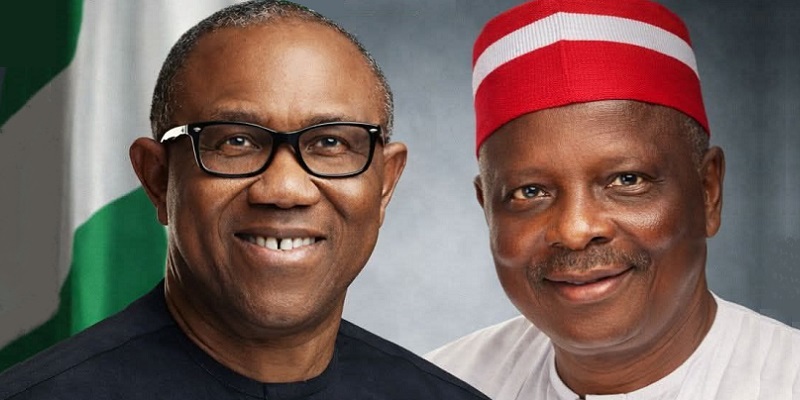
This is precisely where a Obi–Kwankwaso configuration gains strategic relevance.
For Obi, whose 2023 support base was disproportionately urban, youth-driven, and southern-leaning, the core constraint has been northern penetration.
Kwankwaso, on the other hand, commands a loyal grassroots network in Kano and parts of the North-West through the Kwankwasiyya movement.
If the Arewa APC Forum’s position reflects a broader sentiment shift, it lowers the transaction cost of political migration for northern actors who might otherwise resist aligning with an opposition figure like Obi.
Consequences for Tinubu
In practical terms, this development could:
1. Accelerate Northern Elite Defections
The Forum’s language—highlighting governance failures and moral legitimacy—provides a narrative framework for defections.
Northern political entrepreneurs looking to reposition ahead of the next election can now do so under the cover of “principled withdrawal,” rather than opportunism.
This benefits a coalition ticket that needs cross-regional legitimacy.
2. Strengthen Kwankwaso’s Bargaining Power
Kwankwaso’s value in any joint ticket is directly tied to his ability to deliver Kano and influence adjacent states.
With cracks appearing in APC’s northern base, his leverage increases.
He transitions from being a regional candidate to a potential kingmaker.
Negotiations over ticket structure—who leads and who deputizes—would be affected by this shift.
3. Improve Electoral Math for a Joint Ticket
Nigeria’s presidential elections are not won by popularity alone but by geographic spread and minimum thresholds across states.
An Obi–Kwankwaso alliance could theoretically combine southern reformist appeal with northern vote banks.
The Arewa APC Forum’s stance suggests that a portion of the northern electorate may now be more fluid than previously assumed.
4. Reframe the Opposition Narrative
A joint ticket could position itself not merely as an alternative, but as a corrective coalition responding to disillusionment within the ruling party’s own ranks.
The Forum’s emphasis on accountability, unity, and integrity aligns closely with Obi’s campaign messaging, creating narrative coherence.
Constraints for Peter Obi/Kwankwaso
However, there are constraints.
Kwankwaso’s relationship with other northern political actors is not universally harmonious, and Obi’s base may resist concessions perceived as diluting reformist ideals.
Additionally, the New Nigeria Peoples Party and Obi’s existing platform would need structural harmonization—no small task in Nigeria’s party system.
Bottom line: the Arewa APC Forum’s withdrawal may not, on its own, be a game-changer.
However, it is a credible early signal of fragmentation within the ruling coalition.
If that fragmentation deepens, it materially improves the feasibility and potential competitiveness of an Obi–Kwankwaso joint ticket.