TDA viral image circulating online has ignited outrage and raised serious questions about discipline and operational integrity within Nigeria’s security architecture.

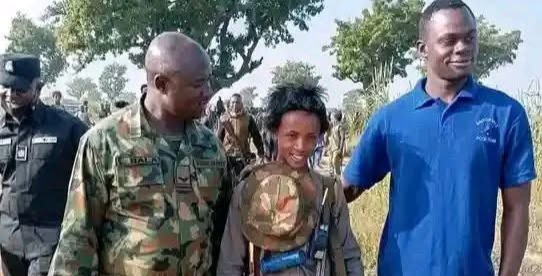
The photograph, reportedly taken in Katsina State, shows a uniformed military officer, a civilian, and a minor armed bandit walking side by side in what appears to be a relaxed atmosphere.
The armed bandit is visibly carrying a rifle and appears unrestrained, while the others seem at ease, even conversational.
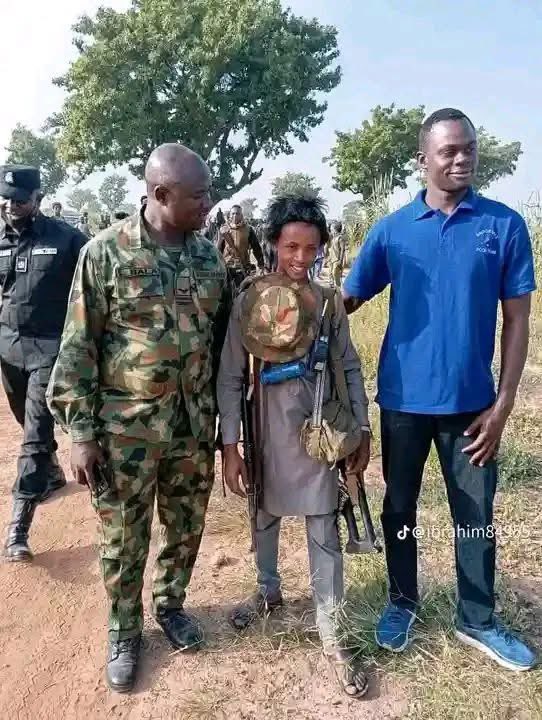
Unverified claims accompanying the image allege that the young man is affiliated with a notorious bandit group operating in the North-West.
However, at the time of filing this report, there is no official confirmation from the Nigerian Armed Forces or the Nigerian Air Force regarding the identity of the individuals involved or the circumstances surrounding the encounter.
What has fueled public anger is not only the presence of an armed non-state actor but the apparent informality of the interaction.
The officer, dressed in camouflage, appears to be pose the individual in a non-hostile manner, while another man in civilian clothing walks alongside them, smiling.
In the background, additional security personnel can be seen, suggesting this was not an isolated or covert moment.
Security analysts caution against drawing premature conclusions from a single image.
In conflict zones such as parts of Katsina State, it is not uncommon for security forces to engage in negotiated surrenders, intelligence gathering, or community-based de-escalation efforts. Such interactions can sometimes be misinterpreted when captured out of context.
However, critics argue that optics matter, especially in a country grappling with persistent insurgency and banditry.
If the individual is indeed linked to armed groups, the optics of a friendly or casual posture by security personnel could undermine public confidence and morale, particularly among families of fallen soldiers.
“This image, if authentic and accurately described, reflects a troubling lapse in protocol,” said a security consultant based in Abuja.
“Even in cases of surrender or cooperation, there are established procedures for handling suspects—especially those bearing arms.”
The controversy also revives broader concerns about the conduct and accountability of security forces in high-risk zones.
Nigeria has faced years of asymmetric warfare involving insurgent and bandit groups, and maintaining public trust remains critical to counterinsurgency success.
Authorities have yet to issue an official statement addressing the image.
As pressure mounts, Nigerians are demanding clarity: Was this a case of operational engagement, a negotiated surrender, or a breach of military discipline?
Until those questions are answered, the image stands as a stark reminder of the complexities—and sensitivities—surrounding Nigeria’s ongoing security challenges.