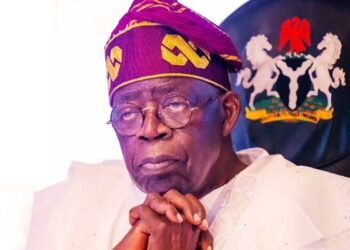
TD The following report examines a series of allegations and controversies that have been raised by critics of President Bola Ahmed Tinubu over the years.
Some of these claims remain disputed, while others have been the subject of court proceedings, official responses, or media investigations.
Where claims are contested, this is indicated accordingly.
1. Controversy Over Parental Background
Questions have periodically been raised by political opponents regarding President Bola Tinubu’s family background and parentage.
Critics have argued that inconsistencies exist in public records concerning his parents.
Some critics claim that Tinubu falsified his personal and parental identity, alleging that he was formerly known as “Amoda Ogunlere”.
They also claim that he was originally from Iragbiji in Osun State.

Tinubu has consistently maintained the information contained in his official records.
2. Dispute Over Date of Birth
Tinubu’s date of birth has generated public debate because different documents over the years have reportedly reflected varying dates or years.
Critics cite these discrepancies as evidence of inconsistency.
Meanwhile, his supporters argue that clerical errors and documentation issues were common in Nigeria during the period in question.
The issue has remained politically controversial but unresolved in court as proof of forgery.

3. Questions About Primary School Records
The President has faced criticism over the absence or inconsistency of publicly verifiable records relating to his primary school education.
Opponents argue that the schools listed in some official documents have been questioned, with some of them on existent as at the time claimed.
Though Tinubu has not admitted to presenting false primary school credentials, the matter remains part of ongoing political debate.
4. Secondary School Claims
Similar questions have been raised regarding Tinubu’s secondary school education.
Critics have challenged aspects of the educational history presented in official documents submitted during elections.

To make matters worse, Tinubu left the spaces for primary and secondary school education vacant in the form recently submitted to the electoral body.
Critics claim either Tinubu had no formal early life education or he may have a case of identity theft in his hand that he would not dare disclose.
While these issues have featured prominently in political campaigns and legal petitions, no final judicial finding has so far declared that he forged his secondary school qualifications.
5. Chicago State University Certificate Controversy
The controversy surrounding Tinubu’s educational qualifications from Chicago State University became one of the most widely publicised disputes before and after the 2023 presidential election.
Court-ordered disclosures by the university confirmed that one “Tinubu” attended the institution and graduated.
However, questions were raised over discrepancies between the certificate submitted to Nigeria’s electoral authorities and documents held by the university.
Moreover, a certified true copy (CTC) of the document from the University shows that Bola Tinubu is a female, not male.
Tinubu has maintained that he graduated from the institution, while critics continue to argue that the certificate controversy raises questions about the authenticity of documents submitted.
6. NYSC Certificate Debate
Another recurring issue concerns whether Tinubu participated in the National Youth Service Corps (NYSC) scheme.
Because of his age at graduation and other circumstances surrounding his educational timeline, critics have questioned the absence of publicly available NYSC records.
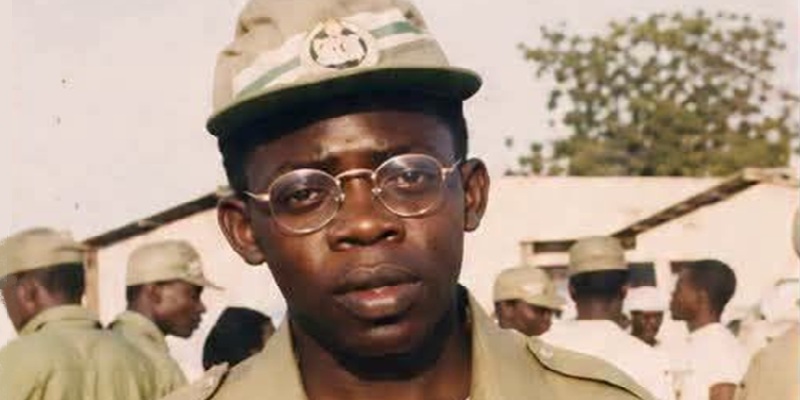
His supporters even posted a picture purportedly of Tinubu in NYSC fatigue in the early 1980s.
Recently, however, an alleged “real owner of the picture, emerged.
Claims surfaced that the individual in the photograph is not Tinubu, but rather Mr. Olamide Salami Kayode, 52, who reportedly declared himself the true person in the image.
Tinubu has not presented an NYSC certificate as part of his qualifications for office, and the issue has remained largely a subject of political criticism rather than a judicial determination.
7. Theft of Donald Duke’s Photo
Another interesting scenario involved Donald Duke, former Governor of Cross River State in Nigeria.
Duke had alleged that his picture was stolen by Tinubu and/or his team.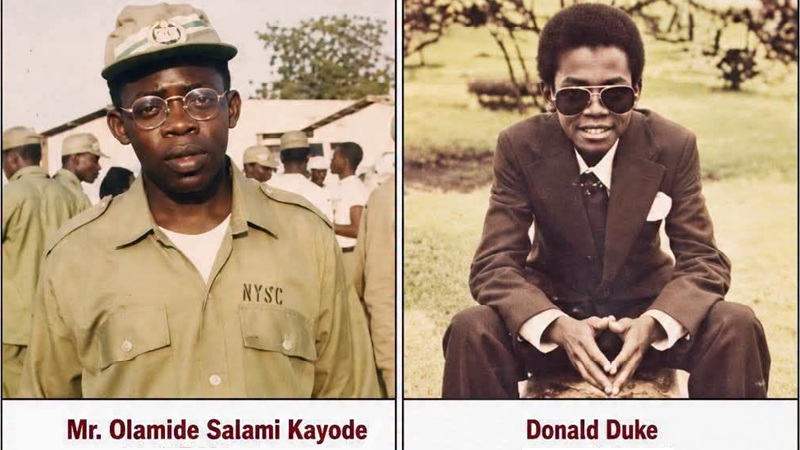
“Olamide Salami Kayode” and “Donald Duke” all presented to the world as TinubuConfirming the fraudulent use of his photo, Donald Duke said in a speech recorded at an event:
“Interestingly, there’s a new documentary that has been produced.
“It’s titled, “The Nation Builder”, and it’s on bulletin, his years in Chicago, his exploits, what a wonderful student he was, fine.
“My disagreement is that my photograph, as a 12-year-old, is used as his photograph, as a young person.
“In other words, they couldn’t find a photograph of him as a young person, and they now take my photograph I took as a 12-year-old.”
8. Deloitte Employment Claims
Questions have also been raised about claims that Tinubu previously worked for Deloitte.
Critics have argued that publicly available evidence does not conclusively support aspects of his employment history.
The President had previously claimed that he worked in the private sector before entering politics, specifically Deloitte, in his previous forms submitted to the Independent National Electoral Commission (INEC).
However, following intense scrutiny of his past life, Tinubu dropped the claim in the form submitted to INEC this year.
Debate over specific employment records has continued.
9. Bishops’ Endorsement Controversy
During the 2023 election campaign, individuals presented as Christian bishops attended the unveiling of Tinubu’s running mate.
The incident sparked widespread criticism after several Christian organisations distanced themselves from the event, alleging that some participants were not recognised bishops.
The controversy fuelled accusations that the event created a misleading impression of broad Christian endorsement.
Again, as usual, the Tinubu campaign denied any deliberate deception.
10. Catholic Youth Organisation Statement Forgery Claim
Last weekend, a statement circulated on social media claiming to represent the position of the Catholic Youth Organisation of Nigeria (CYON) on political neutrality.
The organisation subsequently stated that the document did not originate from it.
CYON described it as fake and warned members of the public against misinformation.
The incident became another controversy in Nigeria’s increasingly contentious political information environment.
U.S. Drug Forfeiture Case
One of the most documented controversies involving Tinubu relates to the 1993 civil forfeiture case in the United States.
Court records show that he agreed to forfeit $460,000 held in bank accounts after U.S. authorities alleged the funds were connected to narcotics proceeds.
Importantly, the case was a civil forfeiture proceeding, not a criminal conviction for drug trafficking.
Tinubu has repeatedly denied involvement in drug trafficking, and no U.S. criminal court convicted him of such an offence.
Nevertheless, the forfeiture has remained a recurring issue in Nigerian political discourse and election campaigns.
Conclusion
Many of the controversies surrounding President Bola Ahmed Tinubu have become defining issues in Nigeria’s political landscape, frequently resurfacing during election cycles and court proceedings.
None of the matters have been clarified through official records or judicial decisions.
Others remain politically contested, with supporters and critics interpreting the available evidence differently.
As with many high-profile political disputes, distinguishing between established facts, unresolved questions and partisan claims remains essential for informed public discourse.
Until such matters are cleared, Tinubu’s parentage, identity, education and occupation remain shrouded in mystery.