
 ABUJA, Nigeria — The World Bank has challenged Nigerian state governments over their spending priorities despite rising public revenues.
It says investment in roads and transport infrastructure has grown faster than spending on education, healthcare and social protection.
The warning raises questions about whether increased government revenue is improving essential public services and citizens’ living conditions.
A World Bank Senior Economist, Gloria Joseph-Raji, raised the concerns on Tuesday in Abuja.
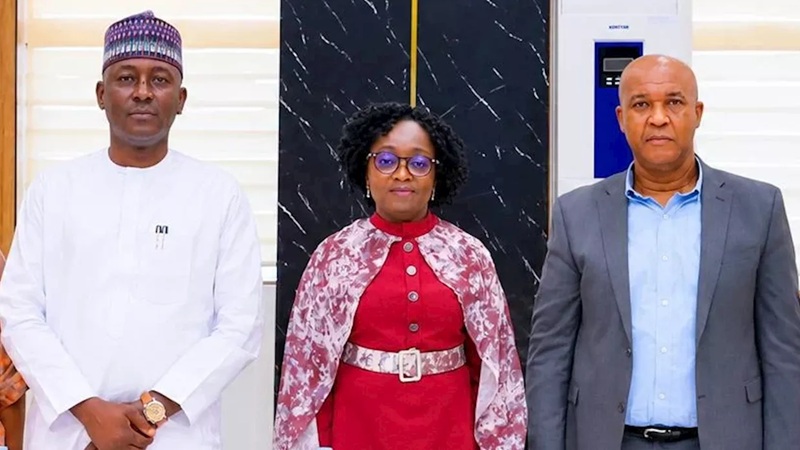
She spoke during the launch of BudgIT’s 2026 State of States Report.
The report carries the theme, From Allocation to Impact: Rethinking State Spending Priorities.

Joseph-Raji said spending on essential social services had increased substantially but remained behind infrastructure spending.
She noted that this pattern persisted even in states with weaker human development outcomes.
Economic Reforms Increase State Revenues
Joseph-Raji attributed the increased fiscal resources to several economic reforms introduced since 2023.
These include petrol subsidy removal, exchange-rate unification and improvements in tax administration.
States also benefited from federal intervention funds and settlements of longstanding government obligations.
The World Bank said these developments expanded the financial capacity of state governments.

According to Joseph-Raji, many states previously struggled to meet basic financial obligations, including civil service salaries.
She said states could now meet salary commitments while having additional resources for public services.
However, she warned that increased revenue must translate into better development outcomes.
World Bank: Education Spending Share Declines
The World Bank’s October 2026 Nigeria Development Update examined spending patterns across all 36 states.
Its findings showed that state revenues increased by approximately 93 per cent in real terms between 2023 and 2025.
Expenditure also increased by approximately 92 per cent during the same period, with capital spending consequently rising from 46 per cent to 61 per cent of total expenditure.

Transport infrastructure recorded the largest increase among major spending categories.
Education, healthcare and social protection spending also increased, but at slower rates.
The World Bank reported that education’s expenditure share declined from 14.9 per cent in 2021.
It reached 12.1 per cent in 2025. Healthcare spending remained broadly stable at approximately seven per cent.
Social protection’s share increased from 1.4 per cent to 4.4 per cent. The figures highlight differing spending trends across essential public services.
BudgIT Raises Concern Over Budget Implementation
BudgIT also questioned how effectively state governments were deploying their available financial resources.
Its first-half 2026 analysis covered 34 states. Those states had combined approved budgets totalling ₦35.22 trillion.
However, they spent only ₦8.60 trillion by the end of June. That represented 24.4 per cent of their combined approved budgets.
The remaining ₦26.62 trillion had not been spent by the end of June.
BudgIT Country Director, Vahyala Kwaga, presented the figures during the report’s launch.
He argued that revenue generation and budget allocations alone could not measure government performance.
He said citizens deserved to know whether public spending delivered meaningful development outcomes.
The figures concern first-half 2026 budget execution, not the entire year’s expenditure.
State Revenues Rise Sharply, Said World Bank
BudgIT’s comparative analysis also highlighted substantial revenue growth across 34 states.
Their aggregate revenues increased from ₦4.99 trillion in 2022 to ₦15.53 trillion in 2025.
That represented an increase of approximately 211 per cent, as Federation Account allocations also increased significantly during the period.
FAAC receipts rose from ₦3.43 trillion in 2022 to ₦11.38 trillion in 2025, representing growth exceeding 232 per cent.
The figures indicate a substantial expansion in financial resources available to state governments.
However, the World Bank warned against excessive dependence on federally shared revenue.
Federation transfers accounted for 73 per cent of aggregate state revenues between 2021 and 2025.
That calculation excluded Lagos State because of its relatively strong internally generated revenue.
Joseph-Raji said transfers exceeded three-quarters of revenue in nearly every state during 2025.
She added that internally generated revenue covered recurrent expenditure in only two states.
This dependence exposes state finances to fluctuations in federally shared revenue.
BudgIT Calls for Greater Accountability
BudgIT’s 2026 report assesses the fiscal performance of 35 Nigerian states during 2025.
It examines revenue generation, expenditure management, debt sustainability and spending priorities.
The organisation introduced a revised methodology for assessing developmental impact.
Its assessment gives greater attention to agriculture, healthcare, education and water services.
The report also examines states’ dependence on federal allocations and their fiscal pressures.
BudgIT called for stronger domestic revenue mobilisation and more credible budgeting.
It also emphasised responsible borrowing and improved public financial management.
The organisation believes governments must demonstrate how public resources improve citizens’ lives.
World Bank Recommends Stronger Financial Management
The World Bank called for improved accountability and more effective management of public resources.
It identified budget credibility, cash management and spending controls as important priorities.
It also recommended stronger public investment management and improved debt oversight.
States were urged to incorporate donor-funded activities into their budget systems.
Such activities should also appear in implementation reports and annual financial statements.
The World Bank acknowledged improvements in fiscal transparency across Nigerian states.
However, it maintained that transparency must support better spending decisions and service delivery.
World Bank Country Director for Nigeria, Mathew Verghis, stressed the importance of efficient spending.
He said stronger accountability could help public resources improve Nigerians’ lives.
The Development Challenge
The findings place renewed attention on how state governments use increased public revenues.
Roads and transport infrastructure remain important for economic growth and connectivity.
However, education, healthcare and social protection directly affect human development.
The World Bank’s assessment suggests that these sectors require greater spending attention.
BudgIT’s budget execution figures also raise concerns about implementation capacity.
The figures do not establish that every unspent budget allocation represents waste.
They nevertheless highlight the gap between approved budgets and actual expenditure.
State governments now face growing pressure to demonstrate measurable public benefits.