TD Asaba, Delta State — Citizen-led accountability platform TrackaNG, a project of BudgIT, has raised serious questions about public financial transparency in Delta State.

TrackaNG raised the doubts after uncovering contradictions between official budget records and ground reality regarding a ₦50 million court construction project in Erho, Abraka.
Budget Record vs. Ground Reality
According to Delta State’s 2024 Q4 Budget Implementation Report, ₦50 million was fully expended—recorded as 100% implementation—for the construction of Magistrate and High Court facilities in Erho, Abraka.
On paper, this suggested that the project had been completed, with funds fully disbursed and infrastructure delivered.
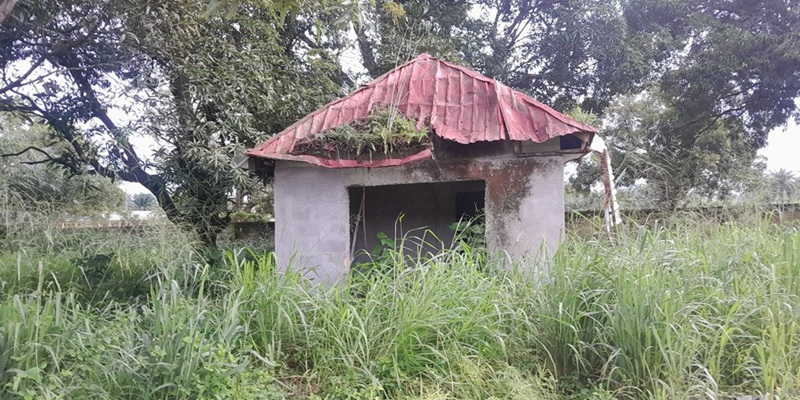
Yet a site visit by TrackaNG painted a starkly different picture.
Photos shared online showed dilapidated court buildings, with peeling roofs, broken benches reportedly donated by the local community, and compounds overgrown with bushes.
Court officials confirmed that no new construction or renovation had taken place.
The magistrate even noted that the current benches were provided by residents, not the government.
This glaring mismatch between official records and the reality on the ground has sparked outrage among citizens.
Observers, meanwhile, demand to know how ₦50 million could vanish without trace.
Chief Judge’s Response
When contacted, the Office of the Chief Judge of Delta State clarified that the ₦50 million appropriation was never accessed during the 2024 fiscal year or thereafter.
The office made the clarification in response to Freedom of Information request by TrackaNG.
“The entire sum of ₦50,000,000.00 as appropriated remains unaccessed throughout the 2024 fiscal year or thereafter,” the Chief Judge’s office stated.
The letter went further to describe reports of full expenditure as “totally incorrect and misleading”.
It urges civil society groups to cross-check facts before making assertions.
This official clarification directly contradicts the budget implementation report, which claimed full expenditure and 100% completion.
TrackaNG Accountability Call
TrackaNG highlighted the discrepancy in a public post:
“So, where is the ₦50 million?
“If the funds were not accessed, how did the expenditure appear as fully implemented in the Budget Implementation Report?
“This raises an important accountability question.”
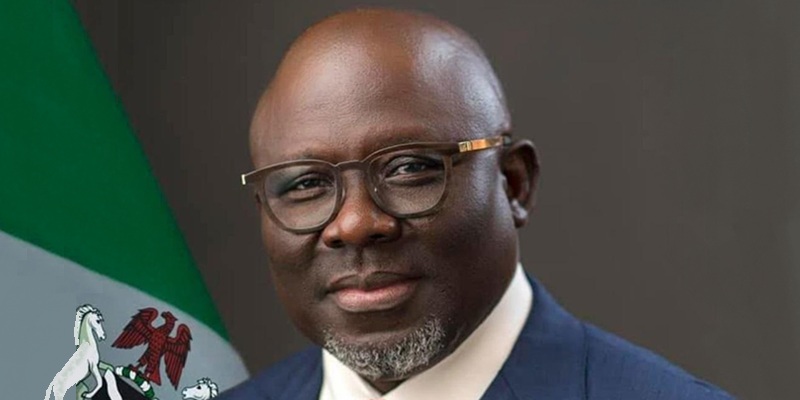
The group called on Governor Sheriff Oborevwori, the Economic and Financial Crimes Commission (EFCC), and the Independent Corrupt Practices Commission (ICPC) to investigate and reconcile the figures.
TrackaNG emphasized that public records must tell the same story as what happens on the ground, warning that inconsistencies erode trust in governance and fuel suspicions of corruption.
Implications for Transparency
The case underscores a broader challenge in Nigeria’s governance: ensuring that budget performance reports align with actual implementation.
When official records claim 100% completion but implementing agencies deny accessing funds, it raises concerns about:
- Misreporting: Were figures deliberately inflated to show progress that never occurred?
- Misallocation: Did funds earmarked for the project get diverted elsewhere?
- Oversight Weaknesses: Are state financial monitoring systems robust enough to detect and prevent such discrepancies?
For citizens of Delta State, the unanswered question by TrackaNG remains: where did the ₦50 million go?
Wider Context for the Exposition by TrackaNG
This is not the first time Nigerian states have faced scrutiny over budget discrepancies.
Across the country, civil society groups have documented cases where budget implementation reports claim projects were completed, yet site visits reveal abandoned facilities or nonexistent infrastructure.
Such contradictions highlight systemic weaknesses in Nigeria’s public financial management, where paper records often fail to match ground realities.
They also underscore the importance of citizen-led initiatives like TrackaNG, which bridge the gap between official narratives and lived experiences.
Future Outlook
The intervention by TrackaNG has spotlighted a troubling inconsistency in Delta State’s financial reporting.
With evidence of abandoned court facilities and conflicting official records, the demand for accountability is urgent.
Until authorities reconcile these contradictions, confidence in Delta State’s governance and financial transparency will remain in doubt.
Public records must tell the same story as what happens on the ground.
This case is a reminder that transparency is not just about publishing figures—it is about ensuring those figures reflect reality.
For Delta State, reconciling this ₦50 million discrepancy is not optional; it is a test of credibility.