



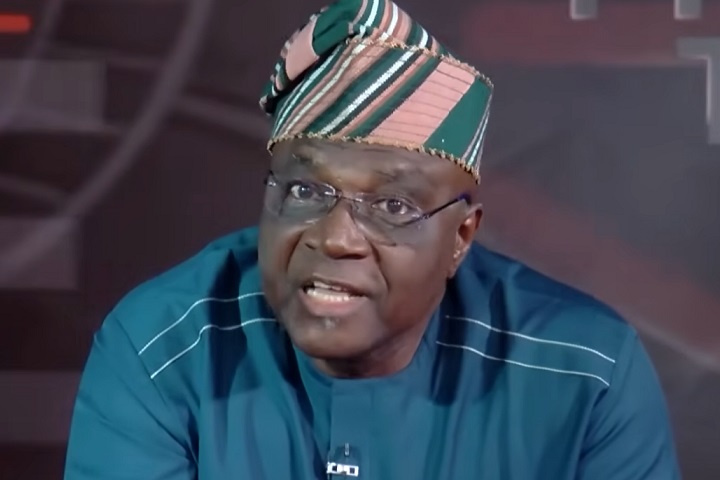

TDPresidential aide Bayo Onanuga has denied that President Bola Tinubu said Nigerians should reject him over electricity supply, insisting his remarks were conditional and misrepresented.
Tinubu’s Remarks on Power Supply
Context
In December 2022, ahead of the 2023 elections, Tinubu told a business luncheon audience:
“If I don’t give you constant electricity for four years, when I come back for a second term, don’t vote for me.”
Watch the video below:
Denial
Onanuga said during an Arise News interview that Tinubu’s statement was conditional, not an outright pledge to forgo re-election.
He argued critics quote only part of the remark, ignoring the broader context in which Tinubu acknowledged the enormity of Nigeria’s power sector challenges.
Government Action
- Tinubu signed the Electricity Act, decentralizing the sector and empowering states to generate, transmit, and distribute electricity independently.
This reform was hailed as a landmark shift from the federal monopoly.

- His administration has prioritized closing the metering gap, directing distribution companies to provide meters free of charge to consumers, thereby reducing estimated billing disputes.
- Efforts are underway to stabilize generation, but Nigeria’s installed capacity of 13,500 MW remains underutilized.
Experts blame gas shortages, legacy debts exceeding ₦4 trillion owed to gas suppliers, and fragile transmission infrastructure.
- The government has also initiated talks with private investors to expand renewable energy projects, particularly solar, to rural communities.
Obi’s Contrasting Statement
Meanwhile, Peter Obi had recently reminded Nigerians Tinubu’s pledge not to re-elect him if he fails to deliver steady power in four years.
In a This Dawn report, Obi reminded: “If I don’t provide steady electricity in four years, don’t vote me for a second tenure.”
Obi’s emphasis on electricity as a driver of industrial growth and job creation resonated with citizens weary of decades of unreliable supply.
His words are often invoked in debates about governance, reinforcing his image as a reform-driven politician who ties his political survival to tangible results.
Public Reactions and Political Implications
- Tinubu’s Denial: Supporters argue the President is being pragmatic, acknowledging inherited structural problems that cannot be solved overnight.
They highlight his reforms as evidence of commitment.

Critics, however, accuse him of backtracking on campaign promises and shifting responsibility.
Power supply remains one of the most visible indicators of government performance, shaping public trust and political legitimacy.

Broader Context: Nigeria’s Electricity Crisis
Nigeria has struggled with electricity for decades, despite billions of dollars invested in reforms.
The sector is plagued by generation shortfalls, transmission bottlenecks, and distribution inefficiencies.
Frequent blackouts, estimated billing, and reliance on generators have crippled businesses and households.

Analysts argue that without decisive reforms, Nigeria risks losing competitiveness in manufacturing and technology sectors.
Citizens increasingly view electricity as a benchmark for governance success, making it a politically sensitive issue.
Key Takeaways
- Tinubu: His aide insists he never pledged to abandon re-election; instead, he promised reforms while asking Nigerians to appreciate the scale of inherited challenges.
- Electricity Sector: Despite reforms, the sector remains plagued by gas shortages, debts, and weak infrastructure.
- Public Sentiment: Nigerians continue to demand measurable progress, with electricity seen as central to economic revival and governance credibility.
Bottom Line
Tinubu’s aide insists the President’s words were misrepresented, while Obi insists the statement sets a sharper accountability standard.
Both, however, highlight electricity as a decisive issue for Nigeria’s political future.
Meanwhile, citizens are increasingly unwilling to tolerate excuses in a sector that directly affects daily life and national development.