




TD What would psychiatrists say about the conduct of Nigeria’s political leadership?
It is a tempting question because certain Nigerian politicians appear to behave in ways that invite psychological examination.
They flaunt power, humiliate opponents, demand personal loyalty and speak as though public institutions were extensions of their private estates.
They appear intoxicated by attention and convinced that the authority they possess today will remain with them forever.
Nyesom Wike, the former governor of Rivers State and current Minister of the Federal Capital Territory, provides perhaps the most theatrical example.
His politics is loud, confrontational and intensely personal.

He appears to relish the spotlight, reacts aggressively to criticism and conducts political disagreements as battles of domination.
Although he left office as governor, the struggle over what Nigerian politicians call the “political structure” of Rivers State has continued to revolve around him.
President Bola Tinubu presents a different but equally troubling model of power.
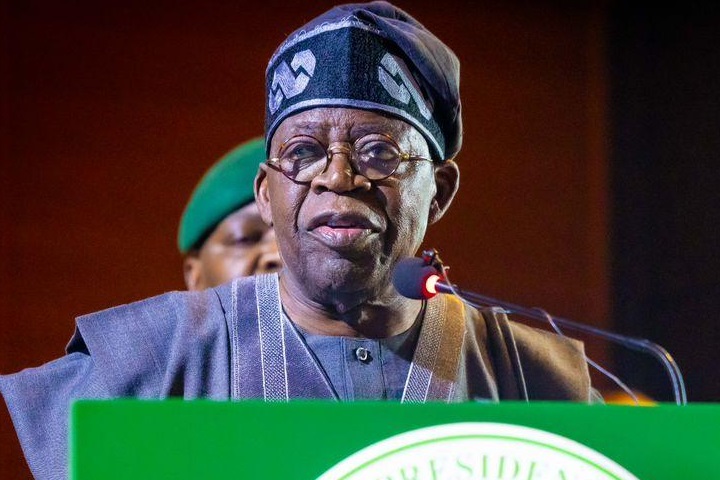
His method is quieter, more strategic and more deeply dependent upon alliances, patronage, secrecy and political calculation.
Questions about his identity, educational documents, finances and American legal history have followed him for years, yet complete and unambiguous explanations have often remained elusive.
However, a responsible psychiatrist would immediately offer an important warning: no ethical professional should diagnose either Wike or Tinubu without personally examining him and obtaining the necessary consent.

The American Psychiatric Association’s Goldwater Rule specifically discourages psychiatrists from diagnosing public figures from television appearances, speeches, newspaper reports or political conduct alone.
Nevertheless, psychiatrists and political psychologists can discuss observable patterns of behaviour.
They can explain the characteristics associated with destructive leadership without declaring that a particular politician suffers from a clinical disorder.
That distinction is essential.
Wike and the Performance of Dominance
Wike’s public behaviour frequently displays what psychologists might describe—not diagnose—as grandiosity, entitlement, antagonism and an unusually strong need to demonstrate dominance.
His political communication rarely appears designed merely to persuade. It is often designed to establish hierarchy: to show who is powerful, who must obey, who has been rewarded and who will be punished.
The message is not simply, “I disagree with you.”
The message is, “I have the power, and you will discover what happens to people who challenge me.”

That is the psychology of personalised authority. Political office ceases to be regarded as a temporary public trust and becomes an extension of the politician’s personality.
Opposition is consequently interpreted not as a legitimate democratic right but as betrayal, insolence or personal disrespect.
Wike’s continuing involvement in Rivers politics illustrates this danger.
He is no longer the state’s governor, yet Rivers remains trapped in a contest over whether its elected institutions can function independently of its former leader.
When legislators, local officials and political organisations are primarily identified according to their loyalty to one individual, democracy has already been psychologically weakened.
The constitution may remain on paper, but the real currency of government becomes proximity to the political godfather.
This is why the expression “political structure” deserves scrutiny.
In a healthy democracy, the structure belongs to the electorate. It consists of institutions, laws, political parties and accountable public officials.
It does not belong to Wike, Tinubu or any other individual.
A political psychologist examining Wike’s public persona might therefore identify several behavioural tendencies:
- an intense desire to remain politically central;
- difficulty surrendering control after leaving office;
- sensitivity to criticism and perceived disloyalty;
- the public humiliation of opponents;
- conspicuous displays of influence;
- the conversion of political disputes into personal combat; and,
- the cultivation of an image of invulnerability.
These traits can be politically effective. Fear produces obedience, while spectacle attracts attention.
But they are dangerous in anyone exercising public authority because they gradually destroy the distinction between service and ownership.
Tinubu and the Politics of Strategic Ambiguity
Tinubu’s exercise of power is less theatrical but more intricate.
Where Wike projects strength through confrontation, Tinubu has built his political reputation through networks, alliances, patronage and strategic accommodation.
His approach resembles what political psychology calls Machiavellian behaviour: the careful management of people and institutions for the acquisition and preservation of power.
“Machiavellian” does not mean mentally ill. It describes a political method characterised by calculation, secrecy, manipulation, flexibility and an ability to treat relationships instrumentally.
Tinubu’s supporters celebrate this as political genius.
His critics see a system in which loyalty is purchased, institutions are weakened and uncomfortable questions are buried beneath competing narratives.
His American history is a particularly important example of why language must remain exact.
In 1993, approximately $460,000 connected to Tinubu was forfeited to the United States government through a civil forfeiture proceeding arising from a drug-related investigation.
Tinubu was not criminally convicted in that case, and it would be inaccurate to describe the forfeiture itself as a criminal conviction.
That legal distinction matters.
But the absence of a conviction does not make the underlying questions unreasonable.
Nigerians are entitled to ask why the money was forfeited, what investigators recorded and why access to the remaining American government files continues to generate such fierce legal resistance.
The present American litigation is a Freedom of Information Act dispute over the disclosure of government records. It is not a criminal prosecution of Tinubu.
Responsible criticism must acknowledge that fact while continuing to demand the truth contained in the official files.
The same principle applies to controversies surrounding his educational and biographical record.
Allegations are not convictions, but persistent discrepancies require complete explanations—not insults, propaganda or shifting accounts from political spokesmen.
A presidency cannot demand public trust while treating scrutiny as hostility.
Why Followers Ignore the Contradictions
The more difficult question is not why powerful politicians behave this way.
History is filled with people who sought power and then convinced themselves that they deserved unlimited quantities of it.
The deeper question is why millions of followers overlook conduct they would condemn immediately in an opponent.
Psychology offers several explanations.
Political Identity Replaces Independent Judgment
For many followers, political allegiance is no longer an opinion. It has become part of their identity.
A criticism of Tinubu is interpreted as an attack on the APC, the Yoruba people, Lagos, the South-West or the supporter personally.
A criticism of Wike may be treated as an attack on Rivers State, the Ikwerre people, the minister’s political family or everyone who benefited from his administration.
Once politics fuses with identity, evidence becomes secondary.
People defend their group because abandoning the leader feels like betraying themselves.
Cognitive Dissonance
Human beings experience psychological discomfort when facts contradict deeply held beliefs.
A supporter who has spent years describing Tinubu as a master strategist will resist information suggesting deception, impropriety or serious failures of judgment.
Accepting the evidence would require the supporter to admit that he may have defended the wrong man.
It is emotionally easier to attack the journalist, judge, opposition politician or document than to reconsider one’s loyalty.
The same applies to Wike’s followers.
If they have presented him as a fearless defender of Rivers interests, they may reinterpret intimidation as strength, arrogance as confidence and political control as effective leadership.
The mind changes the meaning of the behaviour in order to protect the original belief.
Patronage and Material Dependence
Some followers are not confused at all. They understand the contradictions perfectly well but benefit from the arrangement.
Nigeria’s patronage system connects political loyalty to appointments, contracts, employment, access, protection and money.
When a person’s livelihood depends upon a political leader, moral objections become expensive.
Praise is rewarded. Silence is protected. Criticism can lead to exclusion.
The follower consequently develops a convenient political morality: misconduct by the opposition is criminal, while identical misconduct by his benefactor is strategy.
Fear Disguised as Loyalty
Powerful politicians surround themselves not only with admirers but with people who are afraid of becoming enemies.
In an environment where state institutions are weak and political office can influence contracts, policing, taxation and personal security, public enthusiasm may conceal private fear.
Some followers praise powerful men because they believe neutrality is unsafe. They join the crowd before the crowd is turned against them.
This is not democratic loyalty. It is political self-preservation.
Aspirational Identification
Other supporters see in the leader the powerful person they wish to become.
The convoy, expensive clothing, security personnel, access to state resources and ability to insult opponents without consequences become symbols of success.
The follower does not resent the abuse of power because he dreams of possessing the same power one day.
He does not ask, “Should anybody be allowed to behave this way?”
He asks, “When will it be my turn?”
This is how oppression reproduces itself.
People who have suffered under unaccountable power do not always demand accountability. Some merely demand an opportunity to control others.
The Strongman Illusion
Countries experiencing insecurity, poverty and institutional failure are particularly vulnerable to strongman politics.
Citizens become impatient with procedure and begin searching for a leader who appears decisive.
Aggression is mistaken for competence. Rudeness becomes authenticity.
Secrecy becomes strategy. Refusal to compromise becomes strength.
Yet the strongman’s performance frequently conceals institutional weakness. A genuinely strong leader builds systems capable of functioning without him.
An insecure leader makes himself indispensable and destroys any institution that might challenge his authority.
Propaganda and Repetition
Political followers are also influenced by repetition.
When party spokesmen, friendly television stations, social-media operatives and paid commentators repeat the same explanation often enough, it acquires the appearance of truth.
The objective is not necessarily to prove one consistent account.
It is to produce so many competing stories that ordinary citizens become exhausted and conclude that the truth cannot be known.
Confusion is itself a political weapon.
When Power Alters the Powerful
Psychological research suggests that power can reduce a person’s sensitivity to other people’s perspectives.
It may encourage risk-taking, overconfidence and the belief that ordinary restrictions apply only to others.
This effect becomes more dangerous when leaders are surrounded by praise singers.
A politician who receives constant applause gradually loses access to reality.
Advisers stop correcting him. Officials anticipate his desires. Supporters reinterpret every mistake as brilliance. Critics are removed from the room.
The leader then begins confusing obedience with love and fear with respect.
Eventually, he may believe that the country cannot survive without him.
But political power is always temporary. Governors leave office. Ministers are dismissed. Presidents complete their terms.
Alliances collapse, protégés rebel and crowds that once shouted a leader’s name discover another person to praise.
The tragedy is that power often prevents its possessor from recognising this until it is too late.
Nigeria Must Treat the Institutional Disease
Nigeria’s fundamental problem is not whether Wike is a narcissist or whether Tinubu possesses some other personality disorder.
Those would be medical conclusions that cannot responsibly be reached from a distance.
The national problem is that Nigerian institutions permit behaviour associated with destructive leadership to flourish without sufficient restraint.
A functioning democracy does not depend upon the psychological generosity of its leaders.
It assumes that leaders are fallible, ambitious and sometimes dishonest—and therefore surrounds them with enforceable limits.
Nigeria needs legislatures that cannot be purchased, intimidated or converted into private political armies.
It needs courts whose decisions command confidence. It needs electoral institutions that do not bend before incumbents.
It needs security agencies that serve the constitution rather than influential individuals.
It needs transparent public accounts, enforceable conflict-of-interest rules and a press protected from retaliation.
The answer to an overbearing politician is not a psychiatrist’s diagnosis.
It is a constitution that works.
Wike may behave as though he owns Rivers State, but Rivers State belongs to its people.
Tinubu may command the presidency and an immense political network, but Nigeria is not his private inheritance.
Their followers must also decide whether they are citizens or courtiers.
Citizens demand explanations. Courtiers manufacture excuses.
Citizens defend institutions. Courtiers defend personalities.
Citizens understand that public office is temporary. Courtiers behave as though today’s ruler will live and govern forever.
The pathology of Nigerian power survives because too many people condemn tyranny only when their opponents are exercising it.
When their own leader behaves in exactly the same way, they rename it courage, strategy or political sagacity.
Until Nigerians apply the same moral and legal standards to every leader, the country will continue replacing one powerful personality with another while leaving the machinery of abuse untouched.
The real question, therefore, is not whether Wike and Tinubu are psychologically suited to power.
It is whether Nigeria will finally build institutions strong enough to control powerful men—and whether their followers will recover the courage to see what is directly in front of them.