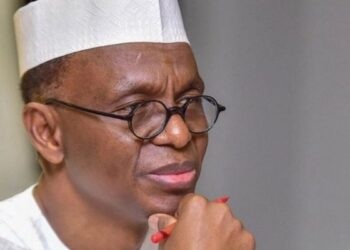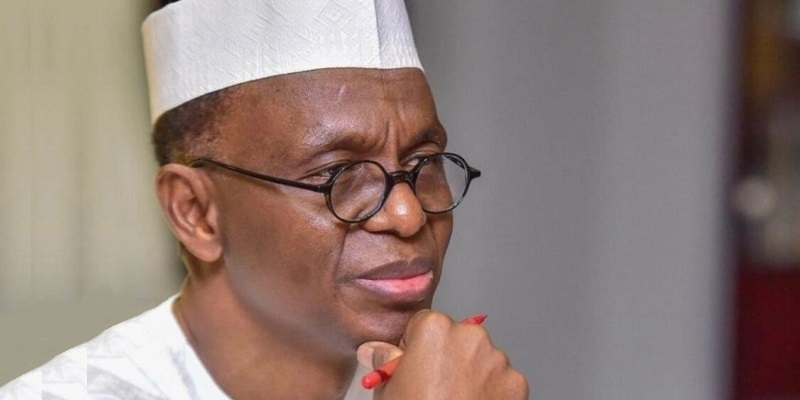
TD There is a peculiar silence in Nigeria today, and it is deafening. A former governor of Kaduna State, once one of the most powerful men in the country, sits in detention. By this week he will have spent 150 days in custody without conviction, for offences that are bailable.

He has been held by the ICPC since February 18, 2026, facing multiple inter-agency prosecutions over alleged diversion of public funds, inflated severance packages, and breach of national security, and despite being granted bail by multiple courts between April and May, he remains locked up because the conditions attached are practically impossible to meet.
His wife has publicly alleged that he was denied access to his doctor and that she was prevented from delivering food to him in custody. His family says he has been shuttled between security facilities in violation of court orders, in what his supporters call psychological torture.
By any honest measure, this is injustice. It is an abuse of state power. And yet no crowd of any consequence has risen for Nasir El-Rufai. No moral coalition. No wave of national outrage. The politicians defending him are defending a principle, not a man.
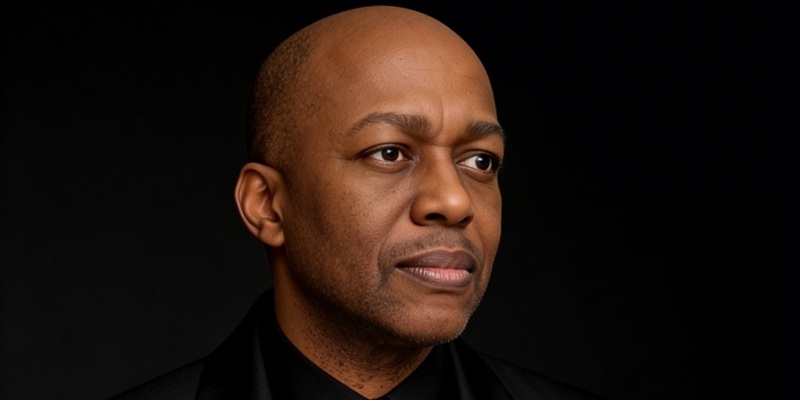
Even Atiku Abubakar and Peter Obi, in condemning his treatment, speak of the constitution, of precedent, of what could happen to any citizen tomorrow. Obi called it political persecution and asked simply that the law prevail. Notice what nobody says. Nobody says he is a good man. Nobody says he does not deserve it. Because everyone in Nigeria remembers.
They remember that for eight years, from 2015 to 2023, Kaduna State was a laboratory of exactly the methods now being applied to its former governor. A coalition of victims and human rights defenders, including the former chairman of the National Human Rights Commission, Professor Chidi Odinkalu, has described those years as a pattern of arbitrary abductions, persecution of critics, reprisal violence, unlawful demolitions of homes, mass dismissals of workers without due process, and the displacement of citizens into exile.
The names are on the record. Journalist Midat Joseph, arrested in 2017 for a WhatsApp post. Sunny Yayock, arrested and charged for social media comments. Audu Maikori, arrested twice in 2017 over tweets. Steven Kefas, detained 150 days after his arrest in May 2019. Segun Oniboyo, detained for 24 days in 2019. Luka Binniyat, detained for over 130 days in 2017. Gabriel Idibia, charged for asking El-Rufai to declare his assets. Jacob Dickson, arrested and charged with incitement in 2016. Dr John Danfulani, suspended, arrested and detained for criticizing the governor. Note the poetry of the arithmetic. Steven Kefas served 150 days. El-Rufai has now served 150 days. The ledger balances itself with a cruelty no novelist would dare invent.
The Maikori case tells you everything about the man’s relationship with the law he now invokes. In 2017 an Abuja High Court ordered El-Rufai’s government to pay Maikori 40 million naira in damages for unlawful arrest and detention. He refused to pay. The Court of Appeal affirmed the ruling in 2020. He refused again, and pushed the case to the Supreme Court, where it still sits. A man who defied court judgments for years now begs the courts to enforce his rights. He who comes to equity must come with clean hands.
Then there is the case that will not die. Abubakar Idris, known as Dadiyata, a university lecturer and social media critic, was abducted from his home in Barnawa, Kaduna, on August 2, 2019, and has never been seen again. This August marks seven years, triggering the statutory presumption of death under Nigerian law. Shortly after the abduction, the then governor’s son posted a tweet widely perceived as gloating over the disappearance. The United States State Department’s 2019 human rights report recorded that nine Southern Kaduna community elders were detained by order of Governor El-Rufai in retaliation for criticizing him. And the darkest chapter of all remains Zaria in December 2015, when the army massacred hundreds of Shiite Muslims in his state; his government’s own official admitted to a judicial inquiry that 347 bodies were buried in a mass grave, and it was his administration that kept Sheikh El-Zakzaky imprisoned for years in defiance of a federal court order, until a Kaduna court finally acquitted him in 2021.
Add to this the demolition of Gbagyi Villa, 3,500 homes, 40 churches, 16 schools, carried out in defiance of a court injunction in the final 72 hours of his tenure, and the demolition of properties belonging to political opponents like Senator Suleiman Hunkuyi, and the picture is complete. This was not governance. It was rule by fear, dressed in the language of reform.
So let us be precise about what is happening now, because precision is what this moment demands. What the Tinubu government is doing to El-Rufai is wrong. Detention without conviction for bailable offences, under bail conditions so excessive they guarantee continued incarceration, looks more like persecution than prosecution, and it puts our entire justice system on trial. The selectivity is naked: former governors Yahaya Bello and Ifeanyi Okowa faced corruption allegations and walked free, while the man who defected to the opposition rots in custody. If we accept this for El-Rufai because we despise him, we license it against every Nigerian who ever crosses power.
But justice for El-Rufai cannot mean amnesia for Kaduna. The correct demand is not his release into comfort. It is due process for him, and due process, at last, for his victims. Answer for Dadiyata. Answer for Zaria. Pay Audu Maikori what the courts ordered nearly a decade ago. Reopen every file his administration buried.
Nasir El-Rufai spent eight years teaching Nigeria that the state can do anything to a man it dislikes. Nigeria learned the lesson. That is why he sleeps tonight in a cell built to his own specifications, and why the silence around him is not a conspiracy. It is a verdict. He sowed the whirlwind, and the harvest has come home to Kaduna’s most diligent farmer. The tragedy of Nigeria is that the whirlwind never stops with the man who deserves it. It moves on, house by house, until someone finally has the courage to break the cycle instead of merely inheriting it.
He is a victim of injustice. He is also its author. Both things are true, and Nigeria must hold both, or it will keep producing El-Rufais forever.