


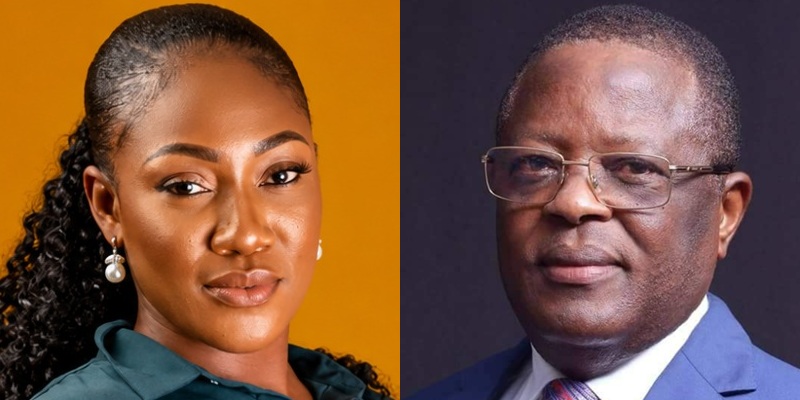

TD A young woman, Mary Habila, left her home alive. Today, she is dead.
She did not perish in some distant accident on a lonely highway or in an obscure village.
She died in the residence of a serving Minister of the Federal Republic of Nigeria, Senator David Umahi, the Minister of Works.
Whatever your personal feelings about David Umahi — whether you admire his infrastructure projects or criticize his politics — is irrelevant.
Whatever party you belong to — APC, PDP, ADC, or any other — is equally beside the point.
The only fact that should command our attention is this: a young Nigerian woman died under circumstances that remain unclear to the public.

That single reality cuts through every partisan divide.

Minister Umahi has denied any wrongdoing and publicly called for a thorough investigation, including an autopsy with the consent of the deceased’s family.
That is his right, and it is a position that deserves to be tested against evidence rather than dismissed out of hand.
But Nigerians equally have the right — indeed, the responsibility — to ask probing questions:
- How exactly did Mary Habila die?
- What will the autopsy reveal about the cause of death?
- Who was with her in the hours leading up to her passing?
- Will the investigation be conducted with sufficient transparency to earn public confidence in its outcome?
These are not disrespectful or malicious questions. In any society that claims to value justice, they are necessary ones.
What is deeply troubling is how swiftly this tragedy has fractured us along predictable lines.

One camp has rushed to convict the Minister in the court of social media, fueled by speculation, unverified details, and sometimes outright sensationalism.
Another camp has moved just as quickly to absolve him, often solely on the basis of his political position and achievements.
Both extremes are dangerous to the cause of justice.
True justice cannot be driven by emotion, tribal solidarity, or partisan loyalty.
It must rest on verifiable facts, due process, and the impartial application of the law.
If Senator Umahi bears no responsibility for Habila’s death, a credible and transparent investigation will establish that beyond reasonable doubt.

If any individual — regardless of status, wealth, or office — is found responsible, then the law must take its full course without fear or favor.
That is how serious nations operate. Anything less erodes public trust in our institutions and signals that some lives matter less than others.
Mary Habila is no longer here to speak for herself or tell her own story.
The least we owe her memory — and the families who mourn her — is to insist that the truth is not buried alongside her body.
No cover-up. No witch-hunt. Just the truth, pursued rigorously and reported honestly.
Because tomorrow, it could be anyone’s daughter, sister, or wife.
When power and influence intersect with unexplained death, the public’s demand for answers is not an attack on government — it is a defense of basic humanity and the rule of law.
Barrister Solomon Dalung, former Minister of Youth and Sports, captured this sentiment powerfully.
His call should resonate across all divides: let the investigation speak, and let justice prevail.
In the end, how Nigeria handles the death of Mary Habila will say far more about our democracy and values than any political slogan or infrastructure ribbon-cutting ever could.
We must choose truth over convenience. The eyes of the nation — and her grieving family — are watching.