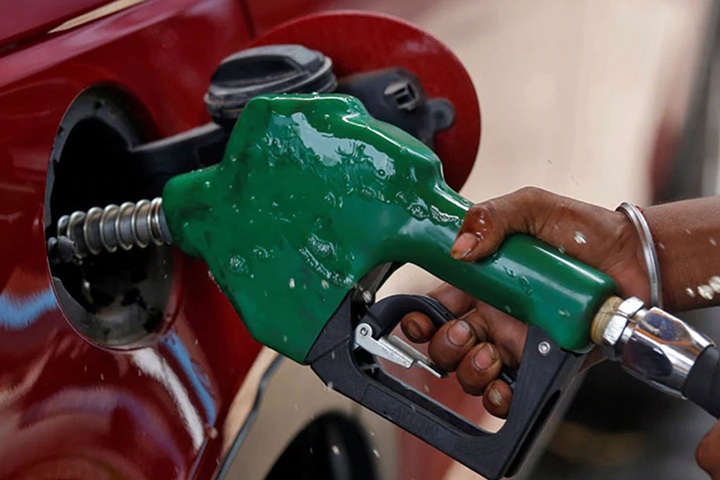
TD Government removed subsidy and consequently took more money from the pockets of the people whenever they bought fuel, entered a bus, transported goods, powered a generator or bought commodities whose prices had absorbed the increased cost of energy.
Government revenues increased, particularly the amounts available for distribution to the federal, state and local governments. But what happened to the citizen whose disposable income had been drastically reduced by the same policy?
What happened to the trader, farmer, vulcaniser, barber, welder, commercial driver and small manufacturer whose source of livelihood was crippled by the enormous increase in the cost of energy?
I look at my own Anambra State and ask the same question. We hear of expenditure and proposals involving major projects such as airports, international conference facilities and an impressive Government House.
These may be presented as developmental projects and may have their own economic justifications, but my question is more immediate: how have they helped the ordinary people whose incomes and sources of livelihood have been crippled by the enormous cost of energy?
How does a struggling trader in Onitsha, a farmer in Ukpor, a vulcaniser in Nnewi or a commercial driver struggling to buy fuel today experience those benefits?

That is the discussion we should be having. It is not enough for government to collect more revenue because subsidy has disappeared and then point to monumental projects as evidence of progress.
If the policy took money directly or indirectly from millions of citizens, some of the savings must return directly or indirectly to those citizens in ways that reduce the burden the policy created.
Otherwise, we have merely transferred resources from millions of struggling private pockets into larger government accounts and congratulated ourselves that government revenue has increased.
There is another part of this debate that troubles me, particularly when I hear presidential candidates who support sustaining subsidy removal explain what they intend to do with the money supposedly saved.
They sometimes speak as though the President of Nigeria sits in Abuja with one enormous pot labelled “Subsidy Savings”, with absolute authority to determine how every naira will be spent.
That is not how our federation works. Revenues accruing to the Federation Account are distributed under our constitutional and statutory revenue-allocation framework among the federal, state and local government tiers.

That raises a question which proponents of subsidy removal must answer: if the President does not control what every governor and local government chairman ultimately does with the additional revenue reaching their tier of government, how can a presidential candidate promise Nigerians that the sacrifice imposed by subsidy removal will necessarily translate into relief for the people?
The President may have the finest social-investment programme imaginable at the federal level, but Nigeria still has 36 states and 774 local government areas making expenditure decisions according to their respective priorities.
Let me bring the argument even closer home to Nnewi South. The road from Nnewi towards Ukpor through Ubu Osigbu has been badly affected by erosion around the Cento Factory axis.
Owerri Anude in Ebe, Ukpor has suffered serious erosion and flooding, while the road connecting Nnewi South to Ekwusigo through Umudike, Ukpor, awarded during an earlier administration in the days when subsidy still existed, has sections that have surrendered to weeds and neglect.
These are not economic theories to the people who must use these roads. They affect movement, farming, trading, property, access to communities and ultimately the cost of living.
Now suppose an APGA-controlled local government decides that its priority is demolishing structures and beautifying roads with flowers while communities within that same local government are confronting erosion and failed access roads.

Whether one agrees with that priority or not, what exactly can the President sitting in Abuja do about that expenditure choice merely because the additional revenue originated partly from the fiscal consequences of subsidy removal?
I am not saying that a Government House, convention centre, airport or beautification project can never have developmental value. Government must build infrastructure, and reasonable people can disagree about priorities.
My question is different: what immediate relief do such projects provide to the citizen whose livelihood has been crippled by the enormous increase in the cost of energy?
How does the struggling woman frying akara in Ukpor experience increased FAAC receipts when the petrol powering her small generator has multiplied in price?
How does the commercial driver experience it? How does the farmer transporting produce to market experience it? How does the small manufacturer experience it?
The Nigerian who paid more for petrol did not make a voluntary donation towards another Government House, another airport, another conference centre or flowers by the roadside.
He accepted—or was compelled to bear—a painful economic reform on the representation that the sacrifice was necessary to free resources for development and ultimately improve his life.
If the additional resources are subsequently distributed across three tiers of government and spent according to hundreds of different political priorities, then proponents of subsidy removal must explain the institutional mechanism that guarantees that the sacrifice of that Nigerian actually returns to him as improved welfare.
Where is our own share? What did we get?
That, for me, remains the question at the heart of the subsidy debate.
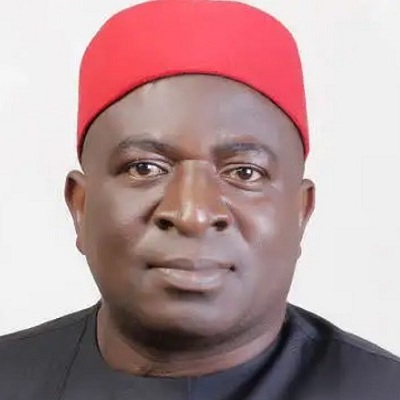
Obunike Ohaegbu, NDC aspirant for Nnewi North/Nnewi South/Ekwusigo Federal Constituency, writes from his village in Ukpor, Nnewi South LGA, Anambra State.