

TDWe had warned in April 2024 that the political partnership between President Diomaye Faye and Prime Minister Ousmane Sonko in Senegal might not stand the test of time.
Their falling out after two years has vindicated that prediction, which was based on the history of godfatherism in African politics.
Kenneth Kaunda was considered the father of Zambia’s independence, but after governing the country for 27 years, his nationality was questioned by his successor, labour leader Frederick Chiluba.
In the of politics, Chiluba had claimed that Kaunda was a Malawian, not a Zambian. This false claim was only reversed two years after Kaunda lost the presidency to Chiluba in 1991.
West Africa is replete with godfatherism gone sour, including President Adama Barrow vs former vice president Ousainou Darboe in the Gambia, Governor Chris Ngige of Nigeria’s Anambra State vs Andy Uba, and Godwin Obaseki vs Adams Oshiomhole of Edo State, also in Nigeria.
However, Rivers State in Nigeria’s Delta region holds the record for the most pitfalls in political godfatherism.

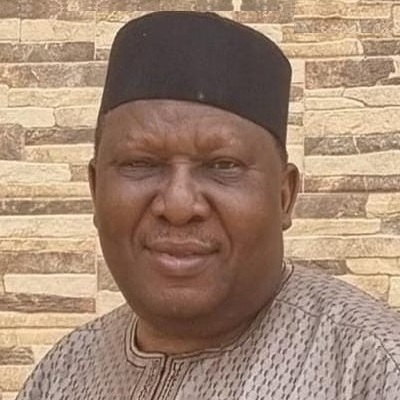
Former governors Peter Odili, Rotimi Amaechi and Nysom Wike, now the Abuja Minister, and serving governor Sim Fubara are among the dramatis personae.
In The spiritual side of Aso Villa, Reuben Abati, a former presidential spokesman, wrote about “…something supernatural about power and closeness to it.”
Aisha Buhari, Nigeria’s former First Lady, also blamed powerful “cabals” that “hijacked” the government of her husband, late General Muhammadu Buhari.
Superstition or speculations aside, Faye and Sonko, as former tax collectors, were friends who came to power in 2024 riding on the crest of the PASTEF party – the “African Patriots of Senegal for Work, Ethics and Fraternity,” founded by Sonko, who continues to enjoy a cult following, especially among Senegal’s restive youths.
Established in 2014, the Patriots pledged allegiance “to the fundamental principles and values of the Republic of Senegal, as defined by the Constitution freely adopted by the Senegalese people…”
They commit to “strengthening …national unity…” and “…consolidation of Senegalese democracy,” and also promise to “contribute to the emancipation… …political, cultural and economic unity of the African peoples.”

Sonko’s self-acclaimed anti-establishment stance and fight against corruption cost him his tax administration job.
He later served as the mayor of Senegal’s southeastern Ziguinchor in Casamance, home to the MFDC separatist group, which signed a historic peace deal with the Dakar government in 2025.
Graduating to a firebrand politician, Sonko had bruising running battles with the government of former President Macky Sall, who probably had an axe to grind with him.
As a tax administrator, Sonko handled a case involving Sall’s younger brother, Aliou Sall.
Four years after the elder Sall assumed the presidency, he issued a decree in August 2016 sacking Sonko from the civil service for “breach of the obligation of professional discretion.”
Sonko contested the 2019 presidential election and lost but came in a surprising third.

His endless battles with the government landed him a two-year jail term, which ruled him out of the 2024 presidential vote.
Bassirou Diomaye Faye’s story from prisoner to Senegal’s youngest president in 20 days is not straightforward.
After losing his job as a tax administrator, he became a freelance opposition activist who also ran into trouble with the authorities and was jailed for “defaming magistrates and contempt of court” over Sonko’s legal trials.
The pair, thus, ended up in jail and were only freed 20 days before the 24th March 2024 presidential election.
The Sall regime had also dissolved Sonko’s PASTEF, for allegedly organising violent anti-government protests.
This only strengthened the Sonko-Faye political bond and convinced Sonko to pick Faye and rally his supporters behind him.
Faye contested the presidential election as an independent candidate and defeated Sall’s anointed candidate.
Many commentators felt it was a political miscalculation by Sonko, already an MP, to have accepted an appointment in Faye’s cabinet as Prime Minister, instead of playing the kingmaker until Faye served out his mandate.
However, Sonko claimed he made the offer, but Faye rejected it, preferring that both men work as a team in his cabinet. Faye has not refuted this claim.
Perhaps, having anticipated his inevitable split with Faye, Sonko did not resign his seat in parliament, and shortly after his dismissal as Prime Minister on 22 May 2026, the gulf between the two men all but deepened.
In an apparent “show of popularity”, Sonko has returned to parliament and resumed his seat, and following the resignation of the parliamentary Speaker, he has also assumed that position and has been talking tough.
As the more politically exposed of the duo, Sonko is using his communication and oratory skills to a telling effect, blaming Faye for the pair’s falling out.
He claims that he never received any salary as Prime Minister (this has not been contradicted) and that Faye deviated from PASTEF’s philosophy.
Faye is also accused of nursing an ambition for a second mandate and allying with the political structure of Macky Sall, his and Sonko’s erstwhile common political foe.
Areas of disagreement between Sonko and Faye include Faye’s decision to bring to Senegal on political asylum, Guinea-Bissau’s former president, Umaro Embalo, who organised a self-military coup in November 2025 to avoid an electoral defeat.
Sonko’s objection forced Embalo to flee Dakar to Morocco.
Sonko was believed to be behind the closing of French military bases in Senegal and the controversial passing of Senegal’s anti-LGBT law. He and Faye also disagreed on the management of a special government fund, with Sonko insisting on full public disclosure.
The first two measures did not go down well with Paris and its Western allies.
Faye’s critics believe he panders too much to France, which he has visited several times since assuming office, unlike Sonko’s pan-Senegal and pan-African sentiments and insistence on the PASTEF project.
What commentators have not emphasized enough is the possible roles played by Macky Sall and France in Senegal’s hidden debt to the International Monetary Fund (IMF).
Under his administration, Senegal accumulated an estimated US$13 billion debt, a debt-to-GDP ratio of 132% at the end of 2024.
The Faye-Sonko government tried to navigate the situation by selling bonds through the Dakar-based Central Bank of West African States, BCEAO, which uses the CFA franc, controlled by the French Treasury.
But this did not stop the IMF from suspending its US$1.8 billion credit facility to Senegal required to restore public finances.
IMF’s facility/bailout is notorious for its conditionality, such as subsidy removal, downsizing/retrenchment, currency devaluation, inflation and high cost of living, resulting in hardship for the poor masses.
Faye is said to favour fact-tracking negotiations with the IMF, while Sonko advised caution.
Before paying the debt, Senegalese citizens are entitled to ascertain the roles played by Sall and France, why, how and under what conditions it was incurred.
African countries have unsavoury experiences of dubious debts accumulated by some governments against national interests.
Faye has since dissolved the Sonko-led cabinet and replaced it with a new 30-member structure.
Several members of the old cabinet are retained, but PASTEF has boycotted the new government.
With its commanding majority of 130 members in Senegal’s 165-seat Parliament, PASTEF can censure or frustrate Faye’s government if he chooses to go it alone.
Local elections are scheduled for 2027 ahead of the presidential vote in 2029.
Under the constitution, Faye could invoke his presidential powers to dissolve parliament in November, two years after its inauguration, while PASTEF could also use its majority to call for an early vote or impeach the president.
Like Faye, Sonko intends to run for the presidency in 2029.
Addressing PASTEF’s Congress after his split with Faye, Sonko claims: “Our (PASTEF) revolution is currently under threat precisely because… not everything that is happening in Senegal at the moment is solely down to internal factors…”
However, he insisted: “…no attempt to sabotage this revolution will succeed because the people, standing shoulder to shoulder with PASTEF, will provide the necessary guarantees so that we can finally liberate our country.”
In the interest of Senegal, and to avoid a looming seismic political crisis, Faye and Sonko owe a duty to themselves and the scores of their compatriots who sacrificed their lives or were clamped into jail during PASTEF’s national protests that preceded to sink their differences and rise above personal egos.
Also, what is playing out in Senegal is a warning and an instructive lesson to other African countries, including Nigeria, the World’s most populous Black nation, on the dangers of external loans.
There might be nothing wrong with debts if only they are incurred transparently and for development-linked projects, activities or programmes for the common good.
The African alternative framework to structural adjustment programmes (AAF SAP), espoused by Nigeria’s late Professor Adebayo Adedeji in 1989, is still relevant today.
Ejime is a Global Affairs Analyst and Consultant on Peace & Security and Governance Communication.