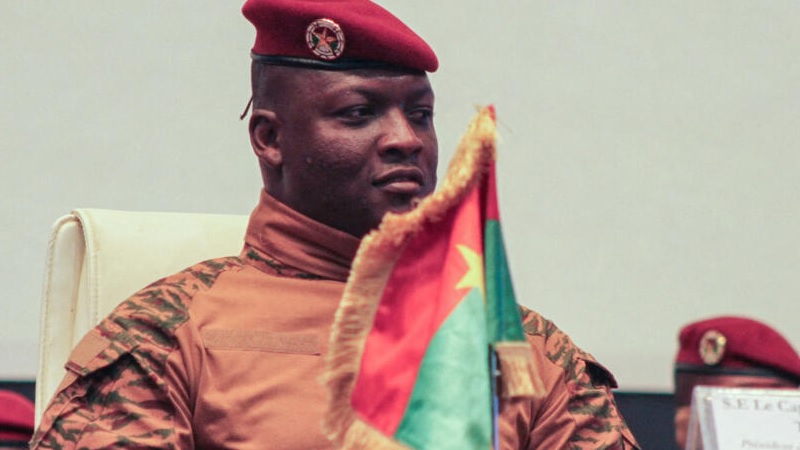

TDOUAGADOUGOU, Burkina Faso — Burkina Faso has reinstated the death penalty after its transitional legislature unanimously approved a revised penal code.
The decision reverses the country’s abolition of capital punishment in 2018.
All 71 members of the legislature voted in favour of the new legislation on Tuesday, October 20, 2026.
Justice Minister Edasso Rodrigue Bayala presented the legislation on behalf of the government.
Authorities say the reform aims to strengthen public security, protect citizens, and respond to serious criminal offences.
However, the decision has renewed concerns among human rights organisations about justice, political freedoms, and possible abuses.

The move comes as Burkina Faso continues battling armed groups linked to al-Qaeda and the Islamic State.

Burkina Faso Restores Death Penalty After Unanimous Vote
The country’s transitional legislature adopted the revised penal code during a plenary session in Ouagadougou.
The vote took place on October 20, 2026, according to the legislature’s official announcement.
All 71 members who participated supported the measure.
The new penal code contains more than 900 articles covering criminal offences and penalties.
Officials said the reform responds to changing security conditions and emerging forms of criminal activity.

The government also described the legislation as part of broader judicial reforms.
Justice Minister Bayala defended the changes as necessary for protecting people and property.
The government believes stronger punishments could discourage serious crimes and strengthen national security.
However, critics question whether restoring capital punishment will effectively reduce violence or criminal activity.
The legislation marks a significant change in Burkina Faso’s criminal justice system.
It also reflects the military-led government’s determination to reshape national laws during an ongoing security crisis.

Burkina Faso Restores Death Penalty for Terrorism and Espionage
The revised penal code introduces capital punishment for several serious offences.
These include terrorism, espionage, and treason.
The legislation also provides for the death penalty in cases of parricide.
Parricide refers to the killing of a parent or another close relative, depending on the legal definition.
The code also includes certain cases involving imported expired or prohibited products that result in death.
The precise application of these provisions will depend on the legislation’s wording and judicial interpretation.
Government officials argue that tougher penalties are necessary to confront serious threats.
Burkina Faso has faced persistent attacks by armed groups operating across parts of the Sahel region.
These attacks have killed thousands of people and displaced millions across affected communities.
Authorities say the revised penalties could strengthen efforts to combat terrorism.
However, human rights advocates warn that capital punishment carries serious risks.
They argue that irreversible sentences can have devastating consequences when courts make mistakes.
The changes are therefore likely to remain a subject of legal and political debate.
Burkina Faso Restores Death Penalty Amid Growing Security Challenges
The decision comes as Burkina Faso continues confronting a prolonged insurgency.
Armed groups linked to al-Qaeda and the Islamic State have carried out attacks across the country.
The violence has affected civilians, security personnel, and communities in rural areas.
Many residents have been forced to leave their homes because of insecurity.
The government has made restoring security one of its principal priorities.
Military operations and security measures have formed part of its response.
Officials supporting the revised penal code argue that stronger punishments could deter terrorism.
Justice Minister Bayala has also argued that previous penalties were insufficient to discourage armed groups.
He suggested that the existing legal framework allowed militants to recruit by promising relatively limited consequences.
However, the effectiveness of capital punishment as a counterterrorism measure remains disputed.
Security experts and human rights organisations often emphasise intelligence gathering, effective policing, and fair trials.
Addressing the conditions that allow armed groups to recruit may also be important.
Burkina Faso’s government will face continued pressure to demonstrate that its policies improve public safety.
The restoration of capital punishment alone cannot guarantee an end to the country’s insecurity.
Burkina Faso Restores Death Penalty Eight Years After Abolition
Burkina Faso abolished the death penalty in 2018 under former President Roch Marc Christian Kaboré.
The abolition marked an important development in the country’s criminal justice system.
The latest legislation reverses that decision after approximately eight years.
According to Amnesty International, Burkina Faso’s last known judicial execution took place in 1988.
Although the country retained the death penalty for years, it had not carried out executions during that period.
The new penal code therefore represents a major change in the country’s approach to capital punishment.
The government began advancing plans to restore the penalty before the latest parliamentary vote.
In December 2025, the Council of Ministers approved a draft measure proposing its reintroduction.
Human Rights Watch criticised that proposal and warned about its possible consequences.
The subsequent legislative approval has moved the reform further through the country’s lawmaking process.
The development has attracted international attention because many countries have moved away from capital punishment.
It also raises questions about the future direction of criminal justice across the Sahel region.
Burkina Faso Restores Death Penalty Despite Human Rights Concerns
Human rights organisations have expressed concern about the government’s decision.
Amnesty International has opposed the reintroduction of capital punishment.
Human Rights Watch has also warned about the potential consequences.
Critics argue that executions violate the right to life and carry the risk of irreversible judicial errors.
They also question whether the punishment effectively prevents terrorism or violent crime.
Concerns extend beyond criminal justice to Burkina Faso’s broader political environment.
The country has been governed by a military-led administration since the 2022 coup.
The authorities have faced criticism over restrictions on political activity and civil liberties.
Human rights advocates fear that broad security laws could be used against government critics.
They argue that fair trials and independent judicial oversight are essential safeguards.
The government, however, presents the revised penal code as a measure to strengthen security and public order.
The competing positions highlight a wider international debate about punishment, deterrence, and human rights.
The implementation of the law will likely attract close scrutiny from domestic and international observers.
Burkina Faso Restores Death Penalty Under Military Rule
The legislative decision comes during a period of significant political change.
Burkina Faso has been under military rule since Captain Ibrahim Traoré took power in 2022.
The military government has promised to address insecurity and strengthen national sovereignty.
Its policies have included changes to security arrangements, public institutions, and national legislation.
The revised penal code forms part of this broader transformation.
Supporters of the government argue that exceptional security challenges require stronger legal measures.
Critics counter that military-led governments must protect civil liberties and maintain judicial accountability.
Burkina Faso’s transitional legislature is not an elected parliament in the conventional democratic sense.
The unanimous vote therefore reflects the position of the current transitional legislative body.
It does not necessarily demonstrate unanimous public support throughout the country.
Independent assessments of public opinion would be necessary to establish broader views on the measure.
The law’s implementation will also determine how it affects criminal proceedings and defendants’ rights.
These issues are likely to remain central to discussions about Burkina Faso’s political future.
Burkina Faso Restores Death Penalty as Regional Debate Continues
The decision adds to continuing debates about criminal justice across Africa.
Governments facing terrorism and violent crime often face demands for stronger security measures.
At the same time, human rights organisations continue advocating for the abolition of capital punishment.
They argue that criminal justice systems should prioritise accountability, fairness, and protection from wrongful convictions.
Countries have adopted different approaches to punishment and the death penalty.
Some retain capital punishment in law, while others have abolished it or stopped carrying out executions.
Burkina Faso’s decision reverses a previous abolition and places the issue back into national debate.
The development could influence discussions among neighbouring countries confronting similar security challenges.
However, there is no certainty that other governments will adopt the same approach.
Each country faces distinct legal, political, and security circumstances.
International attention will likely focus on how Burkina Faso applies the revised code.
Observers will also examine whether the reforms improve security without undermining fundamental rights.
Conclusion: Burkina Faso Restores Death Penalty
Burkina Faso has reinstated the death penalty through a revised penal code approved unanimously by its transitional legislature.
The legislation introduces capital punishment for offences including terrorism, espionage, and treason.
It also covers parricide and certain cases involving prohibited or expired products that cause death.
The decision reverses the abolition introduced in 2018.
Government officials say the reform aims to strengthen public safety and address serious criminal activity.
Human rights organisations have warned about the risks associated with restoring capital punishment.
The move comes as the country continues battling an insurgency and navigating military rule.
The practical impact will depend on how authorities implement the new legislation.
Questions about fair trials, judicial independence, and human rights are likely to remain important.
The development represents a major shift in Burkina Faso’s criminal justice policy.
ThisDawn News will continue monitoring developments and reporting verified updates on the law’s implementation and its wider implications.