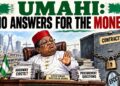



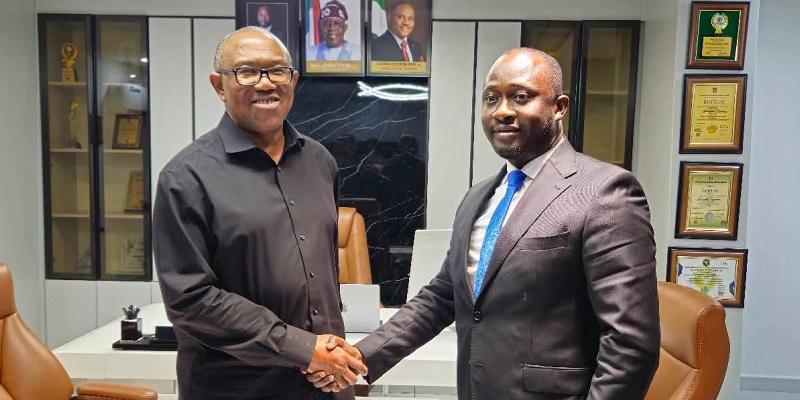

TD A tax audit notice issued by the Nigeria Revenue Service (NRS) to Abuja-based financial services company Irvin Global & Investment Limited one day after a reported meeting between its chief executive and Nigeria Democracy Congress (NDC) presidential candidate, Mr. Peter Obi, has triggered a fresh political controversy.
The controversy began after an X (formerly Twitter) user, Ademola Adeyemi (@Ademola81525182) made a post on social media.
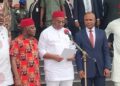
Adeyemi posted that Obi had visited the company’s CEO, Dr Nwangwa Uzonna, in Abuja on Thursday, August 27.
The next day, the Nigeria Revenue Service (NRS) struck.
“Whenever Mr. Peter Obi talks that they are after his life and people that are associated with him, some people do think that PO is emotional,” Adeyemi wrote, pointing to the timing of the subsequent tax notice.
The document shared with the post is dated August 28, 2026—the following day.

WHAT DOES THE LETTER SAY?
The letter, bearing the NRS reference NRS/METG/NCA/20150881-0001/1, notifies Irvin Global that it has been selected for a tax audit covering its 2023–2025 accounting periods.
Signed by Yahaya Ahlaba, Assistant Director, Medium & Emerging Taxpayers Directorate, the letter describes the exercise as a “full-scale audit into the affairs of the company.”
The company was invited to attend a meeting scheduled for September 9, 2026, at 10 a.m. at the NRS Medium and Emerging Taxpayers Directorate in Abuja.
The NRS requested, among other things:
- Audited accounts for 2023–2025;
- Bank statements, including domiciliary and foreign accounts;
- General ledgers;
- Fixed-assets schedules;
- Evidence of tax remittances;
- Distributor schedules; and
- Importation documents.
The agency added that the list was “not exhaustive” and that further requests could be made during the audit.
See a copy of the letter below:


ROUTINE TAX AUDIT OR SOMETHING MORE?
This is where the story becomes politically explosive.
A tax authority is legally entitled to audit taxpayers. The existence of an audit, by itself, is not evidence of political persecution.
Indeed, the NRS letter expressly says the exercise is part of its mandate to establish the company’s compliance with applicable tax laws.
But the timing has inevitably raised questions.
Thursday: Peter Obi reportedly visits the company’s CEO.
Friday: NRS letter dated August 28 announces a full-scale audit.

That sequence does not prove that Obi’s visit triggered the audit.
But it is sufficiently striking to warrant questions—particularly because Obi has repeatedly alleged that individuals and businesses associated with him face pressure from government authorities.
THE QUESTION IS NOT WHETHER NRS CAN AUDIT
It can. The more important question is:
Was this audit already scheduled or risk-triggered before Obi’s visit?
If the answer is yes, the NRS should have little difficulty explaining the audit-selection process.
If the audit was triggered independently by tax-risk indicators, Nigerians deserve to know that regulatory enforcement is based on objective criteria rather than political association.
And if there is evidence that the audit was ordered because a prominent opposition politician visited the company, that would raise a far more serious question about the weaponisation of a state institution.
At present, there is no public evidence establishing which of these explanations is correct.
That distinction matters.
BUT PERCEPTION CAN BE AS DAMAGING AS PROOF
This is the larger danger.
When a company sees a prominent opposition politician today and receives an intensive regulatory demand tomorrow, the message received by the business community may be very different from the message intended by the tax authority.
It may be:
- Stay away from opposition politicians.
- Don’t host them.
- Don’t be seen with them.
- Don’t get involved in politics.
That is how a chilling effect begins. Not necessarily through an official directive.
Sometimes, it begins with fear.
PRIVATE BUSINESS SHOULD NOT HAVE TO CHOOSE SIDES
A Nigerian company should be able to meet Peter Obi.
It should be able to meet Bola Tinubu. It should be able to meet Atiku Abubakar.
It should be able to meet any legitimate political actor.
Doing business with Nigerians—or talking to politicians—should not automatically turn a company into a political target.
That principle is essential to a functioning democracy.
The private sector cannot thrive if entrepreneurs must constantly calculate whether a meeting, photograph, donation, interview or political conversation could attract regulatory retaliation.
THE ZACCH ADEDEJI QUESTION
The controversy comes at an especially sensitive moment for the NRS.
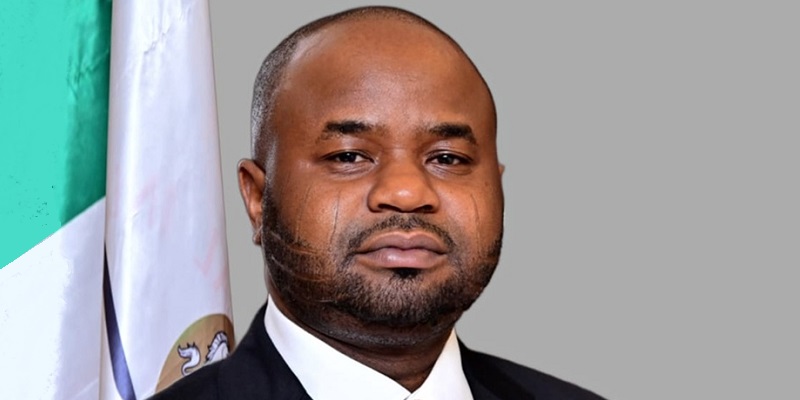
Its chairman, Zacch Adedeji, has been appointed Deputy Director of Fundraising in President Tinubu’s 2027 APC campaign structure, according to reports on the campaign council.
That appointment has itself generated criticism over the separation between public office and partisan political activity.
It is therefore inevitable that every politically sensitive tax action involving an opposition figure will receive greater scrutiny.
That does not mean every NRS audit is politically motivated.
It means the government has an even greater responsibility to demonstrate that tax enforcement is transparent, impartial and risk-based.
NIGERIANS DESERVE ANSWERS
The NRS should answer a few simple questions:
-
When was Irvin Global selected for the audit?
-
What risk criteria triggered the selection?
-
Was the audit approved before Peter Obi’s reported visit?
-
If so, when?
-
Are similar audits being conducted against comparable companies?
-
Was the audit initiated by routine compliance procedures or by a specific intelligence/risk assessment?
These questions should not frighten an institution that is confident in its procedures.
THE GOVERNMENT SHOULD WELCOME THE OPPORTUNITY TO CLEAR THE AIR
If this is an ordinary tax audit, say so.
If Irvin Global has outstanding tax obligations, establish them through due process.
If there are discrepancies in its accounts, publish the findings through the appropriate legal channels.
But if the company is being subjected to extraordinary scrutiny because its CEO met an opposition politician, that would be a deeply troubling abuse of state power.
The difference is enormous.And only evidence can establish which story is true.
For now, what Nigerians have is an extraordinary coincidence in timing, an official NRS audit notice and a political allegation.
That is enough to demand transparency. It is not yet enough to pronounce guilt.
But in a democracy increasingly haunted by fears of institutional politicisation, the government should understand one thing:
When regulatory action follows political association this quickly, people will ask questions.
And they have every right to.
This Dawn News will continue to follow the matter and report any response from the Nigeria Revenue Service, Irvin Global & Investment Limited, Dr Nwangwa Uzonna or Peter Obi.