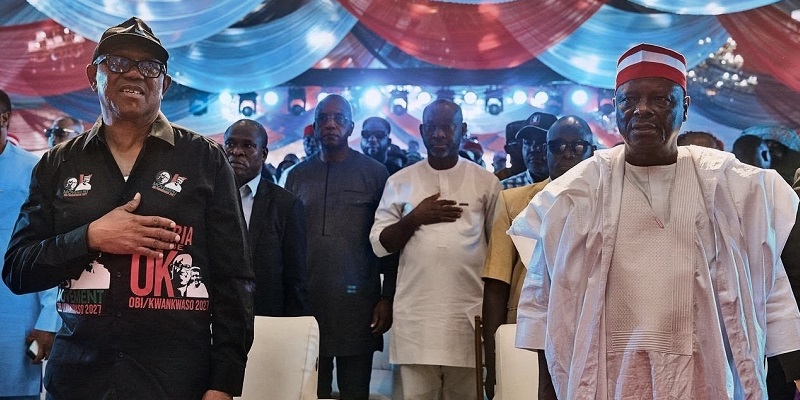
TDThe Presidential candidate of the Nigeria Democratic Congress (NDC), Peter Obi, has officially announced former Kano State Governor, Rabiu Musa Kwankwaso, as his Vice Presidential running mate ahead of the 2027 general elections.

The announcement was made public on Sunday, sparking immediate reactions across Nigeria’s political landscape.
Key Details
-
Strategic Alliance:
The pairing of Obi, widely regarded as a reformist voice from the South-East, with Kwankwaso, a prominent northern political figure and leader of the Kwankwasiyya movement, is seen as a strategic move to broaden the NDC’s appeal across regional and ethnic divides.
-
National Balance:
Political observers note that the ticket reflects an effort to balance Nigeria’s diverse political geography, combining Obi’s reputation for fiscal prudence and governance reforms with Kwankwaso’s grassroots mobilization strength in the North.
-
Official Confirmation:
The announcement was confirmed through Obi’s campaign channels and widely circulated on social media platforms, including X, where it quickly became a trending topic.
Reactions
Supporters of Obi hailed the decision as a “masterstroke”.
They argue that the combination of Obi and Kwankwaso could energize both southern and northern voters.
Kwankwasiyya Movement, loyalists of Kwankwaso, expressed excitement.
They described the partnership as a “historic opportunity” to unite Nigerians under a common vision of reform and inclusivity.
Some political commentators accepted that the alliance is symbolically powerful.
However, they caution that it will face challenges in navigating Nigeria’s complex political terrain, including entrenched party structures and regional interests.
On social media, Nigerians debated the implications of the announcement, with many emphasizing the need for policies that address economic hardship, insecurity, and corruption rather than just political alignments.
Context
Peter Obi, former governor of Anambra State, has built his political brand around transparency, accountability, and economic reform.
Kwankwaso, who governed Kano State from 1999–2003 and 2011–2015, is known for his populist style and strong grassroots following.
Their partnership signals an attempt to forge a broad-based coalition capable of challenging established political blocs in the 2027 elections.
The announcement marks a significant milestone in Nigeria’s evolving political landscape, setting the stage for what promises to be a highly competitive presidential race.