TDTragedy struck in Woro community, Kaiama Local Government Area of Kwara State, where over 100 people were reportedly killed by armed gunmen suspected to be Fulani bandits in a violent attack that has shocked the nation.
The incident, described as one of the deadliest in recent times, has drawn widespread condemnation and renewed calls for urgent government intervention to address insecurity in the region.
Eyewitness Accounts
Residents reported that armed assailants stormed the community late in the night, unleashing violence that left scores dead and many others injured.
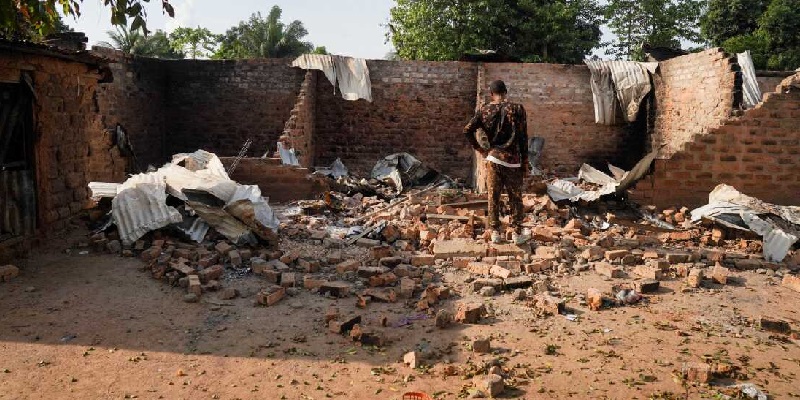
Homes were razed, and survivors fled into nearby bushes to escape the attackers.
Local sources say the scale of destruction has overwhelmed the community, with families mourning loved ones and struggling to find shelter.
Political Reaction
Former Senate President Dr. Abubakar Bukola Saraki described the killings as a “national disaster”.

Saraki stressed that the situation has gone beyond the capacity of the Kwara State government to handle alone.
“What we are witnessing in parts of Kwara State—particularly in the northern and southern senatorial districts—has gone beyond the capacity of the state government,” Saraki wrote in a statement.
He, therefore, urged federal authorities to step in.
Security Concerns
The attack highlights the growing insecurity in Kwara State, particularly in rural communities where residents remain vulnerable to armed groups.
Analysts warn that the absence of swift government response could embolden perpetrators and deepen instability in the region.
Community leaders have appealed for immediate deployment of security forces, humanitarian aid, and reconstruction support to help survivors rebuild their lives.

National Implications
The Woro massacre underscores Nigeria’s broader struggle with insecurity, as violent attacks continue to claim lives across different states.
The incident has sparked outrage among citizens, who demand accountability and stronger measures to protect vulnerable communities.
Observers note that the killings could further strain relations between local communities and government authorities.
This is especially so if victims feel abandoned in the aftermath of such devastation.
As Woro mourns its dead, the nation grapples with yet another reminder of the urgent need for decisive action against insecurity.
With over 100 lives lost, the tragedy stands as a grim call for both state and federal governments to prioritize protection of lives and property in Kwara State and beyond.