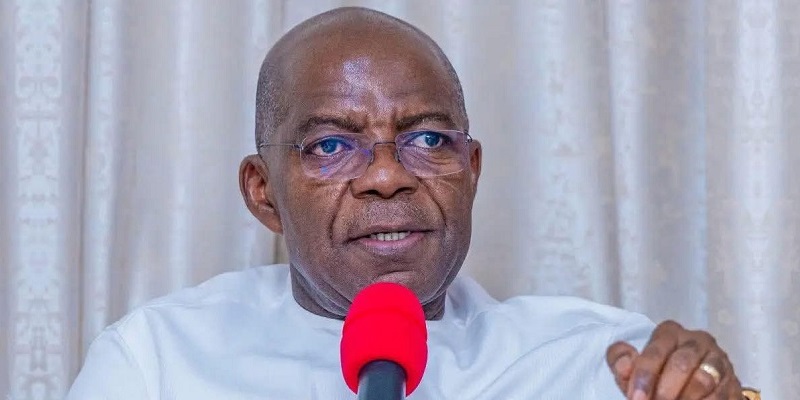
TD Abia State Governor Alex Otti has reaffirmed his long-standing account that former Anambra State Governor Peter Obi left substantial dollar savings when he left office in 2014.
Otti, a former Chief Executive Officer of Diamond Bank, made the clarification during an interview with Arise News on Friday, September 25, 2026.
The clarification came amid the renewed controversy over Obi’s remarks that he left about $150 million in savings and investments for Anambra State.
The Abia State governor insisted that his 2020 account of the investments remains factual.
Alex Otti: ‘What I Documented in 2020 Is Factual’
The debate intensified after Obi again cited the funds during his address at the Nigerian Guild of Editors’ conference in Enugu.
Explaining his earlier intervention, Otti recalled an article he published on June 8, 2020.

In the article, he used Obi’s administration as an example of financial prudence in government.
According to Otti, the article was an account of what happened when Obi was governor.
He noted that Obi had accumulated funds that needed to be protected against the depreciation of the naira.
Otti said Obi initially intended to keep the money in naira.
He, however, advised that the funds should be converted into dollars because of the expected loss in the value of the domestic currency.
He said the funds were subsequently converted and invested. He said:

“It’s a statement of fact and it’s something that happened several years, six years ago. So I haven’t spoken again.”
Otti stressed that his 2020 account concerned the savings he knew about, rather than the separate question of liabilities allegedly inherited by subsequent administrations.
He asserted:
“What I documented in 2020 is factual. That’s the only area that I come in.”
$50m in Diamond Bank
Otti’s earlier account is significant because he was heading Diamond Bank when the investment arrangements were made.
In a 2020 interview explaining his article, Otti said he knew about funds Obi invested in Nigerian banks on behalf of Anambra State.
He identified investments of $50 million in Diamond Bank, $50 million in Access Bank and $55 million in Fidelity Bank.
Otti had made a similar claim as far back as 2017.

Speaking at an economic conference that year, he said he could confirm that Obi left $50 million each in Diamond Bank, Fidelity Bank and Access Bank.
He also said that Obi did not borrow money from any financial institution during his tenure.
The historical statements therefore predate the current political dispute by several years.
Otti Separates Savings from Debt
In his latest remarks, Otti was careful to distinguish between what he personally documented and the wider argument over Anambra’s finances.
He said the fact that money was saved and invested did not automatically settle questions about whether the state subsequently had debts or other financial obligations.
“If there were debits and then debts that are being owed, it’s for the state government to come up with it.
“I just gave account of the savings,” he emphasised.
Otti added that he did not consider himself competent to determine the state’s debt position and therefore would not comment on that aspect of the controversy.
“I cannot talk about the debt. It’s not within my competence to talk about it,” he stressed.
Obi’s $150m Claim
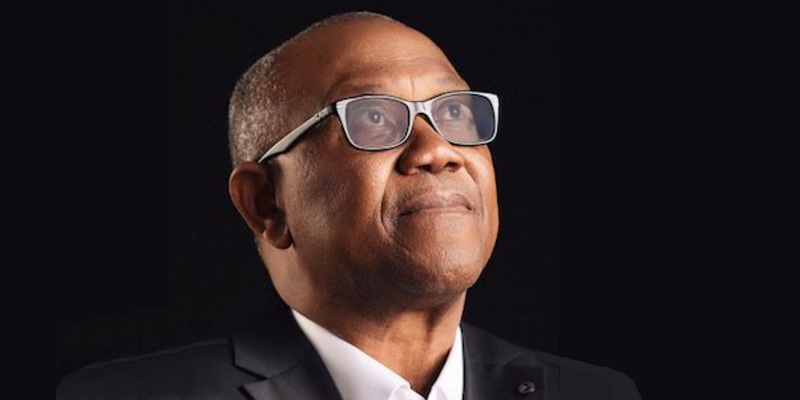
Obi has maintained that he left office in March 2014 with substantial savings and investments.
In July 2026, he said Anambra had $50 million in Diamond Bank, $50 million in Fidelity Bank and $50 million in Access Bank, alongside naira savings.
He said the dollar holdings had been invested in bonds at publicly known rates.
At the Nigerian Guild of Editors conference, Obi again put the amount at about $150 million.
He argued that the funds could have generated substantial returns if retained and reinvested.
He used an analogy of a father leaving wealth to his children.
He maintained that subsequent administrations should have been able to use the returns to address financial obligations while preserving the underlying capital.
Anambra Debt Controversy Continues
The renewed debate comes as Obi and the Anambra State Government disagree over how the state’s financial position at the end of his administration should be understood.
Obi has argued that figures presented as loans inherited from his administration have conflated approved financing, actual drawdowns and outstanding balances.
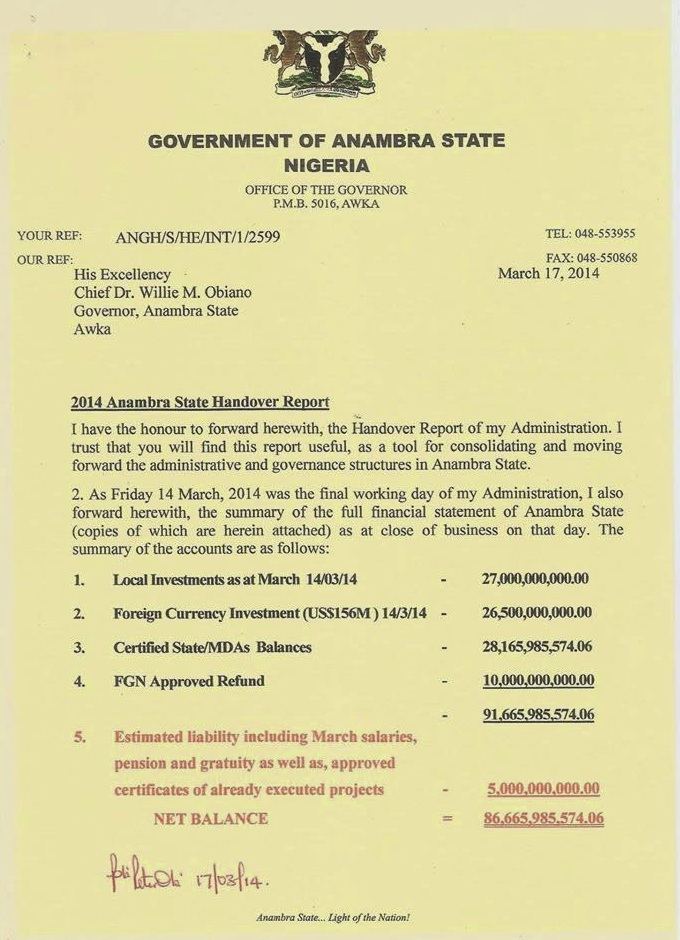
The Soludo administration has presented a different account of the state’s inherited financial obligations.
The two sides are therefore debating two related but distinct questions:
What assets and savings were left behind in 2014, and what liabilities or obligations were also outstanding at the time.
Otti’s intervention addresses the first question.
His position is that his knowledge of the investments and his 2020 account remain valid.
Meanwhile, the responsibility for establishing any debts or liabilities rests on the relevant state records.
Otti’s Earlier Account
In his 2020 explanation, Otti said the investments were made in financial instruments.
He described the arrangement as an example of prudent management of public funds.
He said the dollar investments were made when the exchange rate was approximately ₦160 to the dollar.
Otti calculated that by 2019 the investments, including interest and currency effects, could have represented about ₦95 billion.
The figures remain part of the wider dispute over Anambra’s finances.
It should be distinguished from independently audited evidence establishing the state’s complete financial position at handover.
What is independently documented, however, is that Otti has been making the $50 million-per-bank claim for years, including in 2017 and 2020, even before Soludo became governor.
He was not introducing the claim for the first time during the current political controversy.