TD President Bola Ahmed Tinubu’s political career has been accompanied by controversies involving not only his administration but also members of his immediate family.
Some of the issues concern alleged conflicts of interest, family members’ business activities, public appointments, overseas properties and access to government circles.
Others involve spending associated with the Presidency or fundraising activities led by First Lady Oluremi Tinubu.
It is important, however, to distinguish documented events from allegations, as none of the controversies below, by themselves, establishes criminal wrongdoing by President Tinubu or members of his family.
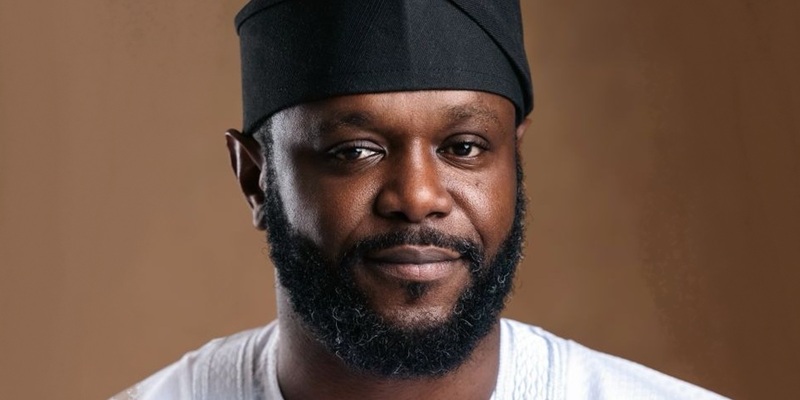
1. Lagos-Calabar Coastal Highway and Seyi Tinubu’s Chagoury Connection
One of the most prominent family-related controversies emerged after the Federal Government awarded the Lagos-Calabar Coastal Highway project to Hitech Construction Company Ltd, part of the Chagoury Group.
The project, planned to cover approximately 700 kilometres, became controversial over its procurement process and the relationship between the Chagoury family and President Tinubu.

Former Vice-President Atiku Abubakar alleged in 2024 that Seyi Tinubu, the President’s son, was a director of CDK Integrated Industries, a subsidiary of the Chagoury Group.
Abubakar argued that the connection raised a conflict-of-interest question over the coastal highway contract.
The controversy deepened after BusinessDay reported leaked corporate documents.
The documents claimed that Seyi Tinubu co-owns an offshore British Virgin Islands company with Ronald Chagoury Jr., son of businessman Gilbert Chagoury.
The Presidency rejected the conflict-of-interest argument, saying Seyi had a right to pursue legitimate business interests within the law.
The issue therefore remains a question of disclosure, procurement and perceived conflict of interest, rather than established proof of corruption.

2. Seyi Tinubu’s $10.8m London Mansion
Another major controversy concerns a London property purchased through Aranda Overseas Corporation, an offshore company in which Seyi Tinubu was identified as the main shareholder.
Bloomberg said the company bought the North London mansion for approximately £9 million ($10.8 million) in 2017.
The property had previously belonged to businessman Kola Aluko.
Aluko had been accused by Nigerian authorities of acquiring assets with proceeds connected to alleged corruption.
He denied the allegations, and later legal developments have to be considered separately from Seyi’s purchase.
The reporting did not establish that Seyi’s purchase itself involved criminal proceeds.

The controversy arose principally from the value of the property, its offshore ownership structure and its previous ownership history.
3. Reports of Millions of Dollars in US Properties Owned by Tinubu’s Daughters
A 2022 investigation by Sahara Reporters revealed that two of Tinubu’s daughters, Zainab Abisola Tinubu and Habibat Oyindamola Tinubu, acquired properties in New York valued at millions of dollars.
The report identified a Brooklyn property acquired for approximately $2.15 million.
Another Manhattan property was acquired for approximately $2.4 million.
The investigation questioned how the purchases were financed as the girls do not engage in any known enterprise.
The report raised questions about the children’s sources of funds rather than establishing illegal conduct.
Therefore, the allegations should not be presented as proof that the properties were improperly acquired.
The issue nevertheless became part of the broader public debate over the wealth of politically exposed persons and their families.
4. Seyi Tinubu’s Access to a Federal Executive Council Meeting
In October 2023, President Tinubu himself publicly addressed controversy over his son’s presence inside a Federal Executive Council (FEC) meeting.
Tinubu said he had seen photographs of Seyi sitting inside the council chamber.
He warned that unauthorised people should not have access to the meeting.
“I saw the photograph of my son, Seyi, sitting behind… That is not acceptable,” he had said.
The President instructed officials to ensure that only authorised individuals attended FEC meetings.
The episode generated questions about the access and influence of presidential family members around the highest levels of government.
5. Appointment of Tinubu’s Son-in-Law as Federal Housing Authority CEO
In February 2024, Tinubu appointed Oyetunde Oladimeji Ojo, his son-in-law, as Managing Director/Chief Executive Officer of the Federal Housing Authority (FHA).
Ojo is married to Tinubu’s daughter, Folasade Tinubu-Ojo, and is a former member of the House of Representatives.
The Federal Ministry of Information officially confirmed the appointment.
The appointment attracted accusations of nepotism from critics because of the familial relationship.
The Presidency, however, cited Ojo’s professional experience and qualifications, including his previous legislative experience and background in housing and hospitality.
The controversy therefore centred on whether appointing a close relative to a major federal agency creates an appearance of nepotism or conflict, rather than on a finding that the appointment was unlawful.
6. Folasade Tinubu-Ojo and the Computer Village Levy Dispute
Tinubu’s daughter, Folasade Tinubu-Ojo, who holds the position of Iyaloja-General, has also faced controversy over her activities in Nigerian markets.
In 2021, a Lagos State High Court barred her and others from imposing or collecting levies from traders at Computer Village, Ikeja.
The court order restrained Tinubu-Ojo and others from collecting dues, levies or fines from members of the market association.
In 2024, traders again issued a cease-and-desist notice through lawyers, alleging continued interference and unlawful levy collection.
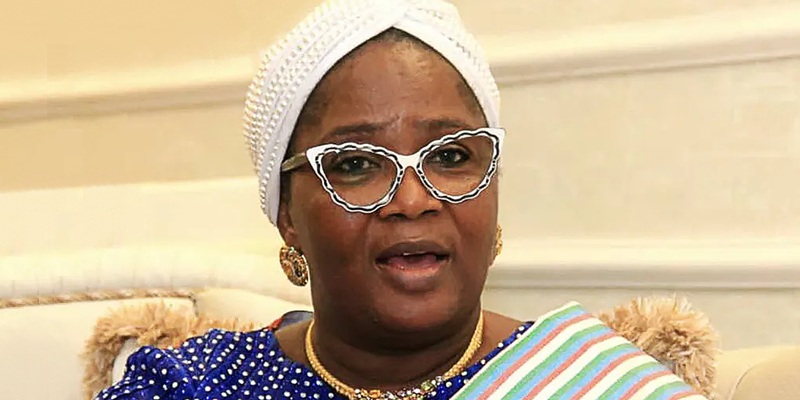
7. Oluremi Tinubu’s Billions in Donations and the National Library Fund
First Lady Oluremi Tinubu has also faced public scrutiny over the substantial sums associated with programmes and charitable initiatives connected to her office.
In 2025, she announced that her Oluremi @65 Education Fund had raised approximately ₦20.46 billion for completion of the National Library complex in Abuja.
She said the account’s signatories included the Minister of Education and the Chief Librarian of the Federation.
The fundraising nevertheless generated questions about why Nigerians and private donors were being asked to finance completion of a national institution after years of government expenditure.
An investigation by the International Centre for Investigative Reporting (ICIR) noted that the Federal Executive Council had approved ₦32.4 billion for the project in 2023.
It reported that budgetary allocations during subsequent years had largely been directed toward recurrent expenditure rather than completing the building.
8. Oluremi Tinubu’s Other Multi-Billion-Naira Interventions
In 2026, Oluremi Tinubu said she had provided ₦3.5 billion in grants to traders and others as part of the Renewed Hope Initiative.
She also said she had provided ₦2 billion for tuberculosis, ₦1 billion for breast-cancer interventions and ₦500 million for malnutrition.
That brings the figures she personally cited for those interventions to billions of naira.
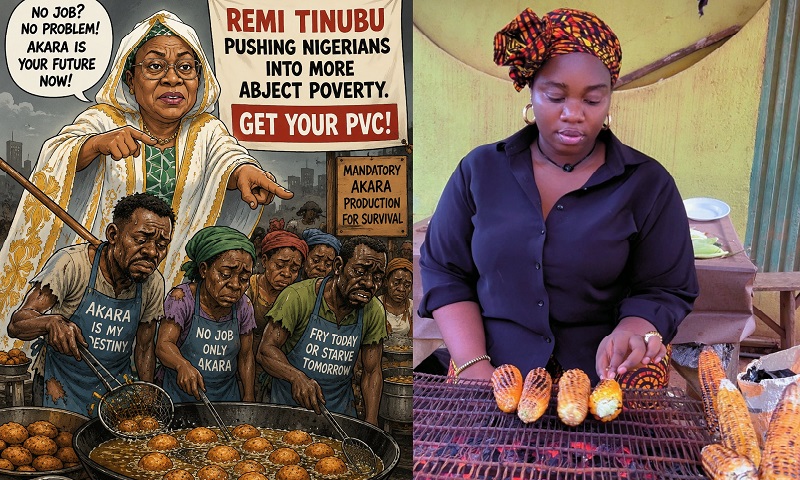
Little wonder her remarks about starting businesses such as akara, roasted corn and kulikuli with relatively little capital generated considerable public discussion.
The legitimate transparency question is how such programmes are funded, accounted for and independently audited.
9. Presidential Aircraft, Yacht and Other First-Family Spending
The Tinubu administration’s spending on presidential assets also became controversial because some expenditures directly involved the President and First Lady.
In 2023, the National Assembly approved a supplementary budget containing billions of naira for the presidential air fleet, official vehicles and other presidential-related expenditures.
Reuters reported that the package included ₦5.095 billion for a presidential yacht, ₦1.5 billion for official vehicles for the Office of the First Lady, and ₦12.7 billion for the presidential air fleet.
The yacht expenditure was subsequently removed from the supplementary budget following public criticism.
The controversy centred on public spending priorities at a time of severe economic hardship following fuel-subsidy removal and the naira’s depreciation.
10. The NANS ₦100 Million Bribery Allegation Against Seyi Tinubu
In 2025, a factional NANS president, Atiku Isah, accused Seyi Tinubu and the Minister of Youth Development of offering him ₦100 million to support President Tinubu.
Seyi denied the allegation.
Consequently, the ₦100 million bribery allegation should be described as a disputed allegation.
The Larger Question: Political Family or Political Institution?
Taken together, these controversies have produced a broader debate about the role of presidential family members in Nigerian public life.
The issues range from:
-
Seyi Tinubu’s corporate relationships and access to government;
-
his alleged links to companies associated with the Chagoury Group;
-
his London property;
-
the presence of presidential relatives around government activities;
-
the appointment of a presidential son-in-law to head the Federal Housing Authority;
-
Folasade Tinubu-Ojo’s activities within market administration;
-
fundraising and grant programmes associated with the First Lady;
-
and questions surrounding presidential and first-family-related spending.
These issues, considered individually, raise recurring questions about transparency, disclosure, procurement, nepotism, conflicts of interest, public spending and the appropriate boundary between private family interests and the exercise of presidential power.
For a government whose officials have repeatedly emphasised accountability and anti-corruption, those questions are likely to remain part of public scrutiny of the Tinubu presidency.
The strongest documented controversies in this report involve corporate records, court proceedings, official appointments, presidential statements and reported financial transactions.