



TDIn a country where cynicism about public institutions is almost a national pastime, I continue to hold a firm and unfailing belief in the Nigerian Judiciary.
When people casually claim that our courts have become “Tinubu’s courts,” I simply shake my head in disbelief. Such sweeping generalisations do not only undermine public confidence in one of our most vital democratic pillars; they also ignore the evidence before our very eyes.
For the past three months, in every legal advisory I have issued on the African Democratic Congress (ADC) leadership crisis, I have consistently preached trust in the judicial process.
I have reproved those who preferred to blame President Tinubu or paint the judiciary as biased rather than confront the internal failures within the party. Today, that trust has once again been vindicated.
Yesterday, the Federal High Court in Abuja, per Justice Joyce Abdulmalik, delivered a clear and courageous judgment protecting the tenure and autonomy of ADC State Executive Committees.
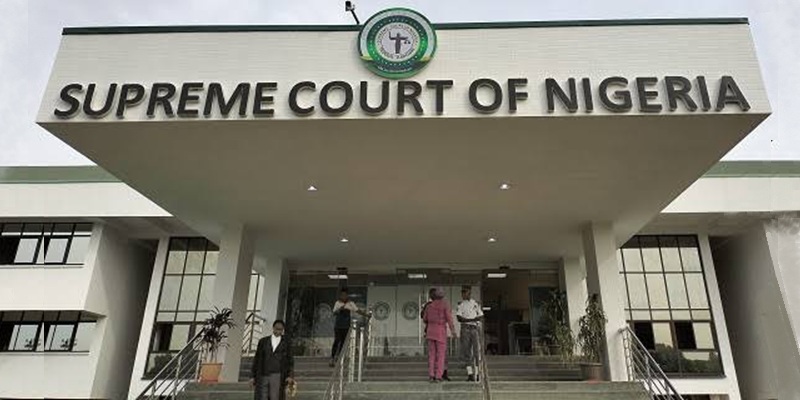
Today, the Supreme Court, in a unanimous decision by a five-member panel led by Justice Mohammed Lawal Garba, vacated the controversial status quo ante bellum order issued by the Court of Appeal.

The apex court rightly held that the Court of Appeal acted beyond its jurisdiction by issuing such an order after it had already dismissed the appeal before it.
These two judgments — delivered within 48 hours — demonstrate that our courts can and do dispense justice even in highly charged political matters.
They also reinforce a principle I have always maintained: when you do the right thing and approach the court with clean hands, the law will be on your side.
My personal experience as a lawyer bears this out. In the past three years, the Coalition for Protection of Democracy (COPDEM) and the Peter Obi Support Network (POSN) have taken INEC to court on three separate occasions — and won all three cases.
These were not cases involving powerful godfathers or ruling party insiders.
They were ordinary citizens and opposition groups seeking to enforce compliance with the law. The courts listened and delivered justice.

The recurring problem in our politics, particularly evident in the ADC crisis, is not the judiciary — it is the stubborn preference for shortcuts.
Political actors routinely bypass their own party constitutions, ignore the mandatory 21-day notice requirement under the Electoral Act, and create parallel structures.
When the inevitable legal consequences follow, they cry bias and look for scapegoats instead of accepting responsibility.
The ancient equitable maxim remains true: He who comes to equity must come with clean hands.
The judiciary is not perfect. No human institution is. But it remains the last hope of the common man and the ultimate guardian of the rule of law in Nigeria.
Those who obey the rules, respect due process, and approach the courts with integrity will almost always find justice.

Those who rely on impunity, factionalism, and media trials will continue to be disappointed.
As the ADC leadership crisis enters a new phase following yesterday’s Supreme Court judgment, my message to all factions is simple: return to the Federal High Court as directed, but more importantly, return to the spirit of internal reconciliation, constitutional compliance, and respect for due process.
Nigeria does not need a perfect judiciary. It needs citizens and politicians who are willing to do the right thing.
When we consistently do that, we will discover that our courts are far more reliable than the loud cynics would have us believe.
The rule of law is not an abstract concept. It is the foundation upon which every stable democracy is built. Let us choose it.